Isostatic pressing technology is primarily utilized to manufacture advanced materials that demand exceptional structural integrity and uniformity. Its specific applications center on producing new alloy products that are difficult to form using traditional casting, as well as creating high-performance zirconia and alumina ceramic products.
Core Insight: The unique value of isostatic pressing lies in its ability to apply equal pressure from every direction simultaneously. Unlike unidirectional pressing, this ensures the final material has uniform mechanical properties throughout its structure, making it indispensable for parts where failure is not an option.
Specialized Applications in Manufacturing
The primary utility of this technology is found in sectors requiring materials with superior mechanical properties that standard manufacturing cannot achieve.
Advanced Alloy Production
Isostatic pressing is used to create new alloy products that are unsuitable for standard casting technologies.
In traditional casting, certain complex alloy compositions may suffer from segregation or structural weaknesses. Isostatic pressing bypasses these limitations by compacting metal powders directly, improving the material's workability and mechanical properties.
High-Performance Ceramics
This process is the preferred forming method for zirconia and alumina ceramic products.
These ceramics are typically chosen for their high performance and strength requirements. Isostatic pressing ensures these critical components achieve the necessary density and reliability that simpler molding techniques might fail to deliver.
The Mechanism Behind the Performance
To understand why this technology is chosen for alloys and ceramics, one must understand the underlying physics that differentiate it from other methods.
Uniform Pressure Transmission
The technology operates on Pascal’s principle. A powder specimen is placed in a high-pressure container and submerged in an incompressible medium (liquid or gas).
Because the medium transmits pressure uniformly in all directions, the material is compacted evenly. This creates a "green body" (an unfired ceramic or metal object) that has consistent density throughout, regardless of its shape.
Isotropic Properties
The resulting materials possess isotropic properties, meaning their strength and characteristics are uniform regardless of the direction they are measured.
In this process, the final characteristics depend on the molding temperature and pressure. They are not reliant on the size, shape, or sampling direction of the material, which ensures high reliability in the final product.
Operational Variants: CIP and HIP
Isostatic pressing is categorized into two distinct methods depending on the thermal requirements of the application.
Cold Isostatic Pressing (CIP)
This method involves pressing and molding powder at room temperature.
CIP is typically used to form the initial "green body" from powder before it undergoes further processing.
Hot Isostatic Pressing (HIP)
HIP is a specialized sintering method that combines molding and sintering simultaneously.
It applies both high temperature and high pressure to the powder. This is often used to densify materials fully and improve mechanical properties beyond what room-temperature pressing can achieve.
Operational Considerations and Requirements
While isostatic pressing yields superior material properties, it involves complex processing requirements compared to standard techniques.
High-Pressure Containment
The process requires a robust, hermetically sealed container capable of withstanding extreme forces.
The powder must be sealed perfectly to prevent interaction with the pressurizing medium. This adds a layer of complexity to the preparation phase compared to open-air molding.
Medium Dependencies
The system relies entirely on the properties of the fluid medium (gas or liquid) to transfer force.
Success depends on the incompressible nature of this medium to ensure the pressure remains truly isostatic (equal from all sides). Any failure in the medium's consistency or the container's seal can compromise the uniformity of the part.
Making the Right Choice for Your Project
Isostatic pressing is not a universal replacement for all forming methods; it is a specialized solution for high-stakes requirements.
- If your primary focus is producing complex alloys: Choose this technology to manufacture compositions that are difficult or impossible to process via traditional casting.
- If your primary focus is ceramic performance: Use this method for zirconia or alumina parts where maximum density and high strength are critical to the application.
- If your primary focus is material uniformity: Rely on this process to guarantee isotropic properties where the material must behave consistently in all directions.
Select isostatic pressing when the cost of material failure outweighs the complexity of the manufacturing process.
Summary Table:
| Application Category | Material Types | Key Benefits |
|---|---|---|
| Advanced Alloys | Complex metal compositions | Eliminates segregation, improves workability |
| High-Performance Ceramics | Zirconia, Alumina | Maximum density, exceptional mechanical strength |
| Structural Components | Multi-directional parts | Isotropic properties (uniform strength in all directions) |
| Pre-Sintering (CIP) | Green body powders | Consistent density before final firing |
| Sintering/Densification (HIP) | Metal & Ceramic powders | Simultaneous molding and sintering for peak reliability |
Elevate Your Material Integrity with KINTEK
Precision in manufacturing begins with the right equipment. KINTEK specializes in advanced laboratory solutions designed to meet the rigorous demands of material science. Whether you are developing next-generation alloys or high-performance ceramics, our range of isostatic presses (cold and hot), high-temperature furnaces, and crushing and milling systems provides the reliability your research deserves.
From pellet and isostatic hydraulic presses to zirconia and alumina consumables, KINTEK is your partner in achieving uniform density and isotropic properties. Don't compromise on structural integrity—contact us today to discover how our comprehensive laboratory equipment can optimize your production process and deliver failure-proof results.
Related Products
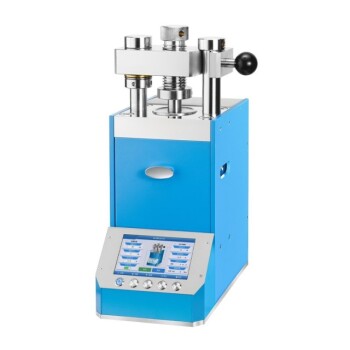
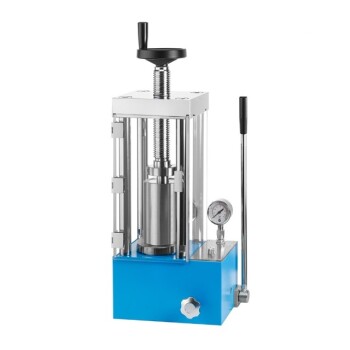
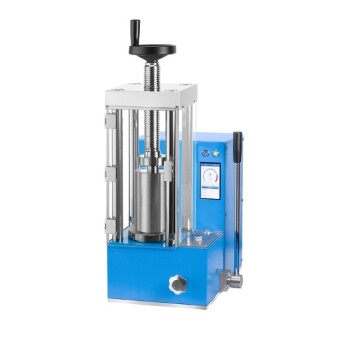
- Automatic Lab Cold Isostatic Press CIP Machine Cold Isostatic Pressing
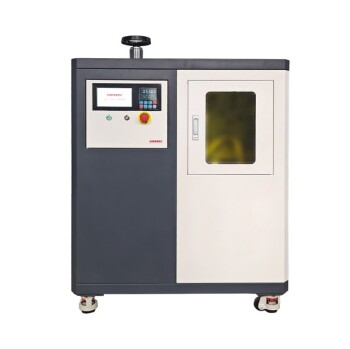
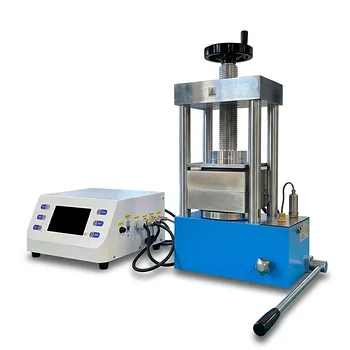
- Warm Isostatic Press for Solid State Battery Research
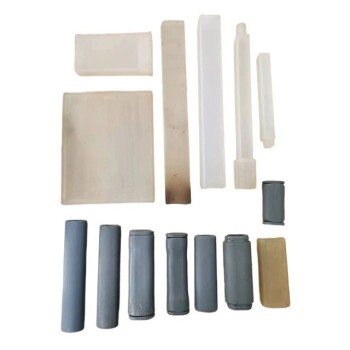
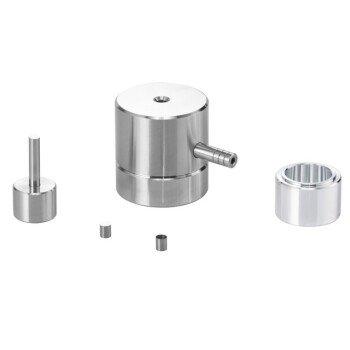
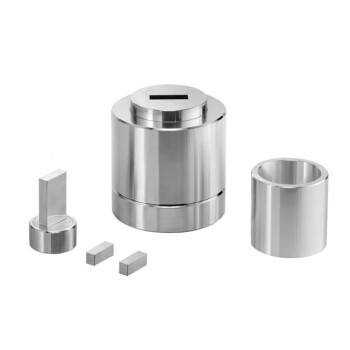
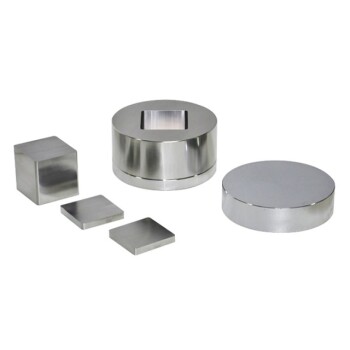
- Isostatic Molding Pressing Molds for Lab
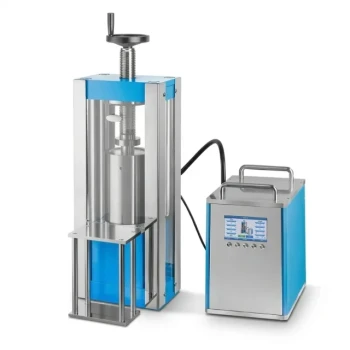
- Electric Split Lab Cold Isostatic Press CIP Machine for Cold Isostatic Pressing
- Manual Cold Isostatic Pressing Machine CIP Pellet Press
People Also Ask
- What is the cold isostatic process? Achieve Uniform Density in Complex Powder Parts
- What is hot and cold isostatic pressing? A Guide to Forming and Densifying Materials
- What role does cold isostatic pressing play in the formation of feed rods for single crystal growth? Ensure Stability.
- What is isostatic pressing method for ceramics? Achieve Uniform Density for Complex Parts
- What are the advantages of isostatic pressing? Achieve Superior Material Integrity and Design Freedom