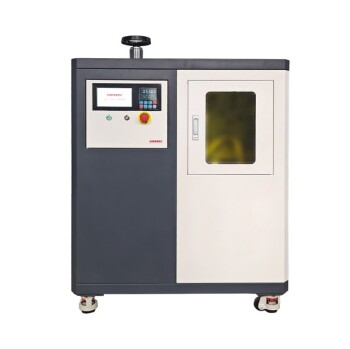
The application of cold isostatic pressing (CIP) serves as a critical corrective step immediately following steel mold dry pressing in the production of 8YSZ ceramics. While dry pressing establishes the initial shape, adding a secondary CIP stage applies uniform, omnidirectional pressure—often around 200 MPa—to eliminate density gradients and micro-cracks caused by friction within the steel mold.
Dry pressing alone often leaves ceramic bodies with uneven internal density due to wall friction. Follow-up isostatic pressing equalizes these inconsistencies, ensuring the final material achieves a relative density exceeding 96% and superior mechanical strength.
Addressing the Flaws of Dry Pressing
The Problem of Mold Wall Friction
In standard steel mold dry pressing, pressure is typically applied uniaxially (from top and bottom).
As the powder compresses, it generates friction against the rigid steel walls of the mold. This friction creates density gradients, meaning the center of the part may be denser than the edges, or vice versa.
Eliminating Micro-Cracks
These uneven density profiles often result in microscopic structural defects.
If left untreated, these structural inconsistencies manifest as micro-cracks within the green body. These defects can lead to catastrophic failure or warping during the high-stress sintering phase.
The Corrective Mechanism of CIP
Applying Omnidirectional Pressure
Cold isostatic pressing submerges the pre-formed sample in a fluid medium within a high-pressure vessel.
Unlike the steel mold, the fluid applies pressure equally from every direction (isotropically). This forces the powder particles to rearrange and pack tightly into areas that remained porous during the initial dry press.
Removal of Internal Voids
This secondary compression effectively collapses internal air pockets and voids.
By homogenizing the internal structure, the process ensures the material is uniform throughout its volume, significantly enhancing the dimensional accuracy of the final product.
Manufacturing and Economic Implications
Achieving Near-Net Shape
The combination of these processes allows for "near-net size" production with highly predictable shrinkage rates.
Because the density is uniform, the ceramic shrinks evenly during firing. This precision reduces the volume of material that must be removed later, minimizing waste.
Reducing Post-Sintering Costs
8YSZ is extremely hard once sintered, making machining difficult and expensive.
CIP creates a "green" (unfired) blank with sufficient strength to undergo fine machining before sintering. Removing material at this stage is significantly faster and cheaper than diamond grinding the final ceramic, ultimately lowering overall production costs.
Understanding the Trade-offs
Process Complexity vs. Quality
Adding a second pressing step inevitably increases the immediate time and complexity of the forming stage.
However, this must be weighed against the reduction in rejection rates. Relying solely on dry pressing for high-performance 8YSZ risks a higher scrap rate due to cracking during sintering.
Equipment Requirements
Implementing CIP requires specialized high-pressure vessels and elastic molds.
While this represents a capital investment, the supplementary data suggests the return on investment is realized through enhanced material performance and reduced finishing requirements.
Making the Right Choice for Your Goal
When designing a manufacturing workflow for 8YSZ ceramics, consider your specific performance targets:
- If your primary focus is mechanical reliability: Utilize the CIP step to ensure relative density exceeds 96% and to eliminate the internal defects that cause premature structural failure.
- If your primary focus is cost reduction: Leverage the high "green strength" provided by CIP to perform intricate machining prior to sintering, avoiding expensive hard-machining processes later.
By combining the speed of dry pressing with the uniformity of isostatic pressing, manufacturers secure both structural integrity and geometric precision.
Summary Table:
| Feature | Steel Mold Dry Pressing | Cold Isostatic Pressing (CIP) |
|---|---|---|
| Pressure Direction | Uniaxial (Top/Bottom) | Omnidirectional (Isotropic) |
| Density Profile | Creates density gradients | Ensures uniform density |
| Internal Defects | Risk of micro-cracks/voids | Eliminates voids and air pockets |
| Shrinkage Control | Irregular due to friction | Predictable and uniform |
| Final Density | Variable | Reaches >96% relative density |
| Machining Timing | High post-sintering costs | Allows cost-effective green machining |
Elevate Your Ceramic Production with KINTEK Precision
Struggling with micro-cracks or uneven density in your high-performance 8YSZ ceramics? KINTEK specializes in advanced laboratory and industrial solutions, providing the high-pressure technology needed to achieve structural perfection.
Our extensive portfolio includes state-of-the-art isostatic presses, high-temperature furnaces, and crushing and milling systems designed specifically for material science experts. From isostatic and hydraulic presses for uniform green body formation to muffle and vacuum furnaces for precision sintering, we provide the tools to ensure your materials exceed 96% relative density and maintain flawless dimensional accuracy.
Ready to reduce waste and lower your post-sintering costs? Contact KINTEK today to find the perfect pressing solution for your lab!
References
- Wugang FAN, Zhaoquan ZHANG. Anticorrosion Performance of 8YSZ Ceramics in Simulated Aqueous Environment of Pressurized Water Reactor. DOI: 10.15541/jim20230513
This article is also based on technical information from Kintek Solution Knowledge Base .
Related Products
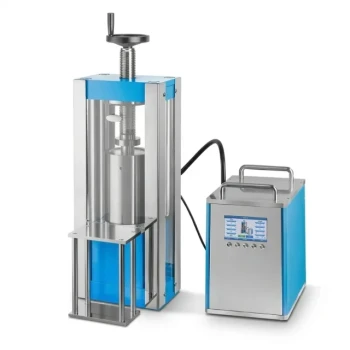
- Electric Split Lab Cold Isostatic Press CIP Machine for Cold Isostatic Pressing
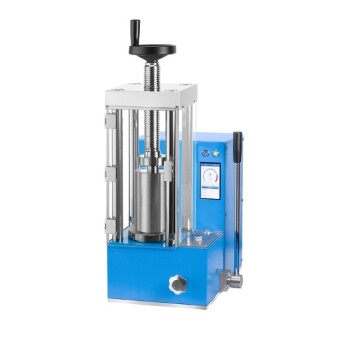
- Electric Lab Cold Isostatic Press CIP Machine for Cold Isostatic Pressing
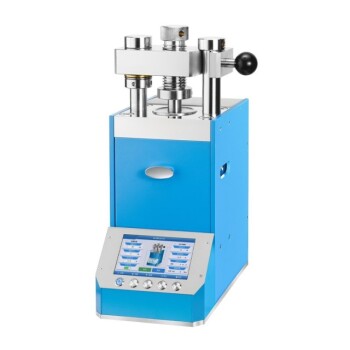
- Automatic Lab Cold Isostatic Press CIP Machine Cold Isostatic Pressing
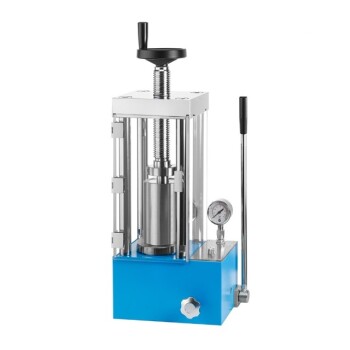
- Manual Cold Isostatic Pressing Machine CIP Pellet Press
- Warm Isostatic Press for Solid State Battery Research
People Also Ask
- How is isostatic pressing equipment utilized to integrate lithium metal anodes during solid-state battery assembly?
- How does isostatic pressing equipment enhance lithium metal anode contact? Optimize Your Solid-State Battery Assembly
- What is the meaning of isostatic pressing? Achieve Uniform Density in Complex Parts
- What is isostatic pressing method for ceramics? Achieve Uniform Density for Complex Parts
- What role does cold isostatic pressing play in the formation of feed rods for single crystal growth? Ensure Stability.