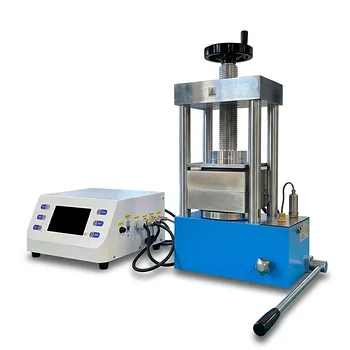
Cold Isostatic Pressing (CIP) is the superior method for bonding sulfide and oxide electrolytes because it leverages high, uniform fluid pressure to mechanically fuse materials with different physical properties. Unlike conventional pressing, CIP forces the softer sulfide material to flow into the surface texture of the harder oxide, creating a seamless, interlocked boundary.
Core Takeaway CIP applies isotropic pressure (often up to 350 MPa) through a liquid medium to facilitate the plastic deformation of soft sulfide electrolytes (LPSCl). This forces the sulfide to fill surface micropores on the hard oxide electrolyte (LLZO), creating a mechanically interlocked interface that dramatically reduces resistance and improves stability.
The Mechanics of Interface Formation
Isotropic vs. Uniaxial Pressure
The fundamental advantage of CIP is the application of isotropic pressure, meaning force is applied equally from all directions.
In contrast to uniaxial pressing (force from top and bottom), which can create uneven stress distributions, CIP utilizes a liquid medium to transmit pressure. This ensures that every point of the composite interface experiences the exact same compressive force.
Plastic Deformation of the Sulfide
The effectiveness of this process relies on the material properties of the sulfide electrolyte (LPSCl).
Under the extreme pressures generated by CIP (up to 350 MPa), the LPSCl undergoes plastic deformation. It behaves less like a rigid solid and more like a viscous material, allowing it to move and reshape without fracturing.
Filling Micropores for Mechanical Interlocking
The oxide electrolyte (LLZO) is a hard, ceramic material that typically has a rough surface comprised of micropores.
As the LPSCl deforms, the isotropic pressure drives it deep into these micropores. This creates mechanical interlocking—a physical state where the two materials are dovetailed together. This eliminates the gaps that typically plague solid-state interfaces.
Increasing Active Contact Area
By forcing the sulfide into the oxide's voids, CIP maximizes the active contact area between the two electrolytes.
This elimination of microscopic voids is critical. Even small gaps act as insulators; by removing them, CIP significantly lowers interfacial impedance and enhances the efficiency of lithium-ion diffusion across the boundary.
Understanding the Trade-offs
Process Complexity and Speed
While CIP produces superior interfaces, it is generally more complex than uniaxial pressing.
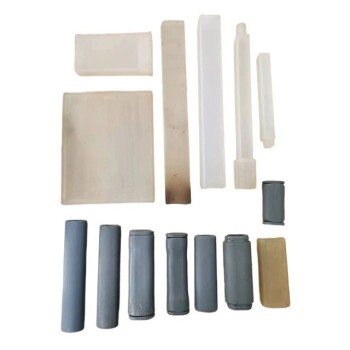
The process requires sealing the materials in flexible, elastomeric molds (such as latex or urethane) to isolate them from the liquid medium. This adds steps to the manufacturing workflow compared to simple die pressing.
Dimensional Constraints
CIP allows for complex shapes, but the size of the composite is strictly limited by the dimensions of the pressure vessel.
Additionally, while friction is minimized compared to rigid dies, the height-to-diameter ratio must still be considered to ensure the green body maintains structural integrity during the depressurization phase.
Making the Right Choice for Your Goal
- If your primary focus is electrochemical performance: Prioritize CIP pressures near 350 MPa to maximize plastic deformation and reduce interfacial resistance to the absolute minimum.
- If your primary focus is structural integrity: Use CIP to prevent the cracking of brittle ceramic (LLZO) layers, as the uniform pressure distribution avoids the shear stresses common in uniaxial pressing.
- If your primary focus is densification: Leverage CIP to eliminate internal voids within the bulk materials, ensuring the entire composite stack achieves high relative density.
CIP transforms the electrolyte interface from a simple point of contact into a unified, mechanically interlocked system.
Summary Table:
| Feature | Uniaxial Pressing | Cold Isostatic Pressing (CIP) |
|---|---|---|
| Pressure Direction | Single axis (top/bottom) | Isotropic (equal from all directions) |
| Material Flow | Limited plastic deformation | High plastic flow into surface micropores |
| Interface Quality | Point-to-point contact, many voids | Seamless, mechanical interlocking |
| Ceramic Safety | High risk of shear stress/cracking | Uniform distribution prevents fractures |
| Interfacial Resistance | High | Significantly reduced |
| Best For | Simple shapes, rapid production | High-performance solid-state interfaces |
Elevate Your Solid-State Battery Research with KINTEK
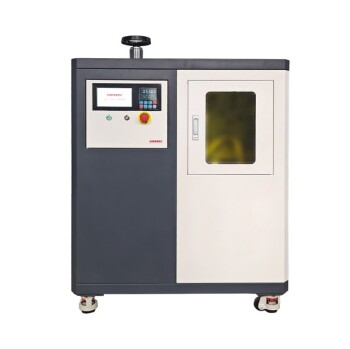
Achieving the perfect interface between sulfide and oxide electrolytes requires precision and uniform pressure. KINTEK specializes in advanced Cold Isostatic Presses (CIP) and isostatic hydraulic systems designed to facilitate superior plastic deformation and mechanical interlocking for materials like LPSCl and LLZO.
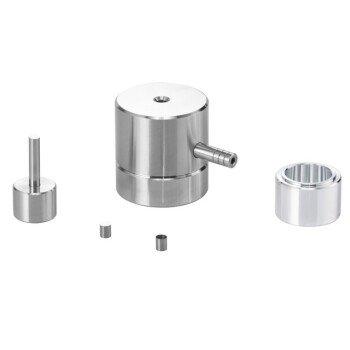
From laboratory-scale pellet presses to high-capacity crushing and milling systems, our equipment ensures your research achieves the densification and low interfacial impedance necessary for the next generation of energy storage. Our portfolio also includes specialized high-temperature furnaces, vacuum solutions, and essential consumables like PTFE and ceramics.
Ready to eliminate interfacial voids and optimize your electrochemical performance?
Contact a KINTEK Specialist Today
Related Products
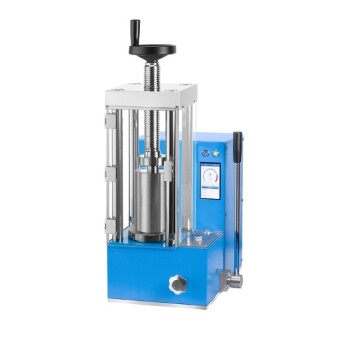
- Electric Lab Cold Isostatic Press CIP Machine for Cold Isostatic Pressing
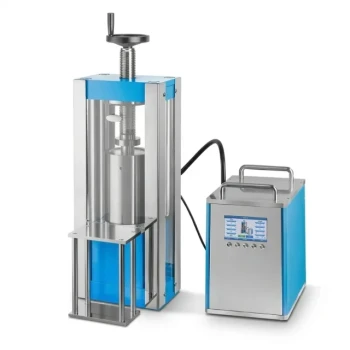
- Electric Split Lab Cold Isostatic Press CIP Machine for Cold Isostatic Pressing
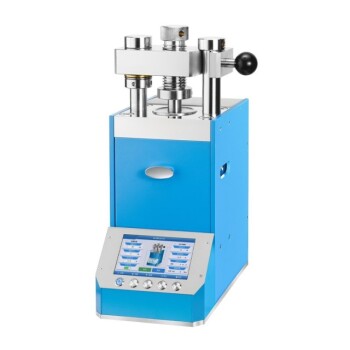
- Automatic Lab Cold Isostatic Press CIP Machine Cold Isostatic Pressing
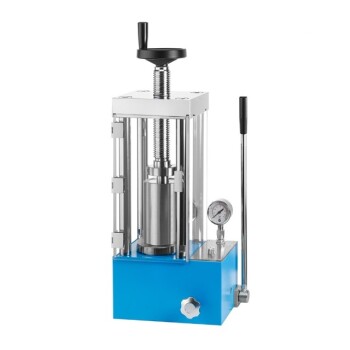
- Manual Cold Isostatic Pressing Machine CIP Pellet Press
- Isostatic Molding Pressing Molds for Lab
People Also Ask
- What role does cold isostatic pressing play in the formation of feed rods for single crystal growth? Ensure Stability.
- What is isostatic pressing method for ceramics? Achieve Uniform Density for Complex Parts
- In what ways does Cold Isostatic Pressing (CIP) enhance LiFePO4 battery performance? Boost Density and Conductivity
- How does Cold Isostatic Pressing (CIP) benefit SiC ceramic reactors? Achieve Flawless Material Integrity
- Why is a cold isostatic press advantageous for Argyrodite sulfide solid-state batteries? Achieve Optimal Densification