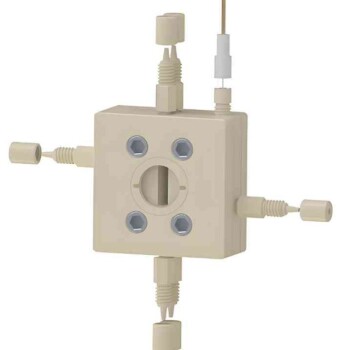
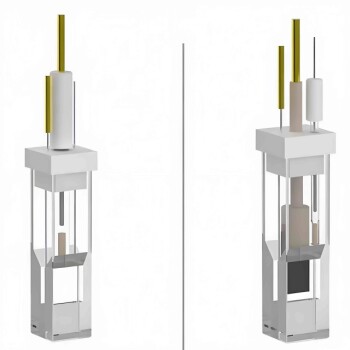
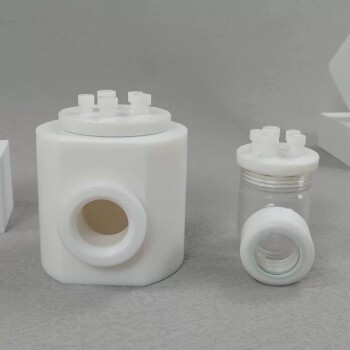
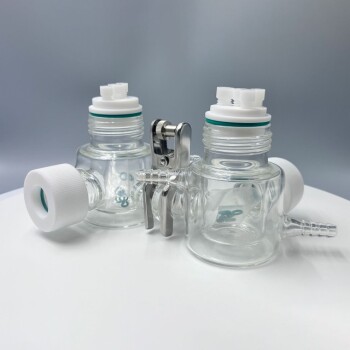
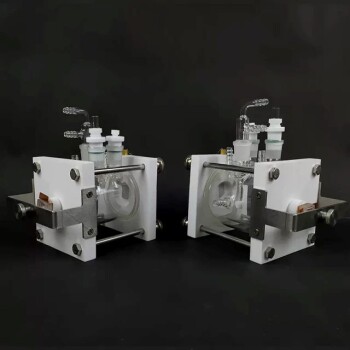
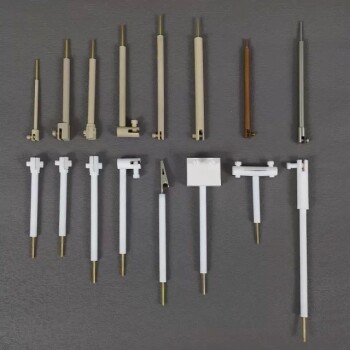
The utilization of a constant-temperature three-electrode electrochemical cell system represents the gold standard for precision in manganese electrodeposition experiments. This specific configuration is chosen to create a rigorously controlled physicochemical environment, allowing researchers to isolate and manipulate variables without interference from external fluctuations. It provides the necessary stability to correlate specific operating conditions—such as temperature and potential—directly with the resulting properties of the manganese deposit.
The primary value of this system is the isolation of variables: it decouples temperature fluctuations and counter-electrode interference from the experiment. This ensures that the observed changes in manganese growth are the result of your deliberate parameters, not experimental noise.
The Critical Role of Thermal Stability
Eliminating Environmental Noise
In electrochemical reactions, temperature is a dominant variable. A constant-temperature control unit, typically a circulating thermostatic water bath, is essential to lock the electrolyte temperature at a specific set point.
Investigating Kinetics and Morphology
By maintaining precise temperatures within a range of 20 to 80 °C, researchers can systematically study how thermal energy impacts the deposition process. Temperature directly dictates deposition kinetics (how fast the reaction occurs) and the crystal structure of the manganese.
Controlling Physical Appearance
Beyond the rate of growth, temperature control is vital for managing surface morphology. The microscopic texture and roughness of the manganese layer change significantly with temperature, and a fluctuating environment would yield inconsistent physical results.
The Precision of the Three-Electrode Configuration
Isolating the Working Electrode
A standard two-electrode system measures the voltage across the entire cell, which includes the potential drops at both the anode and cathode. The three-electrode system—comprising a working electrode, reference electrode, and auxiliary (counter) electrode—solves this ambiguity.
Accurate Potential Monitoring
The inclusion of a reference electrode allows for the precise monitoring of the interfacial potential specifically at the working electrode surface. This ensures that the voltage being applied is driving the specific manganese reduction reaction you intend to study, rather than being lost to solution resistance or counter-electrode reactions.
Ensuring Reproducibility
Scientific rigor demands that experiments be repeatable. This system allows for the precise regulation of current density and potential. By strictly controlling these electrical parameters, the system guarantees the reproducibility of experimental data and ensures the scientific accuracy of the process parameters being developed.
Understanding the Trade-offs
Increased Complexity
While superior for analysis, a three-electrode system is more complex to set up than a two-electrode configuration. It requires a potentiostat rather than a simple DC power supply, and the physical cell design must accommodate the geometry of three distinct electrodes.
Reference Electrode Maintenance
The accuracy of the entire system hinges on the stability of the reference electrode. If the reference electrode drifts or becomes contaminated, the "precise" potential readings become incorrect, potentially invalidating the data regarding kinetics and structure.
Making the Right Choice for Your Goal
To maximize the value of your manganese electrodeposition experiments, align your setup with your specific research objectives.
- If your primary focus is fundamental research: Prioritize the three-electrode setup to accurately map the relationship between interfacial potential and crystal growth.
- If your primary focus is process optimization: Use the constant-temperature capability to determine the exact thermal window (between 20-80 °C) that yields the desired surface morphology.
By stabilizing the thermal environment and isolating the electrochemical potential, you transform manganese plating from an art into a quantifiable science.
Summary Table:
| Feature | Purpose in Manganese Electrodeposition | Key Benefit |
|---|---|---|
| Constant-Temperature Control | Eliminates environmental thermal noise | Ensures consistent kinetics & morphology |
| Three-Electrode Setup | Isolates Working Electrode potential | Accurate monitoring of interfacial potential |
| Reference Electrode | Provides a stable potential baseline | Guarantees data reproducibility |
| Thermostatic Water Bath | Maintains electrolyte between 20-80 °C | Precise control over crystal structure |
Elevate Your Electrochemical Research with KINTEK
Precision in manganese electrodeposition requires more than just a theory—it requires high-performance hardware. KINTEK specializes in providing the specialized laboratory equipment needed to achieve scientific rigor, including advanced electrolytic cells and electrodes, precision cooling solutions, and high-temperature systems.
Whether you are investigating deposition kinetics or optimizing crystal morphology, our comprehensive portfolio—from battery research tools to PTFE consumables and ceramics—is designed to meet the exacting standards of modern material science.
Ready to transform your experimental results from variable to quantifiable? Contact our technical experts today to find the perfect electrochemical setup for your laboratory.
References
- Nerita Žmuidzinavičienė, Algirdas Šulčius. The Corrosion of Mn Coatings Electrodeposited from a Sulphate Bath with Te(VI) Additive and Influence of Phosphate Post-Treatment on Corrosion Resistance. DOI: 10.3390/coatings13091617
This article is also based on technical information from Kintek Solution Knowledge Base .
Related Products
- H Type Electrolytic Cell Triple Electrochemical Cell
- PTFE Electrolytic Cell Electrochemical Cell Corrosion-Resistant Sealed and Non-Sealed
- Quartz Electrolytic Electrochemical Cell for Electrochemical Experiments
- Customizable PEM Electrolysis Cells for Diverse Research Applications
- Customizable Swagelok Type Test Cells for Advanced Battery Research Electrochemical Analysis
People Also Ask
- What is a H type cell? A Guide to Divided Electrochemical Cells for Accurate Experiments
- How should the electrolyte be prepared and added to the H-type electrolytic cell? Best Practices for Purity and Safety
- What is the technical necessity of using an H-type electrolytic cell for NO3RR tests? Protect Your Ammonia Yields
- How does the design of an H-type electrolytic cell benefit the neutral water electrolysis process for metal recovery?
- What is the primary function of an H-type electrolytic cell in NitRR? Ensure Accurate Product Yields