Knowledge Why is a forced-air drying oven used at 120 °C for molybdenum catalysts? Preserve Your Catalyst’s Pore Structure
Author avatar

Tech Team · Kintek Solution

Updated 2 days ago

Why is a forced-air drying oven used at 120 °C for molybdenum catalysts? Preserve Your Catalyst’s Pore Structure


A forced-air drying oven at 120 °C is primarily used to eliminate excess moisture and volatile solvents following the wet chemical preparation of the catalyst. This specific thermal treatment ensures the complete evaporation of free water, which serves to stabilize the material before it undergoes further thermal processing.

The drying step is a structural preservation measure, not just a cleaning step. By removing free water at a controlled 120 °C, you prevent the destructive rapid vaporization that occurs at higher temperatures, thereby protecting the catalyst's delicate pore structure and dispersion.

Preserving Structural Integrity

Preventing Pore Collapse

The zirconia support used in these catalysts relies on a specific porous structure to function effectively.

If the catalyst contains free water when it enters the high-temperature sintering phase, that water will vaporize instantly and violently. This rapid expansion can physically fracture the pores, leading to pore structure collapse. Drying at 120 °C gently removes this water, preserving the architecture of the support.

Inhibiting Particle Agglomeration

Wet chemical preparation disperses molybdenum species across the zirconia surface.

However, if moisture remains on the surface during heating, these active metal particles become mobile. They tend to migrate and clump together, a process known as agglomeration. The drying step "locks" the particles in place, maintaining high dispersion and maximizing the active surface area available for reactions.

Preparing for Thermal Activation

Complete Removal of Volatiles

Beyond water, the synthesis process often involves various solvents.

The 120 °C set point is sufficient to drive off these volatile components. The forced-air mechanism is crucial here, as it continuously sweeps away solvent vapors, ensuring they do not re-deposit or saturate the atmosphere around the sample.

Stabilization Before Sintering

The final step in catalyst synthesis is usually high-temperature sintering (calcination).

The 120 °C drying phase acts as a critical stabilization bridge between wet synthesis and high-heat activation. It ensures the material is physically stable and chemically dry, preventing structural failure when the temperature is eventually ramped up for calcination.

Understanding the Trade-offs

The Risk of Uneven Drying

While forced-air ovens are effective, they rely on convection.

If the sample is packed too tightly, the "forced air" may not penetrate the center of the catalyst bed. This leads to inconsistent drying, where the outer layer is dry but the core retains moisture, eventually causing localized structural damage during sintering.

Temperature Sensitivity

Ideally, 120 °C is safe for zirconia and molybdenum.

However, one must ensure that the specific catalyst precursor does not decompose at this temperature. While rare for this specific combination, applying this standard drying temperature to other temperature-sensitive supports without verification can degrade the material before it is even activated.

Making the Right Choice for Your Goal

To maximize the performance of your molybdenum-based catalyst, consider the following priorities:

  • If your primary focus is Surface Area: Ensure the drying time is sufficient to remove all free water; this prevents pore collapse and maximizes the available area for the reaction.
  • If your primary focus is Metal Dispersion: Prioritize the use of forced convection to dry the material quickly and uniformly, which minimizes the time particles have to migrate and agglomerate.

This controlled drying step is the invisible foundation that ensures the reproducibility and longevity of your final catalyst.

Summary Table:

Drying Factor Impact at 120 °C Risk of Skipping Step
Moisture Removal Eliminates free water and volatile solvents Rapid vaporization causing physical fracture
Pore Structure Maintains zirconia architecture and integrity Pore collapse and reduced surface area
Metal Dispersion "Locks" molybdenum particles in place Particle agglomeration and clumping
Air Mechanism Forced-air prevents solvent re-deposition Inconsistent drying and core moisture retention

Elevate Your Catalyst Synthesis with KINTEK Precision

Ensure the structural integrity of your high-performance catalysts with KINTEK’s advanced laboratory equipment. Our precision-engineered forced-air drying ovens, high-temperature muffle furnaces, and crushing & milling systems are designed to provide the uniform thermal processing and consistency required for molybdenum-based research.

Whether you are scaling up production or refining delicate pore architectures, KINTEK offers the complete solution—from high-pressure reactors to essential ceramic crucibles.

Maximize your active surface area and material longevity today. Contact our laboratory specialists to find the perfect equipment for your synthesis workflow!

Related Products

People Also Ask

Related Products

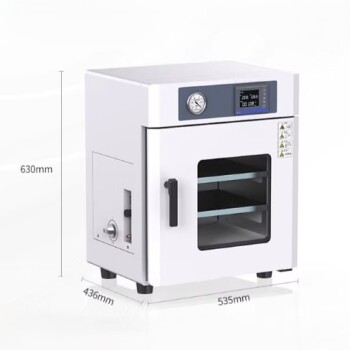
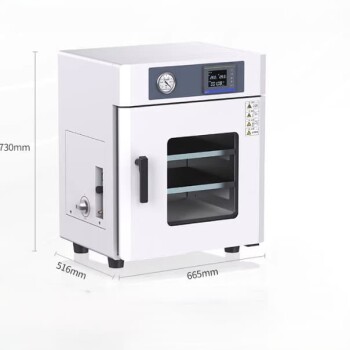
Laboratory Scientific Electric Heating Blast Drying Oven

Laboratory Scientific Electric Heating Blast Drying Oven

The desktop fast autoclave sterilizer is a compact and reliable device used for rapid sterilization of medical, pharmaceutical, and research items.

High Temperature Muffle Oven Furnace for Laboratory Debinding and Pre Sintering

High Temperature Muffle Oven Furnace for Laboratory Debinding and Pre Sintering

KT-MD High temperature debinding and pre-sintering furnace for ceramic materials with various molding processes. Ideal for electronic components such as MLCC and NFC.

High Temperature Constant Temperature Heating Circulator Water Bath Chiller Circulator for Reaction Bath

High Temperature Constant Temperature Heating Circulator Water Bath Chiller Circulator for Reaction Bath

Efficient and reliable, KinTek KHB Heating Circulator is perfect for your lab needs. With a max. heating temperature of up to 300℃, it features accurate temperature control and fast heating.

1200℃ Muffle Furnace Oven for Laboratory

1200℃ Muffle Furnace Oven for Laboratory

Upgrade your lab with our 1200℃ Muffle Furnace. Achieve fast, precise heating with Japan alumina fibers and Molybdenum coils. Features TFT touch screen controller for easy programming and data analysis. Order now!

5L Heating Chilling Circulator Cooling Water Bath Circulator for High and Low Temperature Constant Temperature Reaction

5L Heating Chilling Circulator Cooling Water Bath Circulator for High and Low Temperature Constant Temperature Reaction

KinTek KCBH 5L Heating Chilling Circulator - Ideal for labs and industrial conditions with multi-functional design and reliable performance.

Benchtop Laboratory Freeze Dryer for Lab Use

Benchtop Laboratory Freeze Dryer for Lab Use

Premium benchtop laboratory freeze dryer for lyophilization, preserving samples with ≤ -60°C cooling. Ideal for pharmaceuticals & research.

Vertical Laboratory Tube Furnace

Vertical Laboratory Tube Furnace

Elevate your experiments with our Vertical Tube Furnace. Versatile design allows for operation under various environments and heat treatment applications. Order now for precise results!

Vacuum Heat Treat and Pressure Sintering Furnace for High Temperature Applications

Vacuum Heat Treat and Pressure Sintering Furnace for High Temperature Applications

Vacuum pressure sintering furnaces are designed for high temperature hot pressing applications in metal and ceramic sintering. Its advanced features ensure precise temperature control, reliable pressure maintenance, and a robust design for seamless operation.

Dental Porcelain Zirconia Sintering Ceramic Furnace Chairside with Transformer

Dental Porcelain Zirconia Sintering Ceramic Furnace Chairside with Transformer

Experience top-notch sintering with Chairside Sintering Furnace with Transformer. Easy to operate, noise-free pallet, and automatic temperature calibration. Order now!

Evaporation Crucible for Organic Matter

Evaporation Crucible for Organic Matter

An evaporation crucible for organic matter, referred to as an evaporation crucible, is a container for evaporating organic solvents in a laboratory environment.

Platinum Sheet Electrode for Laboratory and Industrial Applications

Platinum Sheet Electrode for Laboratory and Industrial Applications

Elevate your experiments with our Platinum Sheet Electrode. Crafted with quality materials, our safe and durable models can be tailored to fit your needs.

Electron Beam Evaporation Coating Oxygen-Free Copper Crucible and Evaporation Boat

Electron Beam Evaporation Coating Oxygen-Free Copper Crucible and Evaporation Boat

Electron Beam Evaporation Coating Oxygen-Free Copper Crucible enables precise co-deposition of various materials. Its controlled temperature and water-cooled design ensure pure and efficient thin film deposition.

Engineering Advanced Fine Ceramics Alumina Crucibles (Al2O3) for Thermal Analysis TGA DTA

Engineering Advanced Fine Ceramics Alumina Crucibles (Al2O3) for Thermal Analysis TGA DTA

TGA/DTA thermal analysis vessels are made of aluminum oxide (corundum or aluminum oxide). It can withstand high temperature and is suitable for analyzing materials that require high temperature testing.

Lab Blown Film Extrusion Three Layer Co-Extrusion Film Blowing Machine

Lab Blown Film Extrusion Three Layer Co-Extrusion Film Blowing Machine

Lab blown film extrusion is mainly used to detect the feasibility of film blowing of polymer materials and the colloid condition in the materials, as well as the dispersion of colored dispersions, controlled mixtures, and extrudates;

Laboratory manual slicer

Laboratory manual slicer

Manual microtome is a high-precision cutting device designed for laboratories, industry and medical fields. It is suitable for the preparation of thin slices of various materials such as paraffin samples, biological tissues, battery materials, food, etc.

Shaking Incubators for Diverse Laboratory Applications

Shaking Incubators for Diverse Laboratory Applications

Precision lab shaking incubators for cell culture & research. Quiet, reliable, customizable. Get expert advice today!

Custom PTFE Teflon Parts Manufacturer for PTFE Mesh F4 Sieve

Custom PTFE Teflon Parts Manufacturer for PTFE Mesh F4 Sieve

PTFE mesh sieve is a specialized test sieve designed for particle analysis in various industries, featuring a non-metallic mesh woven from PTFE filament. This synthetic mesh is ideal for applications where metal contamination is a concern . PTFE sieves are crucial for maintaining the integrity of samples in sensitive environments, ensuring accurate and reliable results in particle size distribution analysis.

Custom PTFE Teflon Parts Manufacturer for Culture Dish and Evaporation Dish

Custom PTFE Teflon Parts Manufacturer for Culture Dish and Evaporation Dish

The PTFE culture dish evaporating dish is a versatile laboratory tool known for its chemical resistance and high-temperature stability. PTFE, a fluoropolymer, offers exceptional non-stick properties and durability, making it ideal for various applications in research and industry, including filtration, pyrolysis, and membrane technology.

Twin Screw Extruder Plastic Granulation Machine

Twin Screw Extruder Plastic Granulation Machine

Twin screw extruder plastic granulation machine is designed for the mixing and processing experiments of engineering plastics, modified plastics, waste plastics and masterbatches.

Vacuum Cold Trap Direct Cold Trap Chiller

Vacuum Cold Trap Direct Cold Trap Chiller

Improve vacuum system efficiency and extend pump life with our Direct Cold Trap. No chilling fluid required, compact design with swivel casters. Stainless steel and glass options available.


Leave Your Message