Knowledge Why is a freeze dryer used instead of conventional drying for energy sugarcane? Preserve Your Material Integrity
Author avatar

Tech Team · Kintek Solution

Updated 1 day ago

Why is a freeze dryer used instead of conventional drying for energy sugarcane? Preserve Your Material Integrity


The selection of a freeze dryer over conventional drying is driven by the need for absolute sample integrity. While conventional drying relies on heat that can alter the material, freeze drying removes moisture through sublimation, ensuring the energy sugarcane solids remain chemically and structurally unchanged after hydrothermal pretreatment.

Core Takeaway: Conventional drying introduces thermal stress that can skew analytical data by degrading fibers and altering chemical bonds. Freeze drying is the only method that guarantees the preservation of the biomass's original porosity and chemical composition, which is non-negotiable for accurate lignin and compositional analysis.

Preserving Biomass Integrity

To understand why freeze drying is superior in this context, one must look at how the drying mechanism interacts with the pretreated biomass.

Preventing Thermal Degradation

Conventional drying methods essentially "cook" the sample to evaporate water. This application of heat can initiate unwanted chemical reactions.

Freeze drying operates at low temperatures, removing water without thermal stress. This prevents the degradation of heat-sensitive components within the sugarcane fibers.

Avoiding Structural Collapse

When biomass is dried with heat, the surface tension of evaporating water can pull the fiber network together. This leads to a phenomenon often called "hornification," where the structure collapses and hardens.

Freeze drying locks the physical structure in place by freezing the water first, then removing it as gas. This maintains the original porosity and surface area of the pretreated solids.

Ensuring Analytical Accuracy

The ultimate goal of processing these samples is usually characterization or downstream conversion. The drying method dictates the reliability of this data.

Accurate Chemical Composition

If the sample is altered during drying, the baseline data for the research is compromised.

By preserving the original chemical structure, freeze drying ensures that the "dry weight" composition reflects the actual state of the biomass immediately after pretreatment.

Precision in Lignin Measurement

Lignin content analysis is particularly sensitive to sample preparation.

Heat-induced structural changes can make lignin more difficult to extract or measure accurately. Freeze drying ensures the lignin remains accessible and chemically stable for precise quantification.

Understanding the Trade-offs

While freeze drying is scientifically superior for analysis, it is not without operational costs.

Higher Resource Consumption

Freeze drying is an energy-intensive process compared to simple oven drying. It requires significantly more electricity to maintain vacuum and freezing temperatures.

Process Duration

It is a slow process. Removing moisture via sublimation takes considerably longer than rapid heat evaporation, potentially creating a bottleneck in high-throughput workflows.

Making the Right Choice for Your Goal

The decision between freeze drying and conventional drying depends entirely on the fidelity required by your downstream application.

  • If your primary focus is analytical precision: You must use freeze drying to ensure that chemical composition and lignin data are statistically accurate and reproducible.
  • If your primary focus is moisture removal for combustion: Conventional drying is likely sufficient, as structural collapse does not significantly impact the fuel value of the solids.

Choose the method that protects the specific data points or material properties essential to your project's success.

Summary Table:

Feature Freeze Drying (Sublimation) Conventional Drying (Heat)
Mechanism Low-temp sublimation under vacuum High-temp evaporation
Structural Integrity Preserves porosity and prevents collapse Causes structural collapse (hornification)
Chemical Stability Prevents thermal degradation Risks heat-induced chemical changes
Lignin Analysis High precision and accessibility Potential measurement skewing
Processing Speed Slow, batch-based Rapid, continuous potential
Operational Cost Higher energy consumption Lower energy consumption

Elevate Your Biomass Research with KINTEK Precision

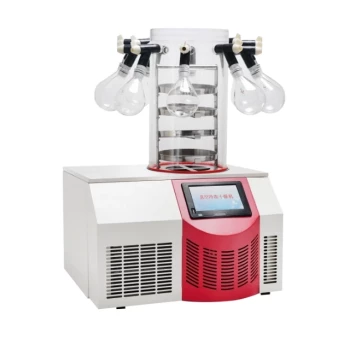
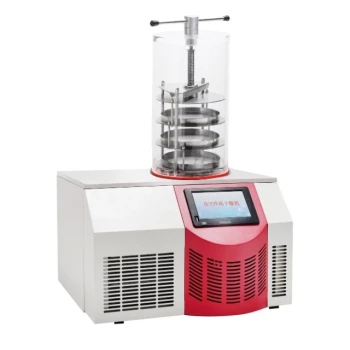
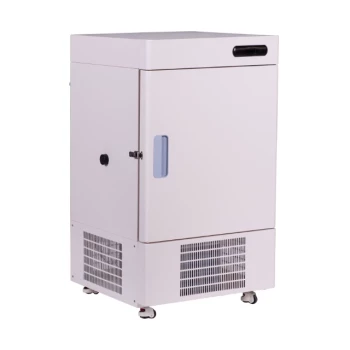
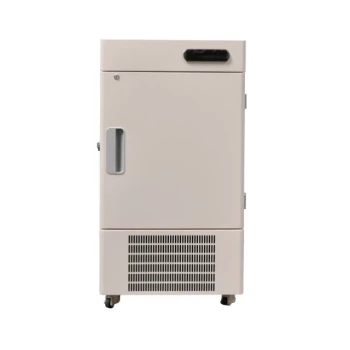
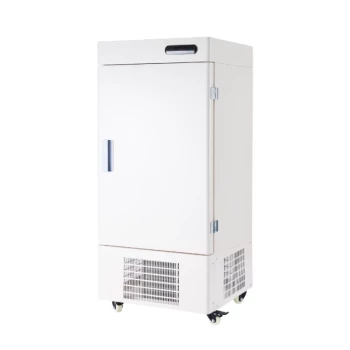
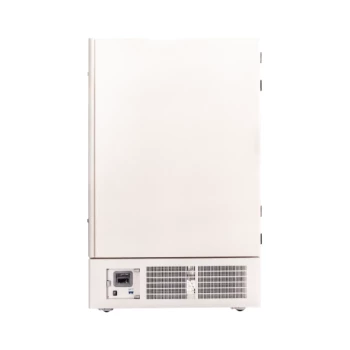
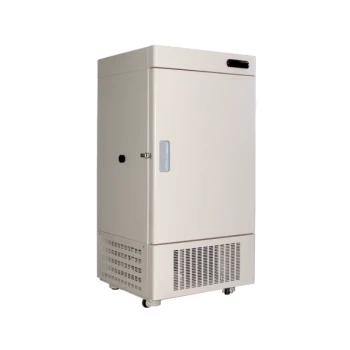
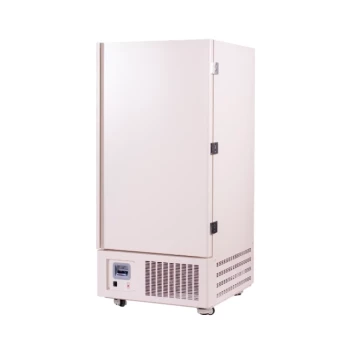
Don't let thermal degradation compromise your analytical results. KINTEK specializes in advanced laboratory solutions designed to maintain the highest standards of sample integrity. Whether you are conducting hydrothermal pretreatment on energy sugarcane or complex chemical characterization, our comprehensive range of cooling solutions—including high-performance freeze dryers, cold traps, and ULT freezers—ensures your materials remain chemically and structurally unchanged.

From high-temperature high-pressure reactors for pretreatment to precision crushing and milling systems for sample preparation, KINTEK provides the essential tools to empower your research. Protect your data and optimize your laboratory workflow today.

Contact KINTEK for a Consultation

References

  1. Ankita Juneja, Vijay Singh. Chemical Free Two-Step Hydrothermal Pretreatment to Improve Sugar Yields from Energy Cane. DOI: 10.3390/en13215805

This article is also based on technical information from Kintek Solution Knowledge Base .

Related Products

People Also Ask

Related Products

Benchtop Laboratory Freeze Dryer for Lab Use

Benchtop Laboratory Freeze Dryer for Lab Use

Premium benchtop laboratory freeze dryer for lyophilization, preserving samples with ≤ -60°C cooling. Ideal for pharmaceuticals & research.

Vacuum Cold Trap Chiller Indirect Cold Trap Chiller

Vacuum Cold Trap Chiller Indirect Cold Trap Chiller

Boost vacuum system efficiency and prolong pump life with our Indirect Cold Trap. Built-in chilling system with no need for fluid or dry ice. Compact design and easy to use.

Oil Free Diaphragm Vacuum Pump for Laboratory and Industrial Use

Oil Free Diaphragm Vacuum Pump for Laboratory and Industrial Use

Oil-free diaphragm vacuum pump for labs: clean, reliable, chemical-resistant. Ideal for filtration, SPE, and rotary evaporation. Maintenance-free operation.

Small Vacuum Heat Treat and Tungsten Wire Sintering Furnace

Small Vacuum Heat Treat and Tungsten Wire Sintering Furnace

The small vacuum tungsten wire sintering furnace is a compact experimental vacuum furnace specially designed for universities and scientific research institutes. The furnace features a CNC welded shell and vacuum piping to ensure leak-free operation. Quick-connect electrical connections facilitate relocation and debugging, and the standard electrical control cabinet is safe and convenient to operate.

Heated Hydraulic Press Machine with Heated Plates for Vacuum Box Laboratory Hot Press

Heated Hydraulic Press Machine with Heated Plates for Vacuum Box Laboratory Hot Press

Enhance your lab's precision with our lab press for vacuum box. Press pills and powders with ease and precision in a vacuum environment, reducing oxidation and improving consistency. Compact and easy to use with a digital pressure gauge.

Vacuum Hot Press Furnace Machine for Lamination and Heating

Vacuum Hot Press Furnace Machine for Lamination and Heating

Experience clean and precise lamination with Vacuum Lamination Press. Perfect for wafer bonding, thin-film transformations, and LCP lamination. Order now!

Circulating Water Vacuum Pump for Laboratory and Industrial Use

Circulating Water Vacuum Pump for Laboratory and Industrial Use

Efficient circulating water vacuum pump for labs - oil-free, corrosion-resistant, quiet operation. Multiple models available. Get yours now!

Laboratory Hydraulic Press Lab Pellet Press for Button Battery

Laboratory Hydraulic Press Lab Pellet Press for Button Battery

Efficiently prepare samples with our 2T Button Battery Press. Ideal for material research labs and small-scale production. Small footprint, lightweight, and vacuum-compatible.

30T 40T Split Automatic Heated Hydraulic Press Machine with Heated Plates for Laboratory Hot Press

30T 40T Split Automatic Heated Hydraulic Press Machine with Heated Plates for Laboratory Hot Press

Discover our split automatic heated lab press 30T/40T for precise sample preparation in material research, pharmacy, ceramics, and electronics industries. With a small footprint and heating up to 300°C, it's perfect for processing under vacuum environment.

Large Vertical Graphite Vacuum Graphitization Furnace

Large Vertical Graphite Vacuum Graphitization Furnace

A large vertical high-temperature graphitization furnace is a type of industrial furnace used for the graphitization of carbon materials, such as carbon fiber and carbon black. It is a high-temperature furnace that can reach temperatures of up to 3100°C.

Vacuum Bellows for Efficient Connection and Stable Vacuum in High-Performance Systems

Vacuum Bellows for Efficient Connection and Stable Vacuum in High-Performance Systems

Discover high-quality vacuum bellows for stable vacuum in high-performance systems. Made from 304 and 316 stainless steel, these bellows ensure efficient connections and excellent sealing. Ideal for

Vacuum Heat Treat Furnace with Ceramic Fiber Liner

Vacuum Heat Treat Furnace with Ceramic Fiber Liner

Vacuum furnace with polycrystalline ceramic fiber insulation liner for excellent heat insulation and uniform temperature field. Choose from 1200℃ or 1700℃ max. working temperature with high vacuum performance and precise temperature control.

Custom PTFE Teflon Parts Manufacturer for PTFE Tweezers

Custom PTFE Teflon Parts Manufacturer for PTFE Tweezers

PTFE tweezers inherit the excellent physical and chemical properties of PTFE, such as high temperature resistance, cold resistance, acid and alkali resistance, and corrosion resistance to most organic solvents.

Vacuum Heat Treat Sintering Brazing Furnace

Vacuum Heat Treat Sintering Brazing Furnace

A vacuum brazing furnace is a type of industrial furnace used for brazing, a metalworking process that joins two pieces of metal using a filler metal that melts at a lower temperature than the base metals. Vacuum brazing furnaces are typically used for high-quality applications where a strong, clean joint is required.

Graphite Vacuum Furnace IGBT Experimental Graphitization Furnace

Graphite Vacuum Furnace IGBT Experimental Graphitization Furnace

IGBT experimental graphitization furnace, a tailored solution for universities and research institutions, with high heating efficiency, user-friendliness, and precise temperature control.

Lab-Scale Vacuum Induction Melting Furnace

Lab-Scale Vacuum Induction Melting Furnace

Get precise alloy composition with our Vacuum Induction Melting Furnace. Ideal for aerospace, nuclear energy, and electronic industries. Order now for effective smelting and casting of metals and alloys.

Graphite Vacuum Continuous Graphitization Furnace

Graphite Vacuum Continuous Graphitization Furnace

High-temperature graphitization furnace is a professional equipment for graphitization treatment of carbon materials. It is a key equipment for the production of high-quality graphite products. It has high temperature, high efficiency and uniform heating. It is suitable for various high-temperature treatments and graphitization treatments. It is widely used in metallurgy, electronics, aerospace, etc. industry.

Graphite Vacuum Furnace Bottom Discharge Graphitization Furnace for Carbon Materials

Graphite Vacuum Furnace Bottom Discharge Graphitization Furnace for Carbon Materials

Bottom-out graphitization furnace for carbon materials, ultra-high temperature furnace up to 3100°C, suitable for graphitization and sintering of carbon rods and carbon blocks. Vertical design, bottom discharging, convenient feeding and discharging, high temperature uniformity, low energy consumption, good stability, hydraulic lifting system, convenient loading and unloading.

Horizontal High Temperature Graphite Vacuum Graphitization Furnace

Horizontal High Temperature Graphite Vacuum Graphitization Furnace

Horizontal Graphitization Furnace: This type of furnace is designed with the heating elements placed horizontally, allowing for uniform heating of the sample. It's well-suited for graphitizing large or bulky samples that require precise temperature control and uniformity.

Graphite Vacuum Furnace High Thermal Conductivity Film Graphitization Furnace

Graphite Vacuum Furnace High Thermal Conductivity Film Graphitization Furnace

The high thermal conductivity film graphitization furnace has uniform temperature, low energy consumption and can operate continuously.


Leave Your Message