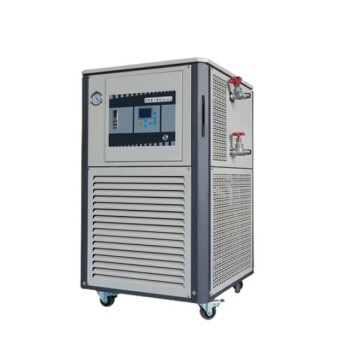
A precision PID controller is the critical component that governs the structural integrity of chrysotile fibers during hydrothermal synthesis. Because the growth kinetics of these nanotubes are incredibly sensitive to thermal changes, this specific control mechanism is required to maintain temperature fluctuations within a strict range—typically ±2 °C—to ensure successful crystallization.
The synthesis of chrysotile fibers relies on a stable thermal environment to facilitate consistent nucleation and crystal growth. Without the tight regulation provided by a precision PID controller, temperature instability leads to structural defects, varying dimensions, and material contamination.
The Mechanics of Crystal Growth
Controlling Sensitive Growth Kinetics
The hydrothermal synthesis process is not merely about reaching a specific temperature; it is about maintaining it with exactitude. The growth kinetics of chrysotile nanotubes react sharply to even minor thermal deviations.
A precision PID (Proportional-Integral-Derivative) controller continuously adjusts the heating output to counteract these deviations. This ensures that the energy supplied to the system remains constant, allowing the chemical reaction to proceed at a steady, predictable rate.
Stabilizing Nucleation
Successful synthesis begins with stable nucleation. This is the initial step where the crystal structure begins to form.
If the temperature fluctuates during this phase, nucleation becomes erratic. A PID controller creates the stable environment necessary for crystals to nucleate uniformly, setting the stage for consistent fiber development.
Impact on Fiber Quality and Morphology
Achieving Uniform Dimensions
For the fibers to be useful in advanced applications, they must possess uniform tube diameters and lengths.
Temperature instability causes uneven growth rates, leading to a batch of fibers with vastly different physical dimensions. Precision control ensures that every fiber experiences the same growth conditions, resulting in a homogeneous final product.
Preserving Lattice Integrity
The internal quality of the fiber is just as important as its external shape. The controller ensures the formation of intact lattice structures.
A steady temperature allows the atoms to arrange themselves perfectly within the crystal lattice. This reduces defects at the atomic level, which is essential for the mechanical and chemical stability of the fibers.
Understanding the Risks of Instability
Preventing Impurity Phases
One of the most significant risks in hydrothermal synthesis is the formation of impurity phases. These are unwanted materials that form when the temperature drifts outside the optimal reaction window.
Without a PID controller to lock the temperature in, the chemical equilibrium shifts, allowing non-chrysotile structures to develop and contaminate the sample.
Avoiding Fiber Breakage
Thermal fluctuations do not just alter growth; they can physically damage existing structures.
Rapid changes in temperature can cause stress within the developing crystal. This instability is a primary cause of fiber breakage, resulting in fragmented or structurally comprised nanotubes rather than long, continuous fibers.
Making the Right Choice for Your Synthesis
To maximize the yield and quality of your chrysotile fibers, align your equipment capabilities with your specific output goals.
- If your primary focus is Structural Purity: Ensure your PID controller is tuned to eliminate overshoot, preventing the formation of unwanted impurity phases.
- If your primary focus is Uniform Morphology: Prioritize a heating system with high-frequency sampling to keep fluctuations strictly within the ±2 °C range for consistent diameters.
Precision in temperature control is not a luxury; it is the defining factor between a flawed sample and a perfect crystal lattice.
Summary Table:
| Feature | Impact of Precision PID Control | Consequence of Thermal Instability |
|---|---|---|
| Nucleation | Stable and uniform crystal formation | Erratic nucleation and structural defects |
| Growth Kinetics | Consistent, predictable reaction rates | Uneven fiber diameters and lengths |
| Lattice Integrity | Perfect atomic arrangement | High defect rates and mechanical weakness |
| Purity | Eliminates unwanted impurity phases | Formation of non-chrysotile contaminants |
| Morphology | Long, continuous, unbroken fibers | Thermal stress leading to fiber breakage |
Elevate Your Materials Synthesis with KINTEK Precision
Achieving the perfect crystal lattice requires absolute thermal control. KINTEK specializes in advanced laboratory equipment designed for high-stakes research, including high-temperature high-pressure reactors and autoclaves perfectly suited for hydrothermal synthesis.
Whether you are developing chrysotile nanotubes or advanced battery materials, our systems provide the precision PID regulation needed to eliminate impurity phases and ensure uniform morphology. From muffle and vacuum furnaces to crushing systems and hydraulic presses, KINTEK provides the comprehensive tools your lab needs for superior material processing.
Ready to optimize your synthesis yield? Contact our technical experts today to find the ideal heating and pressure solution for your specific application.
References
- Roman Nikolaevich Yastrebinsky, Anastasia Vladislavovna Akimenko. Application of Organosilicon Modifier Based on Tetraethoxysilane for the Production of Heat-Resistant Chrysotile Fibers and Reinforced Cement Composites. DOI: 10.3390/fib11100080
This article is also based on technical information from Kintek Solution Knowledge Base .
Related Products
- High Pressure Laboratory Autoclave Reactor for Hydrothermal Synthesis
- Custom PTFE Teflon Parts Manufacturer for Hydrothermal Synthesis Reactor Polytetrafluoroethylene Carbon Paper and Carbon Cloth Nano-growth
- Customizable Laboratory High Temperature High Pressure Reactors for Diverse Scientific Applications
- Electric Rotary Kiln Small Rotary Furnace Biomass Pyrolysis Plant
- Customizable High Pressure Reactors for Advanced Scientific and Industrial Applications
People Also Ask
- What role does a high-pressure reactor (autoclave) play in the synthesis of NiCuFe-LDH? Master Hydrothermal Growth
- What Role Does a High-Pressure Reactor or Autoclave Play in HA Catalyst Synthesis? Achieve High Surface Area Materials
- What equipment is required for hydrothermal synthesis of Ga0.25Zn4.67S5.08? Optimize Your Semiconductor Production
- What is the function of a high-pressure reactor in the hydrothermal synthesis of boehmite? Expert Process Insights
- What role does an autoclave play in the synthesis of MnO2 nanofibers? Mastering Hydrothermal Growth