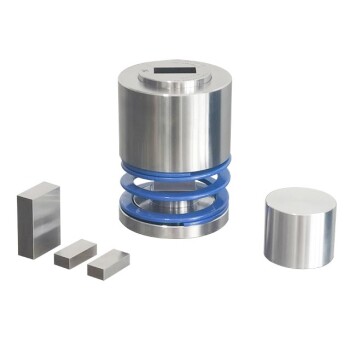
The high-pressure reactor is the indispensable "engine room" of solvothermal synthesis because it forces solvents into supercritical or subcritical states that are physically impossible to reach at atmospheric pressure. By operating in a sealed environment, these reactors allow solvents to remain in a liquid or fluid state at temperatures far exceeding their normal boiling points. This creates the necessary autogenous pressure to dissolve recalcitrant precursors, lower reaction activation energy, and provide the precise kinetic control required to engineer nanomaterials with specific morphologies and high crystallinity.
A high-pressure reactor is essential because it decouples the nucleation process from crystal growth by manipulating precursor solubility and reaction kinetics under extreme pressure. This environment facilitates the production of uniform, high-purity nanomaterials that cannot be synthesized via conventional open-vessel chemistry.
The Physics of the Pressurized Environment
Overcoming the Boiling Point Barrier
In a standard open vessel, a reaction is limited by the solvent's boiling point. A high-pressure reactor uses a sealed, high-strength structure to maintain the liquid phase at temperatures that would otherwise cause the solvent to evaporate.
Reaching Supercritical and Subcritical States
Sealed heating allows solvents to reach subcritical or supercritical states, where they exhibit unique physicochemical properties. These states significantly enhance the diffusion capabilities and molecular collision frequency of the reactants within the solution.
Generating Autogenous Pressure
As the temperature rises within the sealed volume, the solvent generates autogenous pressure. This pressure is the driving force that accelerates the dissolution of precursors, such as silicon or aluminum, which are often insoluble under standard conditions.
Impact on Chemical Kinetics and Morphology
Enhancing Precursor Solubility
High-pressure environments drastically increase the solubility of precursors, allowing for a more homogenous distribution of reactants. This is critical for ensuring that the chemical transformations required for nanomaterial synthesis occur smoothly and completely.
Separating Nucleation and Growth
One of the most vital functions of the reactor is the effective separation of nucleation and growth processes. By controlling the pressure and temperature ramp, researchers can trigger a burst of nucleation followed by a controlled growth phase, resulting in uniform particle size.
Controlling Morphology and Shape
The specific kinetic environment inside the reactor allows for the "tuning" of a material's shape. For instance, it facilitates the growth of antimony trisulfide (Sb2S3) into specific nanostructures or the formation of complex molecular sieve frameworks like ZSM-5.
Structural Integrity and Crystallinity
Driving Phase Transformations
The high-energy environment is essential for the transformation from a raw gel phase to a highly ordered crystalline structure. This results in nanomaterials with superior structural integrity and fewer defects compared to those produced at lower pressures.
Ensuring High-Purity Yields
Because the system is sealed, there is a significantly lower risk of contamination from the external environment. This ensures the production of high-purity substances that meet the rigorous standards required for advanced catalysts and specialized polymers.
Improving Experimental Reproducibility
Modern high-pressure reactors offer stable pressure control and precise temperature management. This level of control is fundamental for ensuring that experiments can be reproduced accurately in high-impact scientific research.
Understanding the Trade-offs and Safety Constraints
Material Compatibility and Corrosion
While reactors are often equipped with PTFE (Teflon) liners, chemical compatibility remains a concern. Strong acids or specific solvents can degrade liners over time, potentially introducing impurities or compromising the seal.
Kinetic Complexity and Monitoring
The primary disadvantage of a high-pressure reactor is the "black box" nature of the reaction. Because the vessel is sealed and pressurized, real-time monitoring of the reaction progress is difficult without specialized and expensive in-situ instrumentation.
Safety and Structural Fatigue
Operating at conditions far exceeding atmospheric pressure carries inherent risks. Reactors must be regularly inspected for structural fatigue or damage to the high-strength sealing structures to prevent catastrophic failure during high-temperature cycles.
How to Apply This to Your Synthesis Goals
Success in solvothermal synthesis requires matching your reactor configuration to your specific material requirements.
- If your primary focus is morphology control: Prioritize reactors with precise temperature ramping to clearly separate the nucleation and growth phases.
- If your primary focus is high crystallinity: Ensure your reactor is rated for high autogenous pressures to facilitate the complete phase transformation of your precursors.
- If your primary focus is corrosive chemical synthesis: Utilize high-quality PTFE or PPL liners and perform regular integrity checks to prevent vessel damage.
- If your primary focus is industrial scalability: Look for reactors with high-strength sealing structures that offer long-term durability over repeated heating and cooling cycles.
By mastering the high-pressure environment, you gain the ability to synthesize advanced functional materials with properties that are simply unattainable through traditional benchtop chemistry.
Summary Table:
| Key Feature | Solvothermal Benefit | Impact on Nanomaterials |
|---|---|---|
| Supercritical State | Enhanced diffusion & molecular collision | Ensures uniform particle size distribution |
| Autogenous Pressure | Dissolves recalcitrant precursors | Facilitates high-purity chemical yields |
| Kinetic Control | Separates nucleation from crystal growth | Allows for precise tuning of morphology |
| Sealed Environment | Prevents solvent evaporation at high temps | Drives transformation to high-order crystals |
| Thermal Stability | Reliable phase transformation energy | Produces materials with fewer structural defects |
Elevate Your Nanomaterial Research with KINTEK
Precision is the heartbeat of solvothermal synthesis. At KINTEK, we specialize in high-performance high-temperature high-pressure reactors and autoclaves engineered to withstand extreme conditions while providing the stable kinetic control your research demands.
From achieving perfect morphology to ensuring high-purity yields, our equipment—including muffle furnaces, vacuum systems, and precision hydraulic presses—is designed to support every stage of your laboratory workflow. Whether you are a researcher focused on crystal growth or a lab manager seeking industrial-grade reliability, KINTEK delivers the durability and precision you need.
Ready to optimize your synthesis results? Contact our technical experts today to find the perfect reactor configuration for your specific material goals!
References
- Priyanka Verma, Hiromi Yamashita. Amine Functionalization Within Hierarchically‐Porous Zeotype Framework for Plasmonic Catalysis over PdAu Nanoparticles. DOI: 10.1002/cctc.202201182
This article is also based on technical information from Kintek Solution Knowledge Base .
Related Products
- Customizable Laboratory High Temperature High Pressure Reactors for Diverse Scientific Applications
- Customizable High Pressure Reactors for Advanced Scientific and Industrial Applications
- Stainless High Pressure Autoclave Reactor Laboratory Pressure Reactor
- Visual High-Pressure Reactor for In-Situ Observation
- Mini SS High Pressure Autoclave Reactor for Laboratory Use
People Also Ask
- How do high-pressure and high-temperature reactors ensure the effective treatment of lignocellulosic wastewater in WAO?
- What equipment is required for high-pressure high-temperature reactions? Master Extreme Chemistry Safely
- How do you control high pressure in a reactor? A Guide to Safe & Stable Operation
- How does initial oxygen pressure affect the wet oxidation of pharmaceutical sludge? Master Your Oxidation Depth
- Why is argon better than nitrogen for inert atmosphere? Ensure Absolute Reactivity & Stability