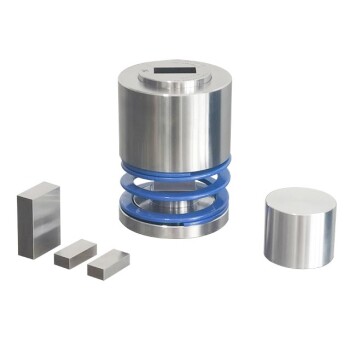
A high-pressure stainless steel reactor is required because it creates a sealed hydrothermal environment where elevated temperature and autogenous pressure drive the chemical coordination of boron into the carbon nitride framework. This specific environment provides the thermodynamic energy necessary to form stable B-N coordination bonds, a process that is chemically impossible at standard atmospheric pressure and temperature.
The reactor acts as a high-energy pressure cooker that forces boric acid species to interact uniformly with the carbon nitride surface. By surpassing the standard boiling point of the solvent, the system facilitates molecular diffusion and bond formation that traditional open-vessel heating cannot achieve.
The Necessity of the Hydrothermal Environment
Creating Superheated Conditions
A sealed reactor allows the solvent to be heated to temperatures like 120 °C, well above its standard boiling point. In this "superheated" state, the solvent's physical properties change, significantly increasing the solubility and reactivity of the boric acid.
Generating Autogenous Pressure
As the temperature rises within the closed stainless steel vessel, autogenous pressure builds up naturally. This high-pressure environment is critical for increasing molecular collision frequency, ensuring that boron atoms effectively reach the active sites on the carbon nitride surface.
Driving Thermodynamics
The combination of heat and pressure provides the thermodynamic energy required to overcome reaction barriers. This energy is the "engine" that enables the chemical modification of the ultrathin carbon nitride layers without destroying their delicate structure.
Facilitating B-N Coordination Bonds
Forming Stable Chemical Linkages
The primary goal of this synthesis is the formation of B-N coordination bonds. These bonds require a specific energy threshold to form; the high-pressure reactor ensures that boron atoms are successfully integrated into the carbon nitride framework rather than just sitting on the surface.
Ensuring Surface Uniformity
High-pressure environments enhance the diffusion capabilities of the reactants. This ensures that the borate species are distributed across the ultrathin carbon nitride surface uniformly, preventing the clumping or uneven loading that often occurs in low-pressure synthesis.
Maintaining Structural Integrity
The controlled environment of a stainless steel autoclave allows for modification at relatively low temperatures (e.g., 120 °C to 160 °C) compared to solid-state methods. This "soft" chemistry approach preserves the ultrathin morphology of the carbon nitride, which is essential for its performance in catalytic applications.
Understanding the Technical Trade-offs
Material Limitations and Corrosion
While stainless steel provides the necessary mechanical strength to withhold high pressure, it can be susceptible to corrosion from acidic precursors like boric acid. For this reason, many reactors utilize a Teflon (PTFE) liner to protect the steel while maintaining the pressure seal.
Pressure Management and Safety
Operating high-pressure reactors requires strict adherence to safety protocols and pressure ratings. If the reaction temperature exceeds the design limits of the vessel, the sealing structure may fail, leading to inconsistent results or equipment damage.
Scalability Constraints
Hydrothermal synthesis in high-pressure reactors is often a batch process, which can limit total throughput. Achieving the same level of B-N coordination in a continuous-flow system remains a significant engineering challenge compared to using a standard autoclave.
How to Apply This to Your Project
Making the Right Choice for Your Goal
To achieve high-quality boric acid modified ultrathin carbon nitride, your equipment choice should align with your specific research or production targets.
- If your primary focus is high bond stability: Use a reactor capable of maintaining at least 120 °C to 160 °C to ensure the formation of robust B-N coordination bonds.
- If your primary focus is maximum surface area: Prioritize a Teflon-lined autoclave to prevent metallic contamination and ensure the "soft" hydrothermal conditions that preserve the ultrathin structure.
- If your primary focus is high-yield uniformity: Opt for a reactor with a high-strength sealing structure to maintain consistent autogenous pressure, which drives uniform diffusion across the framework.
Selecting the appropriate high-pressure environment is the single most important factor in successfully engineering the molecular interface of modified carbon nitride.
Summary Table:
| Feature | Role in bCN Synthesis | Key Benefit |
|---|---|---|
| Superheated Solvent | Increases solubility/reactivity of boric acid | Faster, more efficient reaction |
| Autogenous Pressure | Increases molecular collision frequency | Uniform distribution of boron atoms |
| Thermodynamic Energy | Overcomes chemical reaction barriers | Formation of stable B-N coordination bonds |
| Sealed Environment | Enables low-temp "soft" chemistry (120-160°C) | Preserves delicate ultrathin morphology |
Elevate Your Material Synthesis with KINTEK
Achieve precision in your chemical modifications with KINTEK’s industry-leading high-pressure high-pressure reactors and autoclaves. Whether you are synthesizing modified carbon nitride or advanced catalysts, our equipment provides the stable hydrothermal environment necessary for superior B-N coordination and structural integrity.
Why choose KINTEK?
- Advanced Safety: High-strength sealing structures designed for consistent autogenous pressure.
- Corrosion Resistance: Premium PTFE-lined options to handle acidic precursors like boric acid.
- Comprehensive Lab Solutions: From high-temperature furnaces and hydraulic presses to specialized cooling solutions and ceramics.
Ready to optimize your research yield and ensure material uniformity? Contact our technical experts today to find the perfect reactor system for your laboratory needs!
References
- Yang Liu, Liqiang Jing. Improving CO2 photoconversion with ionic liquid and Co single atoms. DOI: 10.1038/s41467-023-36980-5
This article is also based on technical information from Kintek Solution Knowledge Base .
Related Products
- Stainless High Pressure Autoclave Reactor Laboratory Pressure Reactor
- Mini SS High Pressure Autoclave Reactor for Laboratory Use
- Customizable High Pressure Reactors for Advanced Scientific and Industrial Applications
- Customizable Laboratory High Temperature High Pressure Reactors for Diverse Scientific Applications
- High Pressure Laboratory Autoclave Reactor for Hydrothermal Synthesis
People Also Ask
- Why is a laboratory high-pressure reactor used in the hydrothermal synthesis of hydroxyapatite catalysts?
- What role does a laboratory high-pressure reactor play in the leaching process of spent cathode materials? Optimize Recovery
- Why is a laboratory high-pressure reactor necessary for synthesizing fly ash-based zeolite? Achieve Pure Crystallization
- What conditions do laboratory high-pressure reactors provide for HTC? Optimize Your Biochar Production Processes
- What is the function of a high-pressure reactor autoclave? Enhancing Cu/N Co-Doped Carbon Catalyst Synthesis