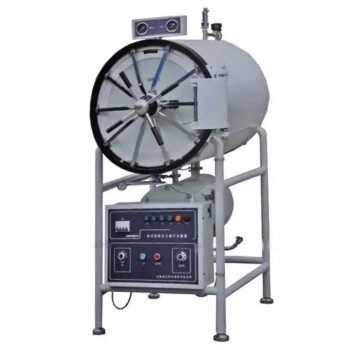
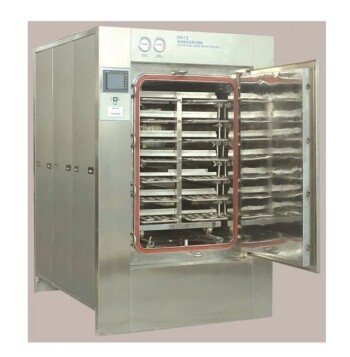
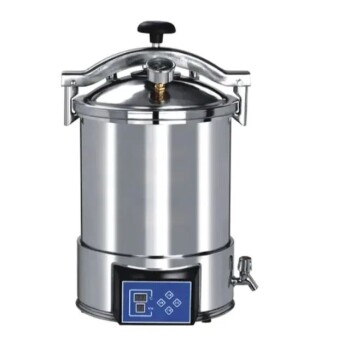
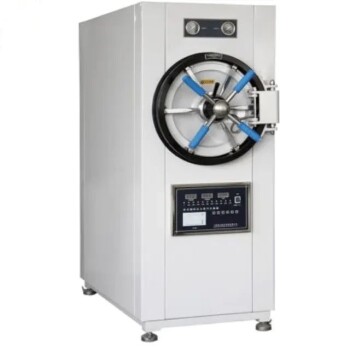
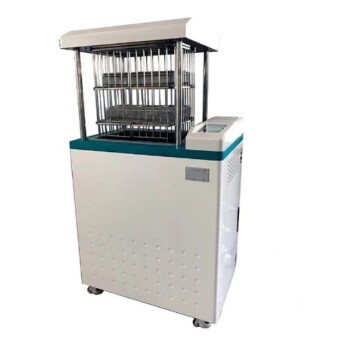
A high-strength sealed vessel is critical because it contains volatile ammonia gas and leverages internal pressure to drive the reaction. At elevated temperatures, such as 75°C, a sealed autoclave prevents the reagent from evaporating, ensuring the chemical environment remains stable and effective while physically forcing the ammonia into the biomass structure.
By containing the reaction, a sealed autoclave transforms ammonia's natural volatility into a mechanical advantage. It maintains a consistent alkaline environment and utilizes internal pressure to penetrate the biomass matrix, effectively severing the bonds between lignin and hemicellulose.
Managing Chemical Volatility
Preventing Reagent Loss
Ammonia is highly volatile, meaning it transitions easily from liquid to gas. This tendency is significantly increased at the elevated temperatures often used in pre-treatment, such as 75°C.
Without a sealed environment, the ammonia gas would rapidly escape the reaction vessel. A high-strength bottle or autoclave acts as a physical barrier, trapping the gas inside to ensure the reagent remains available for the duration of the process.
Maintaining Consistent Alkalinity
The effectiveness of this pre-treatment relies on maintaining a specific chemical environment. Ammonia provides the necessary alkaline medium required to alter the biomass structure.
If the vessel were open, the loss of ammonia gas would cause the concentration of the solution to drop unpredictably. A sealed system guarantees a constant ammonia concentration, ensuring the pH levels remain high enough to drive the reaction.
The Mechanical Role of Pressure
Penetrating the Biomass Matrix
Biomass has a complex, recalcitrant structure that resists chemical attack. Simply soaking biomass in a solution is often insufficient for deep treatment.
As the sealed vessel heats up, the trapped ammonia gas generates significant internal pressure. This pressure acts as a driving force, physically pushing ammonia molecules deep into the dense biomass matrix where they might not otherwise reach.
Breaking the Ester Bonds
The ultimate goal of this penetration is to disrupt the structural integrity of the biomass. Specifically, the ammonia targets the ester bonds that link lignin and hemicellulose.
By combining chemical alkalinity with physical pressure, the system effectively cleaves these bonds. This separation is what makes the cellulose more accessible for subsequent processing steps, such as enzymatic hydrolysis.
Understanding the Operational Trade-offs
Equipment Complexity and Cost
While high-strength sealed vessels maximize reaction efficiency, they introduce higher capital costs compared to open-vat systems. Autoclaves and reinforced reaction bottles are specialized equipment that require significant investment.
Safety and Monitoring Requirements
Operating a pressurized system at high temperatures introduces safety risks that must be managed carefully. The potential for leaks or vessel failure requires strict adherence to safety protocols.
Operators must constantly monitor pressure levels and seal integrity. Unlike atmospheric reactions, a sealed high-pressure system does not allow for easy manual intervention once the heating process begins.
Making the Right Choice for Your Goal
To ensure the success of your biomass pre-treatment, you must align your equipment choice with your specific processing needs.
- If your primary focus is reaction efficiency: Prioritize an autoclave capable of sustaining higher pressures to maximize the penetration of ammonia into the biomass matrix.
- If your primary focus is process consistency: Ensure your reaction bottles have high-quality seals to prevent gas leakage and maintain a stable alkaline pH throughout the treatment.
The success of ammonia pre-treatment lies in using pressure to turn a volatile gas into a powerful penetrating agent.
Summary Table:
| Feature | Role in Ammonia Pre-treatment | Key Benefit |
|---|---|---|
| Sealed Environment | Prevents volatile ammonia gas from escaping | Maintains stable chemical concentration & pH |
| High-Strength Build | Withstands significant internal pressure build-up | Ensures operator safety during high-temp cycles |
| Pressure Generation | Drives ammonia deep into the biomass matrix | Breaks recalcitrant ester bonds efficiently |
| Temperature Control | Sustains optimal reaction heat (e.g., 75°C+) | Accelerates chemical disruption of lignin |
Elevate Your Biomass Research with KINTEK Precision Solutions
Maximize your reaction efficiency and ensure process safety with KINTEK’s high-performance laboratory equipment. Whether you are performing ammonia pre-treatment or complex chemical synthesis, our specialized range of high-temperature high-pressure reactors and autoclaves provides the durability and precise control required for the most demanding applications.
From crushing and milling systems for feedstock preparation to advanced cooling solutions and specialized ceramics, KINTEK is the trusted partner for researchers seeking consistent, scalable results. Don't let reagent loss or equipment failure stall your progress.
Ready to optimize your lab’s capabilities? Contact our technical experts today to find the perfect high-pressure solution for your biomass research goals.
References
- Lili Jia, Junhua Zhang. Comparison of the Delignifiability and Hydrolysability of Wheat Straw and Corn Stover in Aqueous Ammonia Pretreatment. DOI: 10.15376/biores.8.3.4505-4517
This article is also based on technical information from Kintek Solution Knowledge Base .
Related Products
- Mini SS High Pressure Autoclave Reactor for Laboratory Use
- Stainless High Pressure Autoclave Reactor Laboratory Pressure Reactor
- High Pressure Laboratory Autoclave Reactor for Hydrothermal Synthesis
- Desktop Fast High Pressure Laboratory Autoclave Sterilizer 16L 24L for Lab Use
- Laboratory High Pressure Horizontal Autoclave Steam Sterilizer for Lab Use
People Also Ask
- Why use high-pressure reactors for molecular sieve synthesis? Unlock Superior Crystallinity and Framework Control
- What are the advantages of using a high-pressure reactor like an autoclave? Maximize Liquefaction Speed & Yield
- Why are high-pressure reactors or autoclaves necessary for the synthesis of new functional materials? Unlock Precision.
- What is the function of a high-pressure reactor autoclave? Enhancing Cu/N Co-Doped Carbon Catalyst Synthesis
- How are high-pressure reactors used to prepare metaphosphate electrocatalysts? Master In-Situ Precursor Growth