The utilization of a high-temperature reactor is essential to facilitate the instantaneous mixing of precursor solutions, which is the primary requirement for triggering a controlled burst of nucleation. By maintaining a stable environment at approximately 300°C, the reactor provides the specific kinetic conditions necessary for the materials to spontaneously self-assemble into an ordered, high-quality composite structure.
The reactor does not merely heat the solution; it creates a precise kinetic environment that forces quasi-one-dimensional Sb2S3 nanorods to arrange in a hexagonal symmetry on antimony nanosheets, ensuring a stable and effective heterojunction.
The Mechanics of Kinetic Control
Triggering Instantaneous Nucleation
The primary function of the high-temperature reactor in this context is to support the hot injection technique.
This technique relies on the rapid introduction of precursors to cause a sudden spike in supersaturation. The reactor ensures that when this injection occurs, the mixing is instantaneous, triggering a simultaneous burst of nucleation across the solution.
Establishing Kinetic Conditions
Temperature acts as the "throttle" for the reaction kinetics.
By operating at a high temperature, specifically 300°C, the reactor provides the necessary thermal energy to drive the reaction forward at a specific rate. This high-energy state is required to overcome the activation energy barriers associated with forming complex heterostructures.
Structural Assembly and Quality
Facilitating Spontaneous Arrangement
The goal of this synthesis is not just to create material, but to create ordered material.
The kinetic conditions provided by the reactor facilitate a spontaneous arrangement mechanism. Instead of aggregating randomly, the components are energetically guided into a specific ordered structure.
Achieving Hexagonal Symmetry
Specifically, the reactor's environment promotes a hexagonal symmetrical arrangement.
This symmetry is critical for the resulting properties of the material. The high-temperature environment ensures that the quasi-one-dimensional Sb2S3 nanorods align correctly on the surface of the quasi-two-dimensional antimony nanosheets.
Forming the Heterojunction Interface
The ultimate output is a high-quality heterojunction composite material.
The reactor ensures that the interface between the nanorods and the nanosheets is chemically and structurally sound. Without this precise thermal control, the heterojunction might suffer from defects or poor interfacial contact.
Operational Considerations and Trade-offs
Sensitivity to Injection Speed
While the reactor provides the environment, the success of the process hinges on the speed of injection.
If the precursor injection is not sufficiently rapid, the "burst" of nucleation becomes a slow trickle. This results in uneven particle sizes and a failure to achieve the desired heterojunction uniformity, rendering the reactor's temperature control less effective.
Temperature Precision vs. Stability
Operating at 300°C requires rigorous temperature control.
Fluctuations in the reactor's temperature can disrupt the kinetic conditions required for the hexagonal arrangement. If the temperature drops significantly upon injection, the "spontaneous" ordering may fail, leading to amorphous or disordered structures.
Optimizing Your Synthesis Strategy
To ensure the successful synthesis of Sb2S3 nanorod and antimony nanosheet heterojunctions, focus on these operational priorities:
- If your primary focus is Structural Order: Ensure your reactor has high thermal mass or rapid recovery capabilities to maintain 300°C even after the introduction of cooler precursor solutions.
- If your primary focus is Material Uniformity: Prioritize the mechanics of the hot injection itself to guarantee the mixing is truly instantaneous, preventing staged nucleation.
Mastering the precise interplay between injection speed and reactor temperature is the defining factor in engineering high-performance composite heterojunctions.
Summary Table:
| Feature | Role in Hot Injection Process |
|---|---|
| Operating Temp | Stable 300°C for optimal kinetic energy |
| Nucleation Trigger | Facilitates instantaneous precursor mixing and supersaturation |
| Structural Goal | Promotes hexagonal symmetry and spontaneous arrangement |
| Interface Quality | Ensures defect-free contact between nanorods and nanosheets |
| Critical Success Factor | Rapid injection speed and high thermal stability |
Elevate Your Nanomaterial Synthesis with KINTEK
Precision is non-negotiable when engineering high-performance heterojunctions. KINTEK specializes in advanced laboratory equipment designed for rigorous research, including high-temperature high-pressure reactors and autoclaves that provide the thermal stability required for complex kinetic control.
Whether you are developing next-generation battery materials or complex semiconductor composites, our comprehensive range—from high-temperature furnaces (vacuum, CVD, atmosphere) to crushing and milling systems and PTFE consumables—ensures your lab achieves repeatable, high-quality results.
Ready to optimize your synthesis strategy? Contact KINTEK today to discover how our high-precision solutions can enhance your lab's efficiency and material quality.
References
- Zunyu Liu, Luying Li. Study of the growth mechanism of a self-assembled and ordered multi-dimensional heterojunction at atomic resolution. DOI: 10.1007/s12200-023-00091-2
This article is also based on technical information from Kintek Solution Knowledge Base .
Related Products
- Customizable Laboratory High Temperature High Pressure Reactors for Diverse Scientific Applications
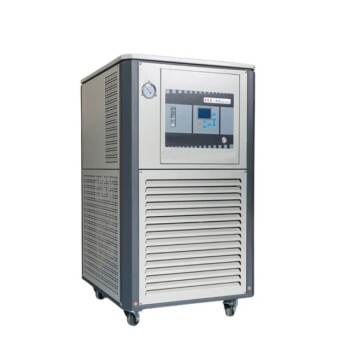
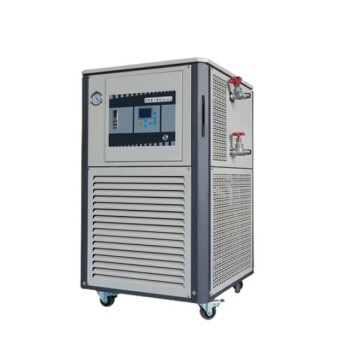
- High Temperature Constant Temperature Heating Circulator Water Bath Chiller Circulator for Reaction Bath
- High Pressure Laboratory Autoclave Reactor for Hydrothermal Synthesis
- Stainless High Pressure Autoclave Reactor Laboratory Pressure Reactor
- Customizable High Pressure Reactors for Advanced Scientific and Industrial Applications
People Also Ask
- How do high-pressure and high-temperature reactors ensure the effective treatment of lignocellulosic wastewater in WAO?
- What equipment is required for high-pressure high-temperature reactions? Master Extreme Chemistry Safely
- How do you control high pressure in a reactor? A Guide to Safe & Stable Operation
- Why is argon better than nitrogen for inert atmosphere? Ensure Absolute Reactivity & Stability
- How does initial oxygen pressure affect the wet oxidation of pharmaceutical sludge? Master Your Oxidation Depth