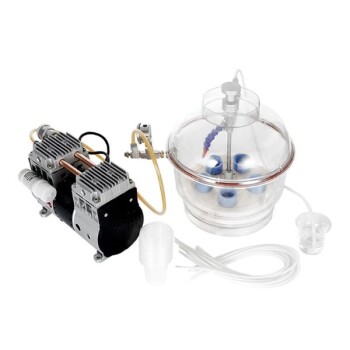
A laboratory vacuum degassing chamber is essential for preserving the structural integrity of bio-based epoxy and graphene composites. During the preparation phase, mechanical stirring and ultrasonic dispersion inevitably entrap microscopic air bubbles within the resin system. If not removed via vacuum, these bubbles harden into permanent defects, significantly compromising the material's density and mechanical strength.
Core Takeaway: While mixing is required to disperse graphene, it creates a secondary problem by aerating the resin. Degassing is the critical corrective step that prevents these air pockets from becoming stress concentration points, ensuring the final composite achieves its maximum potential strength.
The Consequence of Processing
To understand the necessity of a vacuum chamber, one must look at how the composite is created.
The Side Effect of Dispersion
To create a high-quality mixture, researchers must use mechanical stirring and ultrasonic dispersion.
While these methods are effective at distributing graphene throughout the epoxy, they act as aeration mechanisms. They mechanically force air into the viscous resin, creating a suspension of microscopic bubbles that will not escape naturally before the resin cures.
From Bubbles to Microporous Defects
If the mixture is cured immediately after stirring, the trapped air is locked in place.
These bubbles transform into microporous defects within the solid composite. The result is a material that looks solid to the naked eye but is internally riddled with voids.
The Impact on Mechanical Performance
The presence of air bubbles is not merely a cosmetic issue; it is a structural liability.
Creating Stress Concentration Points
A uniform material distributes load evenly. However, microporous defects act as stress concentration points.
When the composite is placed under load, stress accumulates rapidly at these void sites rather than dispersing through the matrix. This leads to crack initiation and premature mechanical failure at loads far below the material's theoretical limit.
Ensuring Lap Shear Strength
Degassing is directly linked to the lap shear strength of the final product.
By removing the voids, the vacuum process ensures a continuous, solid matrix. This continuity is required to transfer stress effectively between the resin and the graphene reinforcement.
Maximizing Density
A composite full of air bubbles has a lower density than a solid composite.
To achieve consistent, reproducible density metrics, the air must be evacuated. This ensures that the measured properties reflect the true nature of the bio-based epoxy and graphene, rather than the volume of trapped air.
Understanding the Risks
Skipping or rushing the degassing phase introduces significant variables into your research.
The Illusion of Strength
Without degassing, a researcher might attribute a material failure to the bio-based resin or the graphene concentration.
In reality, the failure may be caused solely by the processing defect (air bubbles). This leads to incorrect conclusions about the material's viability.
Incomplete Evacuation
Simply applying a vacuum is sometimes not enough; the process must be thorough.
If the vacuum is insufficient, the smallest bubbles—often the most difficult to remove from viscous epoxy—will remain. These residual defects can still act as failure points, negating the effort put into the mixing process.
Making the Right Choice for Your Goal
To ensure your composite performs as intended, apply the following guidelines based on your specific objectives:
- If your primary focus is maximum durability: Ensure a complete vacuum cycle to eliminate stress concentration points and optimize lap shear strength.
- If your primary focus is fundamental research: Standardize your degassing procedure to prevent microporous defects from creating variable density data across your samples.
By rigorously removing entrapped air, you ensure that your composite's performance is defined by its chemistry, not its defects.
Summary Table:
| Process Phase | Effect of Degassing | Impact on Final Composite |
|---|---|---|
| Post-Mixing | Removes entrapped air bubbles | Eliminates internal microporous defects |
| Curing | Creates a continuous solid matrix | Prevents crack-inducing stress points |
| Final Testing | Standardizes material density | Maximizes lap shear & mechanical strength |
Elevate Your Material Integrity with KINTEK
Don’t let microscopic air bubbles compromise your research. At KINTEK, we understand that the success of your bio-based epoxy and graphene composites depends on precision processing. We specialize in high-performance laboratory equipment, including high-temperature high-pressure reactors, autoclaves, and vacuum systems designed to eliminate defects and ensure structural excellence.
From advanced crushing and milling systems to high-temperature furnaces (CVD, vacuum, atmosphere) and hydraulic presses, KINTEK provides the comprehensive tools your lab needs for superior material synthesis and testing.
Ensure your composites achieve their theoretical maximum strength. Contact KINTEK today to find the perfect degassing solution for your laboratory!
References
- Sheikh Rehman, Panagiotis Karagiannidis. Βio-Based Epoxy/Amine Reinforced with Reduced Graphene Oxide (rGO) or GLYMO-rGO: Study of Curing Kinetics, Mechanical Properties, Lamination and Bonding Performance. DOI: 10.3390/nano12020222
This article is also based on technical information from Kintek Solution Knowledge Base .
Related Products
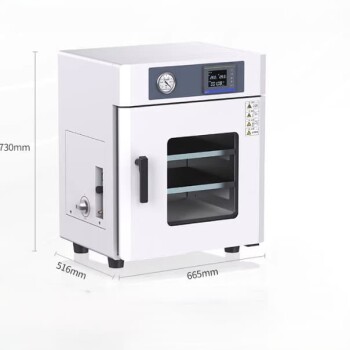
- 56L Vertical Laboratory Vacuum Drying Oven
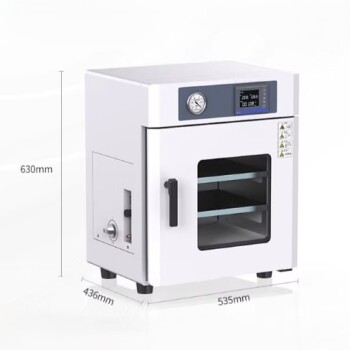
- 23L Laboratory Vacuum Drying Oven
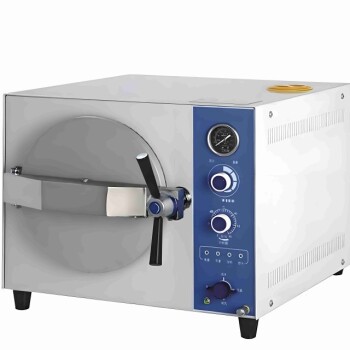
- Laboratory Sterilizer Lab Autoclave Pulsating Vacuum Desktop Steam Sterilizer
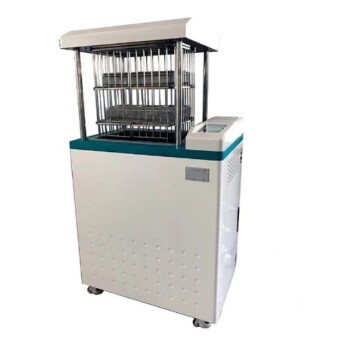
- Laboratory Sterilizer Lab Autoclave Pulse Vacuum Lifting Sterilizer
- Lab-Scale Vacuum Induction Melting Furnace
People Also Ask
- Why is a laboratory vacuum drying oven recommended for rice straw residues? Protect Your Biomass Integrity
- What role does a laboratory vacuum drying oven play in the preparation of modified multi-walled carbon nanotubes?
- What is the importance of using a laboratory vacuum drying oven? Preserving Slow-Release Microcapsule Integrity
- Why is a Laboratory Vacuum Drying Oven recommended for PBAT microspheres? Protect Sensitive Polymer Integrity
- What role does a laboratory vacuum drying oven play in processing nanoparticle powder samples? Protect Sample Integrity