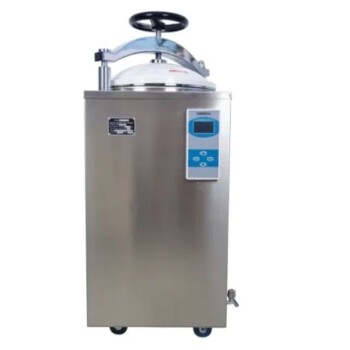
Knowledge Why is a Monel alloy autoclave required for Ferrocolumbite leaching? Essential Safety & Data Purity for HF Experiments
Author avatar

Tech Team · Kintek Solution

Updated 2 days ago

Why is a Monel alloy autoclave required for Ferrocolumbite leaching? Essential Safety & Data Purity for HF Experiments


A Monel alloy autoclave is non-negotiable for this process because standard containment materials are incapable of withstanding the aggressive corrosivity of hydrofluoric acid (HF), particularly under the stress of high temperature and pressure. Monel, a specialized nickel-copper alloy, provides the unique chemical stability required to prevent the reactor vessel from corroding, ensuring both the physical safety of the experiment and the chemical purity of your results.

Hydrofluoric acid at high temperatures destroys standard stainless steel vessels. Using a Monel alloy autoclave is the only way to maintain structural integrity and prevent dissolved metal impurities from ruining the leachate data.

The Challenge: Hydrofluoric Acid at High Parameters

The Limits of Stainless Steel

In many leaching experiments, standard stainless steel is the default material for autoclave construction. However, it is fundamentally unsuitable for processes involving hydrofluoric acid.

HF is distinctively corrosive, capable of attacking the protective oxide layers that typically shield stainless steel. When subjected to this acid, standard vessels degrade rapidly.

The Multiplier Effect of Heat and Pressure

The leaching of Ferrocolumbite requires high-temperature and high-pressure conditions. These parameters act as force multipliers for corrosion.

Under these intense conditions, the erosive effects of hydrofluoric acid accelerate. A vessel that might withstand mild exposure at room temperature will fail catastrophically under the operating conditions required for this specific leaching process.

The Solution: Why Monel Alloy is Critical

Exceptional Chemical Stability

Monel is a nickel-copper-based alloy engineered for high resistance to reducing acids. Unlike stainless steel, its chemical composition remains stable when exposed to aggressive HF environments.

This stability is not merely about extending the life of the equipment; it is a fundamental requirement for the reaction to proceed safely without the risk of vessel breach or failure.

Protecting Data Integrity

Beyond safety, the choice of autoclave material directly impacts the scientific validity of your experiment.

If a container dissolves even slightly during the process, materials from the vessel wall enter the solution. This creates metal impurity contamination in the leachate.

Using Monel prevents this dissolution. It ensures that the elements detected in your leachate come solely from the Ferrocolumbite ore, not from the degradation of your autoclave.

Common Pitfalls to Avoid

Underestimating Corrosive Potential

A common error is assuming that high-grade stainless steel is "good enough" for short durations.

The primary reference indicates that standard stainless steel cannot withstand these erosive effects. Attempting to use incompatible materials risks equipment destruction and hazardous chemical leaks.

Overlooking Leaching Contamination

Focusing solely on whether the vessel holds pressure ignores the chemical reality inside.

Even if a standard vessel does not burst, the corrosion process introduces foreign contaminants. This renders quantitative analysis of the leachate inaccurate, as the results will be skewed by dissolved container materials.

Making the Right Choice for Your Goal

To ensure the success of your Ferrocolumbite leaching experiments, align your equipment selection with your specific priorities:

  • If your primary focus is Operational Safety: You must use Monel alloy to prevent catastrophic vessel failure caused by HF corrosion under high pressure.
  • If your primary focus is Data Accuracy: You must use Monel alloy to eliminate the variable of metal impurity contamination caused by dissolving container walls.

The chemical hostility of hydrofluoric acid demands the specific nickel-copper resistance of Monel to guarantee both a safe lab environment and valid experimental data.

Summary Table:

Feature Standard Stainless Steel Monel Alloy (Nickel-Copper)
HF Acid Resistance Very Low (Degrades protective oxide layer) High (Resistant to reducing acids)
High Temp/Pressure Stability Poor (Accelerated corrosion/failure risk) Excellent (Maintains structural integrity)
Leachate Purity High Risk (Metal impurity contamination) High Purity (No vessel wall dissolution)
Operational Safety Hazardous (Risk of catastrophic breach) Secure (Engineered for aggressive media)

Secure Your Research with Specialized KINTEK Engineering

Don't compromise laboratory safety or experimental accuracy by using incompatible containment for aggressive media. KINTEK specializes in advanced laboratory equipment, providing high-performance high-temperature high-pressure reactors and autoclaves crafted from specialized alloys like Monel to withstand hydrofluoric acid and extreme leaching conditions.

Whether you are performing complex Ferrocolumbite leaching or high-pressure synthesis, our comprehensive portfolio—including crushing systems, hydraulic presses, and specialized ceramics—is designed to meet the rigorous demands of material science and chemical engineering.

Ready to upgrade your lab's safety and data integrity? Contact our technical experts today to find the perfect reactor solution for your specific application.

References

  1. Mario H. Rodriguez, Daniela S. Suarez. Effect of Na + ion on the dissolution of ferrocolumbite in autoclave. DOI: 10.1016/j.hydromet.2015.10.033

This article is also based on technical information from Kintek Solution Knowledge Base .

Related Products

People Also Ask

Related Products

Stainless High Pressure Autoclave Reactor Laboratory Pressure Reactor

Stainless High Pressure Autoclave Reactor Laboratory Pressure Reactor

Discover the versatility of Stainless High Pressure Reactor - a safe and reliable solution for direct and indirect heating. Built with stainless steel, it can withstand high temperatures and pressures. Learn more now.

Customizable Laboratory High Temperature High Pressure Reactors for Diverse Scientific Applications

Customizable Laboratory High Temperature High Pressure Reactors for Diverse Scientific Applications

High-pressure lab reactor for precise hydrothermal synthesis. Durable SU304L/316L, PTFE liner, PID control. Customizable volume & materials. Contact us!

High Pressure Laboratory Autoclave Reactor for Hydrothermal Synthesis

High Pressure Laboratory Autoclave Reactor for Hydrothermal Synthesis

Discover the applications of Hydrothermal Synthesis Reactor - a small, corrosion-resistant reactor for chemical labs. Achieve rapid digestion of insoluble substances in a safe and reliable way. Learn more now.

Desktop Fast High Pressure Laboratory Autoclave Sterilizer 16L 24L for Lab Use

Desktop Fast High Pressure Laboratory Autoclave Sterilizer 16L 24L for Lab Use

The desktop fast steam sterilizer is a compact and reliable device used for rapid sterilization of medical, pharmaceutical, and research items.

Laboratory High Pressure Horizontal Autoclave Steam Sterilizer for Lab Use

Laboratory High Pressure Horizontal Autoclave Steam Sterilizer for Lab Use

The horizontal autoclave steam sterilizer adopts the gravity displacement method to remove the cold air in the inner chamber, so that the inner steam and cold air content is less, and the sterilization is more reliable.

Desktop Fast Laboratory Autoclave Sterilizer 35L 50L 90L for Lab Use

Desktop Fast Laboratory Autoclave Sterilizer 35L 50L 90L for Lab Use

The desktop fast steam sterilizer is a compact and reliable device used for rapid sterilization of medical, pharmaceutical, and research items. It efficiently sterilizes surgical instruments, glassware, medicines, and resistant materials, making it suitable for various applications.

Laboratory Sterilizer Lab Autoclave Pulsating Vacuum Desktop Steam Sterilizer

Laboratory Sterilizer Lab Autoclave Pulsating Vacuum Desktop Steam Sterilizer

The pulsating vacuum desktop steam sterilizer is a compact and reliable device used for rapid sterilization of medical, pharmaceutical, and research items.

Manual High Temperature Heated Hydraulic Press Machine with Heated Plates for Lab

Manual High Temperature Heated Hydraulic Press Machine with Heated Plates for Lab

The High Temperature Hot Press is a machine specifically designed for pressing, sintering and processing materials in a high temperature environment. It is capable of operating in the range of hundreds of degrees Celsius to thousands of degrees Celsius for a variety of high temperature process requirements.

Automatic High Temperature Heated Hydraulic Press Machine with Heated Plates for Lab

Automatic High Temperature Heated Hydraulic Press Machine with Heated Plates for Lab

The High Temperature Hot Press is a machine specifically designed for pressing, sintering and processing materials in a high temperature environment. It is capable of operating in the range of hundreds of degrees Celsius to thousands of degrees Celsius for a variety of high temperature process requirements.

PTFE Electrolytic Cell Electrochemical Cell Corrosion-Resistant Sealed and Non-Sealed

PTFE Electrolytic Cell Electrochemical Cell Corrosion-Resistant Sealed and Non-Sealed

Choose our PTFE Electrolytic Cell for reliable, corrosion-resistant performance. Customize specifications with optional sealing. Explore now.

Warm Isostatic Press WIP Workstation 300Mpa for High Pressure Applications

Warm Isostatic Press WIP Workstation 300Mpa for High Pressure Applications

Discover Warm Isostatic Pressing (WIP) - A cutting-edge technology that enables uniform pressure to shape and press powdered products at a precise temperature. Ideal for complex parts and components in manufacturing.

Square Bidirectional Pressure Mold for Lab Use

Square Bidirectional Pressure Mold for Lab Use

Discover precision in molding with our Square Bidirectional Pressure Mold. Ideal for creating diverse shapes and sizes, from squares to hexagons, under high pressure and uniform heating. Perfect for advanced material processing.

Round Bidirectional Press Mold for Lab

Round Bidirectional Press Mold for Lab

The round bidirectional press mold is a specialized tool used in high-pressure molding processes, particularly for creating intricate shapes from metal powders.

Assemble Square Lab Press Mold for Laboratory Applications

Assemble Square Lab Press Mold for Laboratory Applications

Achieve perfect sample preparation with Assemble Square Lab Press Mold. Quick disassembly eliminates sample deformation. Perfect for battery, cement, ceramics, and more. Customizable sizes available.

Special Shape Press Mold for Lab

Special Shape Press Mold for Lab

Discover high-pressure special shape press molds for diverse applications, from ceramics to automotive parts. Ideal for precise, efficient molding of various shapes and sizes.

Laboratory Disc Rotary Mixer for Efficient Sample Mixing and Homogenization

Laboratory Disc Rotary Mixer for Efficient Sample Mixing and Homogenization

Efficient Laboratory Disc Rotary Mixer for Precise Sample Mixing, Versatile for Various Applications, DC Motor and Microcomputer Control, Adjustable Speed and Angle.

Automatic Laboratory Hydraulic Pellet Press Machine for Lab Use

Automatic Laboratory Hydraulic Pellet Press Machine for Lab Use

Experience efficient sample preparation with our Automatic Lab Press Machine. Ideal for material research, pharmacy, ceramics, and more. Features a compact size and hydraulic press functionality with heating plates. Available in various sizes.

Electrolytic Electrochemical Cell for Coating Evaluation

Electrolytic Electrochemical Cell for Coating Evaluation

Looking for corrosion-resistant coating evaluation electrolytic cells for electrochemical experiments? Our cells boast complete specifications, good sealing, high-quality materials, safety, and durability. Plus, they're easily customizable to meet your needs.

Custom PTFE Teflon Parts Manufacturer for PTFE Mesh F4 Sieve

Custom PTFE Teflon Parts Manufacturer for PTFE Mesh F4 Sieve

PTFE mesh sieve is a specialized test sieve designed for particle analysis in various industries, featuring a non-metallic mesh woven from PTFE filament. This synthetic mesh is ideal for applications where metal contamination is a concern . PTFE sieves are crucial for maintaining the integrity of samples in sensitive environments, ensuring accurate and reliable results in particle size distribution analysis.

Small Vacuum Heat Treat and Tungsten Wire Sintering Furnace

Small Vacuum Heat Treat and Tungsten Wire Sintering Furnace

The small vacuum tungsten wire sintering furnace is a compact experimental vacuum furnace specially designed for universities and scientific research institutes. The furnace features a CNC welded shell and vacuum piping to ensure leak-free operation. Quick-connect electrical connections facilitate relocation and debugging, and the standard electrical control cabinet is safe and convenient to operate.


Leave Your Message