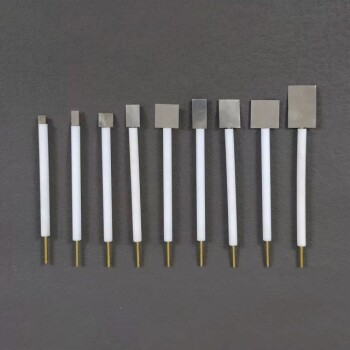
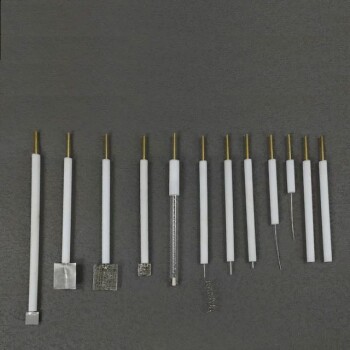
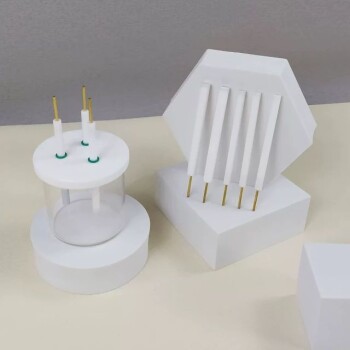
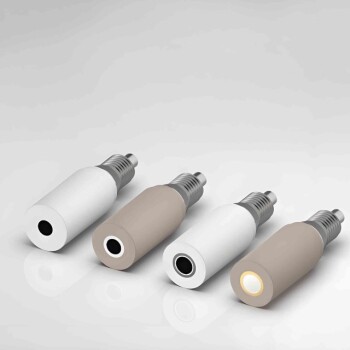
A platinum (Pt) sheet is the industry standard for counter electrodes primarily due to its chemical stability and electrical efficiency. It serves to complete the electrical circuit and facilitate charge transfer without dissolving or introducing impurities into your electrolyte. This ensures that the current measured is a true reflection of the reactions occurring at your working electrode, not an artifact of the counter electrode.
Core Takeaway The platinum sheet acts as a "silent partner" in your electrochemical cell: it carries the necessary current to drive the system while remaining chemically inert. By preventing its own oxidation or dissolution, it ensures that all measured signals originate solely from your sample, protecting the integrity of your data.
The Fundamental Role of the Counter Electrode
Completing the Circuit
In a three-electrode system, current must flow between the working electrode (your sample) and the counter electrode to drive the electrochemical reaction. The platinum sheet facilitates this flow efficiently.
Balancing the Reaction
While your specific interest lies in the reaction at the working electrode, a balancing reaction must occur at the counter electrode to maintain charge neutrality. The counter electrode supports these redox-balancing reactions without becoming a variable in the experiment itself.
Why Platinum is the Material of Choice
Unmatched Chemical Inertness
The primary reason for using platinum is its resistance to corrosion and oxidation. Even in aggressive environments, such as acidic solutions or those containing chlorides, platinum remains stable.
Preventing Sample Contamination
Because platinum does not undergo anodic dissolution, it does not release metal ions or impurities into the electrolyte. This is critical, as dissolved ions from a less stable counter electrode could deposit onto your working electrode, altering its surface and invalidating your results.
Exceptional Electrical Conductivity
Platinum is a highly conductive metal, which minimizes the voltage drop across the counter electrode. This ensures that the system can maintain the required current flow without imposing significant resistance that could limit the reaction kinetics at the working electrode.
The Importance of Using a "Sheet" Geometry
Large Surface Area
Using a sheet (or mesh) rather than a simple wire provides a larger effective surface area. This reduces the current density at the counter electrode surface, preventing it from becoming a kinetic bottleneck during high-current experiments.
Uniform Current Distribution
A larger surface area allows for a more uniform distribution of current lines through the electrolyte. This helps ensure that the polarization across the working electrode is consistent, which is essential for accurate dynamic potential polarization curves.
Understanding the Trade-offs
The Necessity of Surface Area Ratios
While platinum is ideal chemically, its geometry matters. If the surface area of your platinum counter electrode is smaller than that of your working electrode, it may limit the maximum current the system can pass.
Polarization Risks
If the counter electrode is too small, it may undergo extreme polarization to support the required current. This can lead to experimental artifacts or instability in the control of the cell potential, even when using a reference electrode.
Making the Right Choice for Your Goal
To maximize the reliability of your electrochemical testing, align your electrode setup with your specific analytical needs:
- If your primary focus is corrosion testing (e.g., stainless steel or alloys): Ensure your platinum sheet is high-purity to prevent any trace impurities from altering the corrosive environment of the electrolyte.
- If your primary focus is high-current applications: Verify that the surface area of your platinum sheet is significantly larger than that of your working electrode to prevent current throttling.
- If your primary focus is trace analysis: regularly clean or flame-anneal the platinum sheet to remove any organic contaminants that may have adsorbed over time, ensuring the surface remains chemically silent.
By selecting a platinum sheet with adequate surface area, you eliminate the counter electrode as a variable, leaving you with pure, interpretable data regarding your material's performance.
Summary Table:
| Feature | Advantage of Platinum (Pt) Sheet | Impact on Electrochemical Testing |
|---|---|---|
| Chemical Inertness | High resistance to corrosion & oxidation | Prevents electrolyte and sample contamination. |
| Conductivity | Exceptional electrical flow | Minimizes voltage drops and resistance artifacts. |
| Sheet Geometry | Large effective surface area | Reduces current density to prevent kinetic bottlenecks. |
| Stability | Does not undergo anodic dissolution | Ensures measured current reflects only the working electrode. |
Elevate Your Electrochemistry with KINTEK Precision
Don't let inferior electrodes compromise your research data. KINTEK specializes in high-performance laboratory equipment and consumables, providing premium platinum electrodes, electrolytic cells, and battery research tools designed for uncompromising accuracy.
Whether you are conducting corrosion testing or high-current analysis, our comprehensive range—including high-temperature furnaces, crushing systems, and specialized PTFE products—ensures your lab is equipped for success.
Ready to optimize your testing setup? Contact KINTEK today for expert solutions!
References
- Xiaohang Zheng, Wei Cai. In Situ Grown Vertically Oriented Graphene Coating on Copper by Plasma-Enhanced CVD to Form Superhydrophobic Surface and Effectively Protect Corrosion. DOI: 10.3390/nano12183202
This article is also based on technical information from Kintek Solution Knowledge Base .
Related Products
- Platinum Sheet Electrode for Laboratory and Industrial Applications
- Platinum Sheet Electrode for Battery Lab Applications
- Platinum Auxiliary Electrode for Laboratory Use
- High Purity Gold Platinum Copper Iron Metal Sheets
- Rotating Platinum Disk Electrode for Electrochemical Applications
People Also Ask
- What is a common use for a platinum sheet electrode? As a Reliable Counter Electrode in Electrochemical Cells
- What is the most critical guideline for immersing a platinum sheet electrode in an electrolyte? Ensure Accurate Electrochemical Measurements
- What is the purity of the platinum sheet in a platinum sheet electrode? The Key to Reliable Electrochemical Data
- What is the expected lifespan of a platinum sheet electrode? Maximize Your Electrode's Service Life
- What are the available specifications for platinum sheet electrodes? Find the Perfect Fit for Your Electrochemical Needs