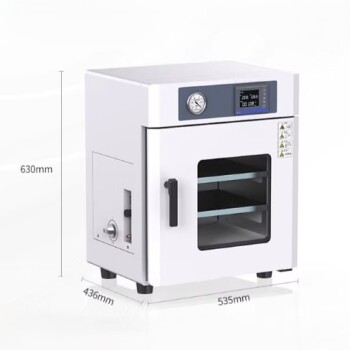
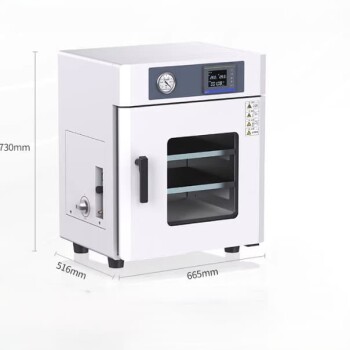
A precision laboratory oven is strictly required to create a stable, low-temperature drying environment (typically 40°C) for zirconium dioxide precursor complexes. This controlled thermal atmosphere is critical for gradually removing moisture without destroying the delicate biological organic templates used to shape the nanoparticles, while simultaneously preventing the severe particle clumping (agglomeration) that ruins the material's properties.
Core Takeaway In the synthesis of zirconium dioxide nanoparticles, drying is a structural preservation step, not just moisture removal. Precision temperature control protects the organic template from thermal degradation and ensures the precursor material remains uniform and unaggregated prior to the high-temperature calcination stage.
The Critical Role of Temperature Stability
The synthesis of zirconium dioxide often involves sensitive precursors. Using a precision oven allows for a highly controlled "soft" drying process that standard heating methods cannot achieve.
Preserving the Biological Template
Many advanced synthesis methods utilize a biological organic template to define the shape and size of the nanoparticles.
This organic framework is often thermally sensitive. A precision oven maintains a low, steady temperature (e.g., 40°C), which is sufficient to evaporate water but gentle enough to leave the organic structure intact.
Controlling Dehydration Rate
The speed at which water is removed dictates the final arrangement of the particles.
If dehydration occurs too quickly, the capillary forces between particles increase drastically. This causes the nanoparticles to pull together tightly, resulting in severe agglomeration.
A precision oven ensures the moisture removal is gradual. This keeps the particles distinct and prevents them from fusing into large, unusable clusters.
Preparing for Calcination
The drying stage is the bridge between the wet chemical reaction and the final heat treatment (calcination). The quality of the final ceramic depends entirely on the condition of the dried precursor.
Ensuring Chemical Stability
The precursor must be chemically stable before it enters the furnace.
The oven removes volatile components and moisture that could otherwise cause rapid vaporization during calcination. If water is trapped inside the structure during high-heat treatment, it can expand explosively on a microscopic level, destroying the material's pore structure.
Uniformity of the Intermediate
Consistency is key for high-performance nanomaterials.
By bathing the sample in a constant thermal environment, the oven ensures that the entire sample dries at the same rate. This prevents "skinning" (where the outside dries but the inside remains wet), ensuring the material is uniform throughout the batch.
Common Pitfalls and Trade-offs
While necessary, the use of a precision laboratory oven introduces specific constraints that must be managed.
The Trade-off of Time vs. Quality
Precision drying is inherently slower than aggressive heating methods.
Because the temperature is kept low (40°C) to protect the template, the drying process takes significantly longer. Attempting to rush this step by raising the temperature risks degrading the organic template and ruining the particle morphology.
Sensitivity to Environmental Fluctuations
The term "precision" implies that the equipment must be reliable.
Standard utility ovens often have wide temperature swings (hysteresis). For zirconium dioxide synthesis, a spike in temperature could compromise the biological template. Therefore, the equipment must be calibrated to ensure the set point is strictly maintained without overshooting.
Making the Right Choice for Your Synthesis
Success in nanoparticle synthesis comes down to aligning your drying method with your specific structural goals.
- If your primary focus is Template Preservation: Prioritize a low temperature (40°C) and extended drying times to ensure the biological framework remains completely intact until calcination.
- If your primary focus is Particle Dispersity: ensure the drying rate is gradual to minimize capillary forces, which is the primary cause of hard agglomeration in zirconium dioxide powders.
By treating the drying stage as a precision chemical process rather than a simple utility step, you ensure the integrity of your final zirconium dioxide nanomaterial.
Summary Table:
| Feature | Requirement in ZrO₂ Synthesis | Impact on Final Nanoparticles |
|---|---|---|
| Temperature Stability | Constant 40°C (Low-Temp) | Preserves delicate biological organic templates |
| Dehydration Rate | Gradual moisture removal | Prevents severe particle clumping (agglomeration) |
| Material Uniformity | Even thermal distribution | Avoids "skinning" and ensures uniform pore structure |
| Pre-Calcination Prep | Removal of volatiles/water | Prevents microscopic structural damage during high-heat |
Elevate Your Nanomaterial Precision with KINTEK
Achieving the perfect zirconium dioxide structure requires more than just heat; it requires absolute thermal control. KINTEK specializes in high-performance laboratory equipment designed for the rigorous demands of advanced material science.
Our precision laboratory ovens provide the stability needed to protect your organic templates, while our comprehensive range of high-temperature furnaces (muffle, vacuum, and CVD) and crushing systems ensure a seamless transition to the calcination and processing stages.
Partner with KINTEK for:
- Superior temperature uniformity for sensitive nanoparticle precursors.
- A full suite of solutions, from pellet presses to high-pressure reactors.
- Expertise in equipping battery research and ceramic synthesis labs.
Optimize your synthesis workflow—Contact our specialists today!
References
- Gözde Koşarsoy Ağçeli, Zümriye Aksu. Biosynthesis of Zirconium dioxide nanoparticles by Streptomyces sp. HC1: Characterization and Bioactivity. DOI: 10.18185/erzifbed.1174027
This article is also based on technical information from Kintek Solution Knowledge Base .
Related Products
- 23L Laboratory Vacuum Drying Oven
- 56L Vertical Laboratory Vacuum Drying Oven
- Laboratory Scientific Electric Heating Blast Drying Oven
- High Temperature Muffle Oven Furnace for Laboratory Debinding and Pre Sintering
- 1700℃ Muffle Oven Furnace for Laboratory
People Also Ask
- Why is a laboratory vacuum drying oven recommended for rice straw residues? Protect Your Biomass Integrity
- What role does a laboratory vacuum drying oven play in the preparation of modified multi-walled carbon nanotubes?
- What is the importance of using a laboratory vacuum drying oven? Preserving Slow-Release Microcapsule Integrity
- Why is a Laboratory Vacuum Drying Oven recommended for PBAT microspheres? Protect Sensitive Polymer Integrity
- What role does a laboratory vacuum drying oven play in processing nanoparticle powder samples? Protect Sample Integrity