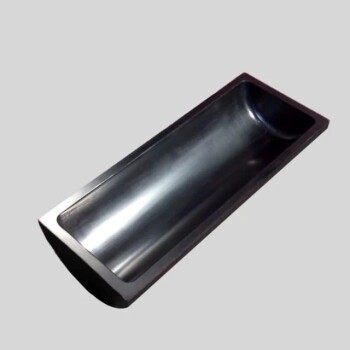
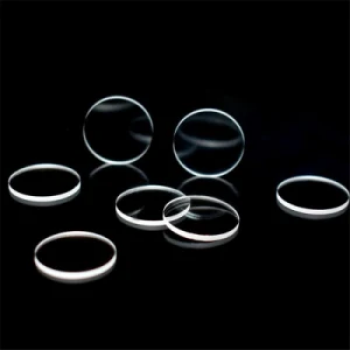
A Quartz Reaction Tube is strictly necessary for gaseous formaldehyde removal testing because it is the only standard material that enables unrestricted light transmission while maintaining chemical purity. It allows external photon sources to fully excite the catalyst without filtering critical wavelengths, and its non-reactive nature ensures that the experimental data reflects only the catalyst's performance, not interference from the container.
Core Takeaway: Reliable photocatalytic testing requires a reaction vessel that is effectively "invisible" to both the light source and the chemical process. Quartz is essential because it offers high transparency to ultraviolet and visible light while remaining chemically inert, preventing experimental error.
Maximizing Photonic Efficiency
The Critical Role of Light Transmittance
For a photocatalytic system to function, photons from an external light source must penetrate the reaction vessel to reach the catalyst.
Quartz offers excellent light transmittance, ensuring that the maximum amount of energy is delivered directly to the active material inside the tube.
Enabling Ultraviolet Activation
Many catalysts specifically require high-energy wavelengths to initiate the formaldehyde removal process.
Unlike standard glass, which filters out most ultraviolet (UV) radiation, quartz is transparent to both UV and visible light. This ensures that the photons required to excite the catalyst are not lost before they enter the reaction zone.
Ensuring Data Integrity
Chemical Inertness
To determine the true efficiency of a catalyst, the reaction environment must remain neutral.
The Quartz Reaction Tube is chemically inert, meaning the material of the tube itself does not interact with the formaldehyde or other reaction gases.
Preventing Side Reactions
If a reaction tube interacts with the gas stream, it creates "noise" in the data.
By preventing side reactions, quartz ensures that any measured reduction in formaldehyde is caused solely by the catalyst. This guarantees the authenticity of your testing results, allowing for accurate benchmarking of catalytic activity.
Understanding the Trade-offs
The Risk of Material Substitution
While quartz is often more expensive than borosilicate glass or polymers, substituting it introduces significant experimental risks.
Using a material with lower transmittance acts as an optical filter, potentially blocking the specific wavelengths needed for activation. This can lead to false negatives, where a viable catalyst appears ineffective simply because the reaction tube starved it of energy.
Material Reactivity
Non-quartz materials may absorb gases or degrade under UV exposure over time.
This introduces variables that are difficult to isolate, making it impossible to distinguish between actual catalytic removal and simple surface adsorption on the tube walls.
Making the Right Choice for Your Goal
To ensure your formaldehyde removal data is defensible and accurate, apply the following guidelines:
- If your primary focus is Broad-Spectrum Activation: Choose quartz to ensure that both UV and visible light wavelengths reach your catalyst without attenuation.
- If your primary focus is Data Authenticity: Rely on quartz to eliminate the possibility of the reaction vessel chemically interfering with the test gases.
Using the correct reaction vessel is not just a hardware choice; it is a prerequisite for valid scientific data.
Summary Table:
| Feature | Quartz Reaction Tube | Standard Glass / Polymers |
|---|---|---|
| Light Transmittance | High (UV + Visible Light) | Low (Filters UV Radiation) |
| Chemical Inertness | Exceptionally High | Variable / Potential Reactivity |
| Data Accuracy | Authentic Catalyst Performance | High Risk of False Negatives |
| Durability | High Resistance to UV Degradation | Potential Material Degradation |
| Primary Function | Maximizing Photonic Efficiency | Optical Filtering Interference |
Elevate Your Photocatalytic Research with KINTEK Precision
Don't let inferior reaction vessels compromise your scientific data. KINTEK specializes in high-performance laboratory equipment designed for rigorous testing environments. Our premium Quartz Reaction Tubes ensure maximum photonic efficiency and chemical purity for your formaldehyde removal studies.
Beyond quartz components, KINTEK offers a comprehensive range of solutions for advanced research, including:
- High-Temperature Furnaces (Muffle, Tube, Vacuum, and CVD)
- High-Pressure Reactors and Autoclaves
- Electrolytic Cells and Electrodes for electrochemical studies
- Crushing, Milling, and Pellet Presses for catalyst preparation
Ready to ensure the authenticity of your testing results? Contact KINTEK today to consult with our experts and find the perfect hardware for your laboratory's specific needs.
References
- Shiuan‐Shinn Lee, Min-Chang Wu. Study of the structure and characteristics of mesoporous TiO<sub>2</sub> photocatalyst, and evaluation of its factors on gaseous formaldehyde removal by the analysis of ANOVA and S/N ratio. DOI: 10.1039/c8ra03557a
This article is also based on technical information from Kintek Solution Knowledge Base .
Related Products
- Laboratory Rapid Thermal Processing (RTP) Quartz Tube Furnace
- 1200℃ Split Tube Furnace with Quartz Tube Laboratory Tubular Furnace
- Carbon Graphite Boat -Laboratory Tube Furnace with Cover
- Visual High-Pressure Reactor for In-Situ Observation
- High Temperature Resistant Optical Quartz Glass Sheet
People Also Ask
- What technical advantages does an RTP tube furnace offer for photoelectrodes? Achieve Precision & High Phase Purity
- What is the temperature of a quartz tube furnace? Master the Limits for Safe, High-Temp Operation
- How does a quartz tube furnace facilitate the synthesis of rGO? Optimize Your Cathode Matrix with Precise Pyrolysis
- What are the advantages of using an electric heating furnace with a quartz tube for liquid bismuth corrosion control?
- What is the maximum temperature for a quartz tube furnace? Key Limits for Safe & Efficient Operation