Precise quantification of amorphous content in fayalite slag requires extreme sample homogeneity. A ring mill is utilized because it achieves high-homogeneity dry mixing of the slag with an internal standard, such as calcite powder. This uniform distribution is essential for accurate Rietveld refinement, as it prevents intensity biases in X-ray diffraction (XRD) data that would otherwise lead to significant measurement errors.
To accurately measure non-crystalline phases using the internal standard method, the physical mixture must be perfectly uniform at a microscopic level. A ring mill facilitates this by providing rapid, high-energy mixing that eliminates the sampling errors and peak intensity fluctuations that typically degrade the reliability of quantitative XRD analysis.
The Role of Homogeneity in XRD Analysis
Overcoming Phase Segregation
Fayalite slag and internal standards, such as calcite, often possess different densities and particle morphologies. Without the high-energy environment of a ring mill, these components can easily segregate during the preparation process.
Ensuring Statistical Representation
A ring mill ensures that every portion of the sample analyzed by the X-ray beam contains the exact stoichiometric ratio of slag to internal standard. This statistical consistency is the foundation of any reliable quantitative phase analysis.
The Impact on Rietveld Refinement
Eliminating Peak Intensity Biases
Quantitative analysis via the Rietveld method relies on comparing the integrated intensities of diffraction peaks. If the internal standard is distributed unevenly, the resulting peak intensities will be biased, leading the software to miscalculate the total amorphous content.
Improving Repeatability and Precision
By utilizing a ring mill, laboratories can achieve highly repeatable results across different batches. The rapid mixing cycle minimizes the human error associated with manual blending, ensuring that the crystalline-to-amorphous ratio remains stable across multiple measurements.
Understanding the Trade-offs
Risk of Mechanical Amorphization
The high energy of a ring mill can be a double-edged sword if not carefully managed. Excessive grinding time may induce lattice strain or even cause additional amorphization of the crystalline phases already present in the slag.
Potential for Sample Contamination
Ring mills use heavy grinding media, typically made of hardened steel or tungsten carbide. Over time, these components can wear down and introduce trace metallic contaminants into the fayalite slag, which may interfere with highly sensitive elemental analyses.
Optimizing Your Pretreatment Protocol
To ensure your sample preparation yields the most accurate data for fayalite slag analysis, consider your primary analytical objective:
- If your primary focus is Maximum Quantitative Accuracy: Use a ring mill for a strictly timed, short duration to ensure internal standard homogeneity without damaging the crystalline structure.
- If your primary focus is High-Throughput Screening: Prioritize the ring mill for its speed, as it can achieve necessary homogeneity levels significantly faster than manual or low-energy mixing methods.
- If your primary focus is Trace Element Purity: Carefully select grinding media, such as zirconia or agate, to prevent the introduction of iron or tungsten into the slag sample.
By mastering the balance between homogeneity and energy input, you ensure that your amorphous content determinations are both robust and scientifically defensible.
Summary Table:
| Feature | Benefit for Fayalite Slag Analysis |
|---|---|
| High-Energy Mixing | Ensures microscopic uniformity between slag and internal standards like calcite. |
| Rietveld Accuracy | Eliminates peak intensity biases, leading to precise amorphous content calculation. |
| Process Speed | Provides rapid pretreatment compared to manual methods, ideal for high-throughput labs. |
| Repeatability | Minimizes human error, ensuring consistent crystalline-to-amorphous ratios across batches. |
| Media Versatility | Options for steel, tungsten carbide, or zirconia to balance energy needs and purity. |
Elevate Your Material Analysis with KINTEK Precision
Achieving flawless sample preparation is the first step toward scientific excellence. KINTEK specializes in high-performance laboratory equipment designed to meet the rigorous demands of material science. Our robust crushing and milling systems, sieving equipment, and hydraulic presses ensure your samples reach the perfect homogeneity required for accurate XRD and Rietveld refinement.
Beyond sample pretreatment, our extensive portfolio supports your entire workflow with:
- High-Temperature Furnaces: Muffle, tube, vacuum, and atmosphere models for precise heat treatment.
- Advanced Reactors: High-temperature high-pressure reactors and autoclaves for complex synthesis.
- Lab Essentials: Cooling solutions (ULT freezers), homogenizers, and high-quality consumables like PTFE products, ceramics, and crucibles.
Whether you are analyzing industrial slag or conducting cutting-edge battery research, KINTEK provides the reliability and expertise you need. Contact our specialists today to discover how our tailored solutions can enhance your laboratory's efficiency and data accuracy.
References
- Anton Andersson, Fredrik Engström. A Method for Synthesizing Iron Silicate Slags to Evaluate Their Performance as Supplementary Cementitious Materials. DOI: 10.3390/app13148357
This article is also based on technical information from Kintek Solution Knowledge Base .
Related Products
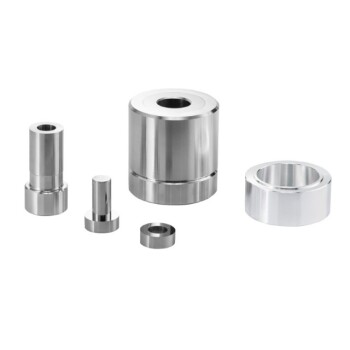
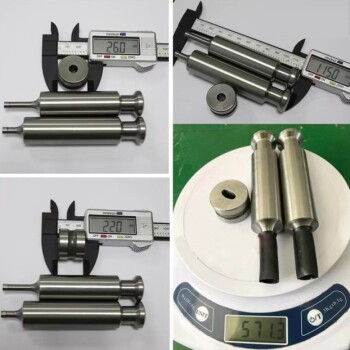
- Ring Press Mold for Lab Applications
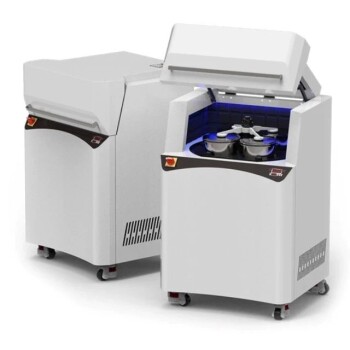
- Laboratory Disc Cup Vibratory Mill for Sample Grinding
- Disc Cup Vibrating Mill Multi-Platform for Lab
- Laboratory Single Horizontal Jar Mill
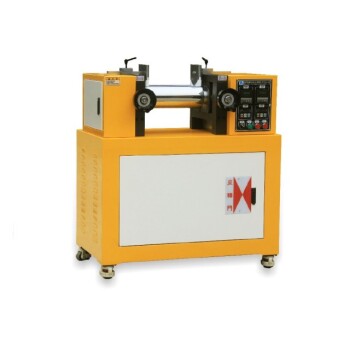
- Open Type Two Roll Mixing Mill Machine for Rubber Crusher
People Also Ask
- How to use a press mold? Master the Art of Creating Consistent Ceramic Forms
- Why are pressure molds with non-conductive resin inner walls required for battery testing? Ensure Data Accuracy
- What is the press mould method? A Guide to Consistent, Detailed Ceramic Forms
- What is the function of press molds during the preparation of SiCf/Ti-43Al-9V composites? Achieve Structural Precision
- What is a press mold used for? Achieve Repeatable Precision and Efficiency