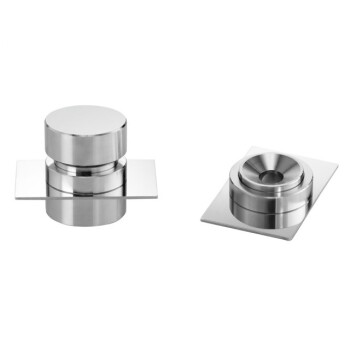
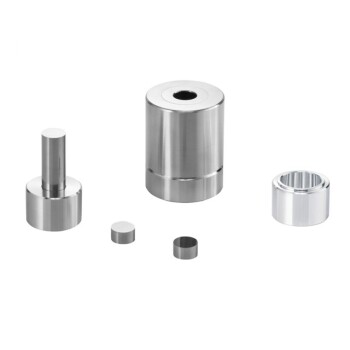
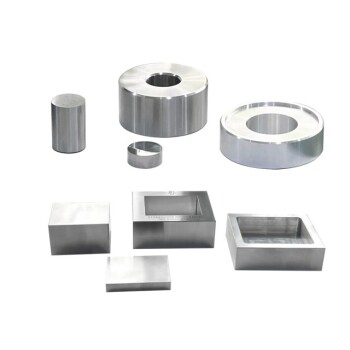
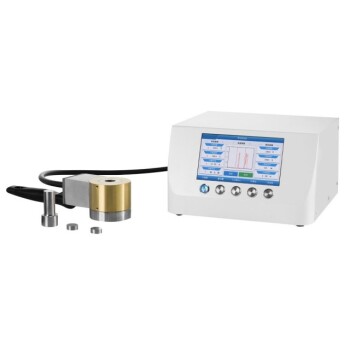
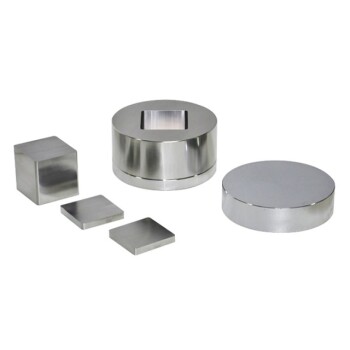
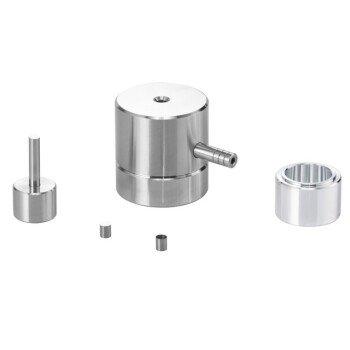
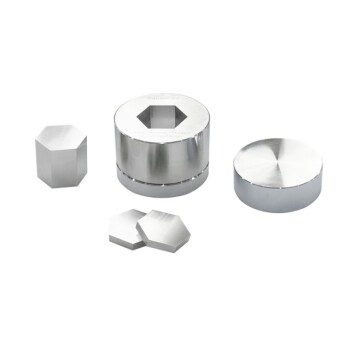
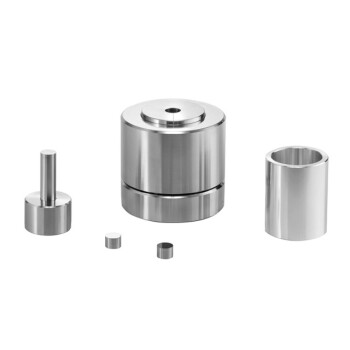
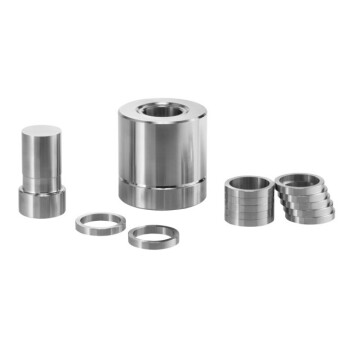
Mold pressing is the fundamental consolidation step used to transform loose commercial NASICON-type solid electrolyte (LAGP) powder into a coherent, shaped structure known as a "green body." By subjecting the loose powder to high mechanical pressure within a mold, this process forces particles into intimate contact to drastically reduce the volume of void space between them.
The primary function of mold pressing is to minimize inter-particle porosity and establish a high-density physical foundation. This pre-compaction is a mandatory prerequisite for effective high-temperature sintering, which is required to achieve ceramic pellets with high ionic conductivity.
The Mechanics of Densification
Creating the Green Body
Commercially available LAGP typically arrives as a loose powder. Mold pressing is the physical mechanism that converts this disjointed material into a singular, solid object.
This resulting object is technically referred to as a green body. While it holds its shape, it has not yet undergone the thermal processing required to fuse the particles chemically.
Minimizing Inter-Particle Porosity
The core technical objective of this step is porosity reduction. In its loose state, LAGP powder contains significant gaps (pores) between particles.
Applying high pressure within the mold physically forces these particles together. This mechanical compaction eliminates air pockets, bringing the electrolyte material into a state of "close contact."
The Foundation for Sintering
Mold pressing is not the final step; it is the preparation for the critical heating phase. The compaction establishes the necessary physical density required for subsequent high-temperature sintering.
Without this dense initial structure, the sintering process cannot effectively fuse the material. The green body provides the structural baseline that allows the material to mature into a functional ceramic.
Linking Process to Performance
Achieving Final Ceramic Density
The density of the green body directly influences the density of the final processed material. A well-pressed green body ensures that the final ceramic pellet achieves maximum density.
Enabling Ionic Conductivity
For solid electrolytes like LAGP, performance is measured by how well they conduct ions. High ionic conductivity is heavily dependent on the material being dense and free of voids.
Therefore, mold pressing is the critical enabler of performance. It creates the conditions that allow the final ceramic to conduct ions efficiently.
Understanding the Limitations
Compaction vs. Bonding
It is vital to recognize that mold pressing establishes physical contact, not chemical bonding.
While the particles are pressed tightly together, they remain distinct entities. The green body is relatively fragile compared to the final product and serves only as the structural precursor.
The Necessity of Heat
Pressing alone cannot produce a functional solid electrolyte. It must be viewed strictly as the foundation for the sintering phase.
If the pressing step is insufficient, the sintering step will fail to produce a dense pellet, regardless of the temperatures used.
Optimizing Your Processing Strategy
To ensure you are getting the most out of your LAGP processing, align your approach with your specific end goals:
- If your primary focus is structural integrity: Ensure you apply sufficient pressure to create a green body that is robust enough to handle without crumbling during transfer to the furnace.
- If your primary focus is maximizing conductivity: Prioritize achieving the highest possible green body density to minimize porosity before sintering begins.
Successful LAGP processing relies on viewing mold pressing not just as shaping, but as the critical first step in determining final electrochemical performance.
Summary Table:
| Process Phase | Core Function | Material State | Key Performance Impact |
|---|---|---|---|
| Mold Pressing | Mechanical Densification | Green Body (Fragile) | Minimizes porosity & sets structural foundation |
| Sintering | Thermal Fusion | Solid Ceramic | Enables high ionic conductivity & chemical bonding |
| Final Product | Performance Execution | Dense Electrolyte | Optimizes ion transport for battery applications |
Elevate Your Solid-State Battery Research with KINTEK
Precise compaction is the foundation of high-performance LAGP electrolytes. At KINTEK, we provide the specialized laboratory equipment needed to transform powders into high-density green bodies and final ceramic pellets.
Our comprehensive range of hydraulic pellet presses (manual, electric, and isostatic), high-temperature muffle and tube furnaces, and precision crushing and milling systems are engineered to meet the rigorous demands of NASICON-type material processing. Whether you are optimizing structural integrity or maximizing ionic conductivity, KINTEK’s tools ensure repeatable, professional-grade results.
Ready to optimize your solid electrolyte synthesis? Contact our laboratory specialists today to find the perfect pressing and sintering solution for your research.
Related Products
- Anti-Cracking Press Mold for Lab Use
- Double Plate Heating Press Mold for Lab
- No Demolding Lab Infrared Press Mold for Laboratory Applications
- Lab Infrared Press Mold
- Ball Press Mold for Lab
People Also Ask
- What is the press mould method? A Guide to Consistent, Detailed Ceramic Forms
- How to use a press mold? Master the Art of Creating Consistent Ceramic Forms
- What is the function of press molds during the preparation of SiCf/Ti-43Al-9V composites? Achieve Structural Precision
- What is a press mold used for? Achieve Repeatable Precision and Efficiency
- What is the purpose of specialized pressure devices in sulfide solid-state batteries? Ensure Chemo-Mechanical Stability