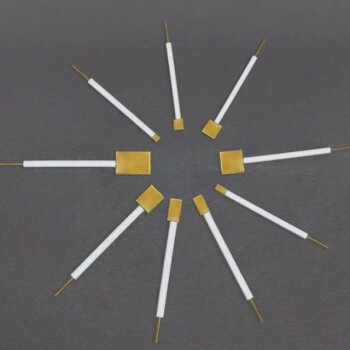
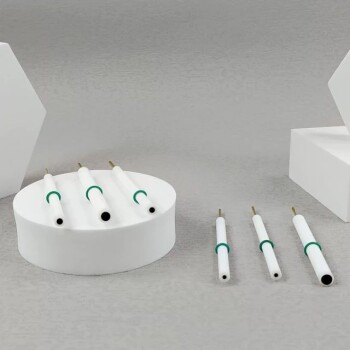
The Saturated Calomel Electrode (SCE) is the established standard for electrochemical stability. It is selected for ODS ferritic steel experiments because it provides an unvarying reference potential, acting as a reliable benchmark for voltage measurements. This stability is essential for precisely determining the corrosion potential ($E_{corr}$) and pitting breakdown potential ($E_b$), allowing for the accurate scientific evaluation of a material's resistance in saline or acidic environments.
Core Insight: In corrosion science, your data is only as good as your baseline. The SCE provides a constant, known voltage that allows researchers to isolate the behavior of the steel sample, ensuring that any fluctuation in potential is attributed to material corrosion rather than measurement error.
The Critical Role of Stability
Benchmarking Voltage
Corrosion kinetics testing relies on measuring the difference in potential between the metal sample and a reference.
The SCE provides a highly stable and reproducible standard. Because its potential does not fluctuate, it allows researchers to pinpoint the exact voltage at which corrosion processes begin.
Defining Material Limits
To evaluate ODS steel, you must identify specific thresholds.
The SCE enables the precise calculation of Corrosion Potential ($E_{corr}$) and Pitting Breakdown Potential ($E_b$). These two metrics are the primary indicators of how well the oxide dispersion strengthened steel will survive in harsh service environments.
Ensuring Data Integrity and Repeatability
Standardization Across Experiments
Scientific validity requires that results can be replicated.
By using an SCE, researchers ensure that measurements of pitting potential are based on an absolute reference point. This makes corrosion data comparable across different batches of steel and between different independent laboratories.
Managing Complex Environments
Corrosion tests often involve complex electrochemical environments, such as saline solutions.
The SCE is designed to function reliably in these conditions, providing a constant potential reference point regardless of the aggressive nature of the test solution surrounding the steel sample.
Operational Considerations and Safeguards
The Necessity of the Salt Bridge
While the SCE is stable, it requires specific isolation to maintain its accuracy.
Experiments typically utilize a salt bridge in conjunction with the SCE. This component reduces the liquid junction potential, which is a source of error that occurs where two dissimilar solutions meet.
Protection from Contamination
The internal chemistry of the reference electrode must remain pure.
The salt bridge prevents acidic or saline test solutions from directly contacting the internal electrolyte of the SCE. This protects the electrode from contamination, ensuring the long-term reliability and reproducibility of the potential data collected.
Making the Right Choice for Your Goal
To maximize the quality of your corrosion data, consider how the reference electrode impacts your specific objectives:
- If your primary focus is determining lifespan: Rely on the SCE to accurately identify the $E_b$ (breakdown potential) to predict when pitting will initiate.
- If your primary focus is comparing steel batches: Use the SCE to ensure your voltage baselines are identical, allowing for valid side-by-side performance analysis.
The SCE remains the preferred choice because it transforms variable electrochemical noise into actionable, standardized material data.
Summary Table:
| Feature | Benefit for ODS Steel Corrosion Testing |
|---|---|
| Potential Stability | Provides an unvarying baseline to isolate material behavior from measurement noise. |
| Reproducibility | Ensures corrosion data like Pitting Breakdown Potential (Eb) is comparable across labs. |
| Compatibility | Functions reliably in aggressive saline or acidic environments typical for steel testing. |
| Data Integrity | When used with a salt bridge, it minimizes liquid junction potential and prevents contamination. |
Elevate Your Electrochemical Research with KINTEK Precision
Precise corrosion analysis of ODS ferritic steel demands absolute accuracy in your reference potential. At KINTEK, we specialize in providing high-performance laboratory equipment and consumables designed for the most rigorous scientific standards.
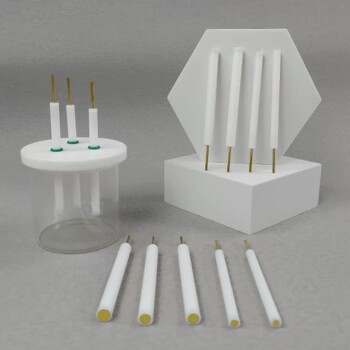
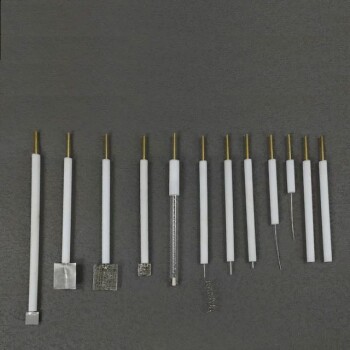
Whether you are conducting pitting potential studies or long-term material lifespan tests, our comprehensive range of electrolytic cells, electrodes, and high-temperature furnaces ensures your laboratory is equipped for success. From battery research tools to PTFE consumables and ceramics, we provide the durability and precision you need to transform variable noise into actionable data.
Ready to optimize your corrosion experiments? Contact KINTEK today to discover how our high-quality solutions can enhance your research efficiency and data reliability.
References
- Zbigniew Oksiuta, Ewa Och. CORROSION RESISTANCE OF MECHANICALLY ALLOYED 14%Cr ODS FERRITIC STEEL. DOI: 10.2478/ama-2013-0007
This article is also based on technical information from Kintek Solution Knowledge Base .
Related Products
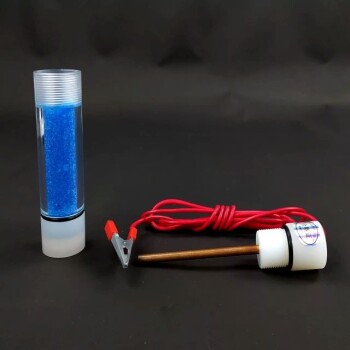
- Reference Electrode Calomel Silver Chloride Mercury Sulfate for Laboratory Use
- Copper Sulfate Reference Electrode for Laboratory Use
- Gold Disc Electrode
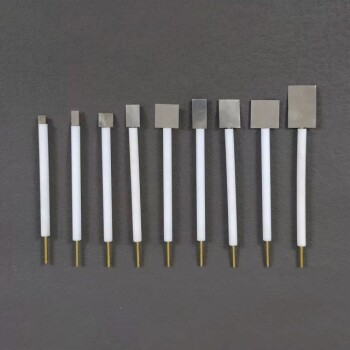
- Platinum Sheet Electrode for Laboratory and Industrial Applications
- Platinum Auxiliary Electrode for Laboratory Use
People Also Ask
- What is the function of a reference electrode? Master Precision in Three-Electrode Reactor Reconstruction
- What is the recommended maintenance for the filling solution of a reference electrode? A Guide to Stable & Accurate Readings
- Which electrode is used as a ground reference? Master the Key to Accurate Electrochemical Measurements
- What is the reference electrode in potentiometry? The Key to Stable & Accurate Measurements
- Which electrode is used as a reference? A Guide to Accurate Electrochemical Measurements