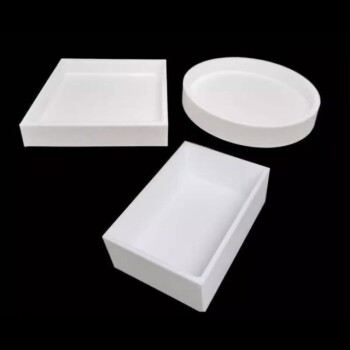
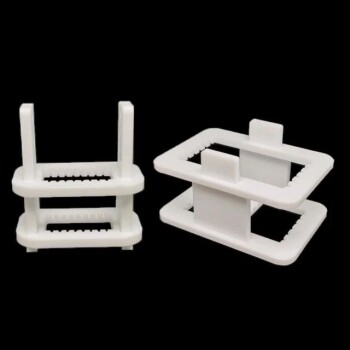
A stainless steel reactor equipped with a polytetrafluoroethylene (PTFE) liner is a mandatory requirement for manganese-based coating synthesis because it provides the only viable defense against the harsh chemical environment required for the reaction. Without this liner, the combination of high pressure, high temperature, and corrosive manganese salts would rapidly destroy standard laboratory equipment and contaminate the final product.
The synthesis of manganese-based coatings involves corrosive agents and high pressures that would compromise standard steel vessels. The PTFE liner serves a dual critical function: it acts as a chemical shield to preserve the structural integrity of the reactor and ensures the atomic purity of the coating by preventing the leaching of metallic impurities.
The Role of Chemical Resistance
Protecting the Vessel Integrity
The primary challenge in this synthesis is the use of strong acids, strong bases, and specific reactants like manganese chloride.
These chemicals are highly corrosive, particularly when heated. A PTFE liner provides excellent resistance to these aggressive substances, preventing them from making contact with the stainless steel shell.
Managing High-Pressure Environments
This reaction typically occurs under high-pressure conditions.
While the stainless steel outer shell provides the mechanical strength to contain this pressure, it is chemically vulnerable. The PTFE liner isolates the pressure-bearing shell from the corrosive liquid, allowing the reactor to operate safely without risking structural failure due to chemical attack.
Ensuring Experimental Precision
Eliminating Metallic Contamination
The most distinct advantage of a PTFE liner is its chemical inertia.
If the reaction solution were to touch the stainless steel, metallic ions from the steel alloy would leach into the mixture. The liner creates a hermetic barrier that completely eliminates the introduction of these metallic impurity ions.
Guaranteeing Coating Purity
For applications like trimanganese tetraoxide coatings, purity is paramount.
Any foreign ions introduced from the reactor wall would alter the composition and performance of the final coating. The PTFE liner ensures that the final product consists solely of the intended chemical structure.
Reproducibility of Results
Scientific validity relies on the ability to repeat an experiment with consistent outcomes.
By preventing corrosion and contamination, the liner ensures the reaction environment remains stable and identical across multiple runs. This guarantees the reproducibility of experimental results, which is impossible if the reactor walls are degrading.
Operational Considerations and Limits
Understanding the Material Limits
While PTFE provides exceptional chemical resistance, it is not a structural material.
It relies entirely on the stainless steel shell to withstand the pressure generated during synthesis. Consequently, the user must ensure the liner is perfectly fitted to the shell to prevent mechanical deformation or rupture.
Thermal Constraints
Although the reference notes resistance to "high temperatures," PTFE has a lower thermal limit than stainless steel.
Users must operate within the thermal rating of the specific PTFE grade used. Exceeding this limit can cause the liner to soften or release fluorinated compounds, which would defeat the purpose of using it for purity.
Making the Right Choice for Your Goal
To achieve a successful synthesis, you must view the liner and the steel shell as an integrated system, each addressing a specific failure mode.
- If your primary focus is coating purity: Prioritize the use of the PTFE liner to maintain chemical inertia and prevent the leaching of metallic ions into your trimanganese tetraoxide structure.
- If your primary focus is equipment safety: Rely on the liner to shield the pressure-bearing stainless steel shell from the corrosive attack of manganese chloride and strong acids.
The PTFE liner is not merely an accessory; it is the critical interface that translates the mechanical strength of steel into a chemically viable environment for high-purity synthesis.
Summary Table:
| Feature | Purpose in Manganese-Based Synthesis | Benefit to Researcher |
|---|---|---|
| Chemical Inertia | Resists strong acids and manganese salts | Prevents metallic ion leaching and contamination |
| Corrosion Shield | Protects stainless steel from chemical attack | Extends equipment lifespan and ensures safety |
| Pressure Support | Steel shell handles mechanical stress | Enables high-pressure synthesis safely |
| Thermal Stability | Maintains integrity at reaction temperatures | Guarantees reproducible experimental results |
Elevate Your Synthesis with KINTEK Precision
Don't compromise the purity of your manganese-based coatings. KINTEK specializes in high-performance laboratory solutions, providing robust high-temperature high-pressure reactors and autoclaves equipped with premium PTFE liners designed to withstand the harshest chemical environments.
Whether you are focusing on battery research, advanced material synthesis, or chemical processing, our comprehensive range of hydrothermal reactors, crushing systems, and specialized consumables ensures your lab achieves superior results with maximum safety. Let our experts help you select the ideal equipment for your specific application.
Ready to upgrade your lab's capabilities? Contact us today to request a quote or expert consultation!
References
- Leoš Doskočil, Jaromír Wasserbauer. Effect of process conditions for the preparation of a manganese-based coating on the surface of AZ31 magnesium alloy. DOI: 10.2478/kom-2023-0001
This article is also based on technical information from Kintek Solution Knowledge Base .
Related Products
- Custom PTFE Teflon Parts Manufacturer for Hydrothermal Synthesis Reactor Polytetrafluoroethylene Carbon Paper and Carbon Cloth Nano-growth
- Custom PTFE Teflon Parts Manufacturer for Microwave Digestion Tank
- Stainless High Pressure Autoclave Reactor Laboratory Pressure Reactor
- Custom PTFE Teflon Parts Manufacturer F4 Conical Flask Triangular Flask 50 100 250ml
- Custom PTFE Teflon Parts Manufacturer for Centrifuge Tubes
People Also Ask
- What is the function of a PTFE reactor in MXene etching? Ensure Safe, High-Purity MAX Phase Conversion
- Why is a PTFE reactor required for titanium-based nano-ceramic coating solutions? Ensure Chemical Inertness & Purity
- Why must a Polytetrafluoroethylene (PTFE) reactor be used for Ti3C2TX MXene etching? Ensure Safety and Purity
- Why are PTFE reactors preferred for silver phosphate glass testing? Ensure Purity and Kinetic Accuracy
- What are the advantages of using polytetrafluoroethylene (PTFE) liners in hydrothermal synthesis reactors? High Purity