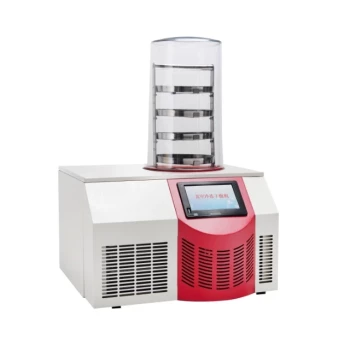
The vacuum drying oven is the definitive tool for ensuring the chemical integrity of lithium-air battery air electrodes. By subjecting pressed electrodes to controlled heat (typically 100°C) within a negative-pressure environment for extended periods, this process ensures the absolute removal of residual solvents and moisture that would otherwise compromise the battery's electrolyte system.
Core Takeaway While standard drying removes surface liquids, vacuum drying is required to extract deep-seated moisture and solvents from the electrode's porous structure without damaging it. This step is critical to prevent fatal chemical side reactions with non-aqueous organic electrolytes, thereby guaranteeing the safety and cycle stability of the final battery cell.
The Critical Role of Moisture Elimination
Deep Extraction of Residuals
The preparation of air electrodes involves various solvents and processing steps that leave behind trapped residues.
A vacuum drying oven treats these electrodes at sustained temperatures, such as 100°C, often for durations up to 12 hours.
The vacuum environment lowers the boiling point of trapped liquids. This allows for the thorough evaporation of stubborn solvents and trace moisture from deep within the electrode matrix, which atmospheric drying cannot achieve.
Protecting the Electrolyte System
Lithium-air batteries rely on non-aqueous organic electrolytes. These electrolytes are chemically incompatible with water.
If an electrode retains even trace amounts of moisture, that water will react with the organic electrolyte once the battery is assembled.
This reaction degrades the electrolyte and can lead to safety hazards. Vacuum drying eliminates this variable, ensuring the chemical environment inside the sealed battery remains stable.
Preserving Microstructure and Activity
Maintaining Catalyst Efficiency
Air electrodes often contain sensitive catalysts or nanoparticles necessary for the battery's oxygen reactions.
Supplementary data suggests that vacuum environments prevent powder agglomeration during the drying phase.
By preventing clumping, the process maintains the high specific surface area of the material, ensuring that the electrochemical activity of the catalyst remains maximal.
Protecting Against Oxidation
High temperatures in the presence of air can degrade electrode materials before they are even used.
Vacuum drying removes oxygen from the processing chamber. This allows you to apply the heat necessary for drying without oxidizing sensitive components, such as platinum nanoparticles or other active sites.
Conserving Pore Structure
Air electrodes require an open pore structure to facilitate oxygen transport during battery operation.
Rapid evaporation at high atmospheric temperatures can sometimes damage fragile pore structures.
Vacuum drying accelerates evaporation at lower thermal stress levels. This "deep drying" keeps active sites and sub-nanometer cavities fully open, which is essential for optimal gas adsorption and sensing performance.
Common Pitfalls to Avoid
Temperature Sensitivity
While heat is necessary, excessive temperatures can damage the binder or the conductive carbon network within the electrode.
It is vital to adhere to the recommended 100°C threshold for air electrodes. Going significantly higher risks structural degradation, while lower temperatures may fail to remove solvents bound within micropores.
The Illusion of "Dry"
An electrode may appear dry to the touch or visual inspection but still contain adsorbed moisture.
Do not shorten the recommended drying time (e.g., 12 hours). The diffusion of moisture from the center of a pressed electrode out to the surface takes time, especially under vacuum. Rushing this step is a primary cause of early cycle failure.
Making the Right Choice for Your Goal
To optimize your lithium-air battery fabrication, align your drying protocol with your specific performance targets:
- If your primary focus is Cycle Stability: Prioritize long duration (12+ hours) drying to ensure zero moisture interaction with the organic electrolyte.
- If your primary focus is Catalytic Activity: Ensure the vacuum level is sufficient to lower the boiling point, allowing you to keep thermal stress low and prevent nanoparticle oxidation.
By rigorously controlling the vacuum drying stage, you transform a simple heating process into a critical quality assurance step that defines the lifespan of your battery.
Summary Table:
| Feature | Impact on Air Electrode | Benefit to Battery System |
|---|---|---|
| Deep Solvent Removal | Extracts trapped residues from porous structures | Prevents fatal reactions with non-aqueous electrolytes |
| Negative Pressure | Lowers boiling points of solvents | Enables thorough drying at lower thermal stress levels |
| Oxygen-Free Environment | Prevents material degradation and oxidation | Preserves catalytic activity of nanoparticles/active sites |
| Structural Preservation | Maintains open pore structure and prevents clumping | Facilitates optimal gas transport and adsorption |
| Controlled Heating | Sustained 100°C treatment (up to 12h) | Ensures chemical integrity without damaging binders |
Elevate Your Battery Research with KINTEK Precision
Don't let trace moisture compromise your innovation. KINTEK specializes in advanced laboratory solutions designed for the rigorous demands of energy storage research. From high-performance vacuum drying ovens and high-temperature furnaces to precision hydraulic pellet presses and battery research tools, we provide the equipment necessary to ensure your electrodes meet the highest standards of chemical integrity and cycle stability.
Ready to optimize your electrode processing? Contact our technical experts today to find the perfect drying solution for your lab!
Related Products
- 56L Vertical Laboratory Vacuum Drying Oven
- 23L Laboratory Vacuum Drying Oven
- Laboratory Scientific Electric Heating Blast Drying Oven
- Benchtop Laboratory Vacuum Freeze Dryer
- Dental Porcelain Zirconia Sintering Ceramic Vacuum Press Furnace
People Also Ask
- Why is a laboratory vacuum drying oven recommended for rice straw residues? Protect Your Biomass Integrity
- What role does a laboratory vacuum drying oven play in the preparation of modified multi-walled carbon nanotubes?
- What is the importance of using a laboratory vacuum drying oven? Preserving Slow-Release Microcapsule Integrity
- Why is a Laboratory Vacuum Drying Oven recommended for PBAT microspheres? Protect Sensitive Polymer Integrity
- What role does a laboratory vacuum drying oven play in processing nanoparticle powder samples? Protect Sample Integrity