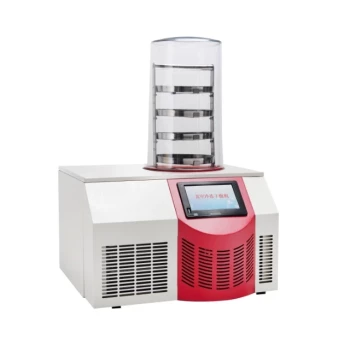
Deep drying is the critical function of a vacuum drying oven when preparing Li2MnSiO4/C electrode sheets. Following the coating process, the oven utilizes a vacuum environment—typically at 100°C—to lower the boiling point of liquids, ensuring the complete removal of residual moisture and N-methylpyrrolidone (NMP) solvents without damaging the material.
Core Takeaway The vacuum drying oven is not merely about drying; it is a stabilization tool. By removing solvent and moisture residues that standard drying cannot reach, it prevents destructive secondary reactions inside the battery, securing both the structural integrity and electrochemical performance of the final product.
The Mechanism of Vacuum Drying
Lowering the Boiling Point
The primary benefit of using a vacuum oven is the manipulation of atmospheric pressure. By lowering the pressure inside the chamber, the boiling points of both water and the organic solvent NMP are significantly reduced.
Efficient Moisture Evaporation
This allows stubborn moisture and solvents to evaporate rapidly at 100°C. Without a vacuum, removing these residues would require much higher temperatures, which could thermally damage the electrode components.
Preventing Chemical Degradation
Eliminating NMP Solvents
The slurry used to coat the electrodes relies on N-methylpyrrolidone (NMP) as a solvent. However, NMP is detrimental to the finished battery; it must be thoroughly evacuated from the porous electrode structure to ensure the material performs as intended.
Blocking Secondary Reactions
The most critical role of deep drying is preventing "secondary reactions." If moisture or solvents remain in the electrode sheet, they can react unpredictably once the battery is assembled and charged, leading to internal instability.
Mitigating Electrolyte Corrosion
Although the primary goal is drying the electrode, the downstream effect protects the electrolyte. Residual water can react with common electrolyte salts (like LiPF6) to create hydrofluoric acid (HF), a highly corrosive compound that destroys battery materials and severely limits cycle life.
Ensuring Structural Integrity
Preserving the Electrode Lattice
Li2MnSiO4/C is a structured material. The gentle yet thorough drying process provided by the vacuum oven ensures that the removal of volatiles does not collapse the pores or crack the coating, maintaining the structural stability required for ion transport.
Preventing Oxidation
Standard drying ovens expose materials to oxygen. A vacuum oven removes air from the chamber, creating an oxygen-free environment that prevents the oxidation of the active materials and the carbon coating during the heating process.
Common Pitfalls and Trade-offs
The Risk of Incomplete Drying
If the vacuum level is insufficient or the time at 100°C is too short, trace moisture will remain. This is a "silent killer" for batteries, often manifesting later as gas generation (swelling) or rapid capacity fade during cycling.
Thermal Stress vs. Drying Speed
While higher temperatures dry materials faster, exceeding the recommended 100°C for Li2MnSiO4/C can degrade the binder or the conductive carbon network. The vacuum allows you to achieve "high-heat results" at moderate, safe temperatures.
Making the Right Choice for Your Goal
To maximize the quality of your Li2MnSiO4/C electrodes, align your drying protocol with your specific performance targets:
- If your primary focus is Cycle Life: Prioritize extending the drying duration at 100°C under high vacuum to ensure absolute minimum moisture content, preventing HF formation.
- If your primary focus is Structural Integrity: Monitor the temperature ramp-up strictly to ensure solvents do not evaporate too violently, which can cause micro-cracking in the electrode surface.
Thorough vacuum drying is the single most effective step to transition your electrode from a wet chemical slurry into a stable, high-performance electrochemical component.
Summary Table:
| Feature | Benefit for Li2MnSiO4/C Electrodes |
|---|---|
| Vacuum Environment | Lowers NMP/water boiling points, enabling deep drying at safe 100°C temperatures. |
| Oxygen-Free Drying | Prevents oxidation of active materials and carbon coating during the heating process. |
| Residual Removal | Eliminates trace moisture to block HF formation and prevent internal battery corrosion. |
| Structural Control | Prevents micro-cracking and preserves the electrode lattice for optimal ion transport. |
Elevate Your Battery Research with KINTEK
Don't let trace moisture compromise your Li-ion battery performance. KINTEK specializes in high-precision laboratory equipment designed for advanced energy research. We provide industry-leading vacuum drying ovens, battery research tools, and consumables that ensure your electrode sheets meet the highest standards of structural integrity and cycle life.
From high-temperature furnaces to specialized PTFE and ceramic consumables, we offer the complete toolkit for your lab's success. Contact us today to optimize your electrode preparation process!
Related Products
- 56L Vertical Laboratory Vacuum Drying Oven
- 23L Laboratory Vacuum Drying Oven
- Laboratory Scientific Electric Heating Blast Drying Oven
- Benchtop Laboratory Vacuum Freeze Dryer
- Dental Porcelain Zirconia Sintering Ceramic Vacuum Press Furnace
People Also Ask
- Why is a laboratory vacuum drying oven recommended for rice straw residues? Protect Your Biomass Integrity
- What role does a laboratory vacuum drying oven play in the preparation of modified multi-walled carbon nanotubes?
- What is the importance of using a laboratory vacuum drying oven? Preserving Slow-Release Microcapsule Integrity
- Why is a Laboratory Vacuum Drying Oven recommended for PBAT microspheres? Protect Sensitive Polymer Integrity
- What role does a laboratory vacuum drying oven play in processing nanoparticle powder samples? Protect Sample Integrity