Knowledge Why is a vibratory ball mill preferred over high-energy milling for cathode composites? Achieve Superior Battery Life
Author avatar

Tech Team · Kintek Solution

Updated 3 days ago

Why is a vibratory ball mill preferred over high-energy milling for cathode composites? Achieve Superior Battery Life


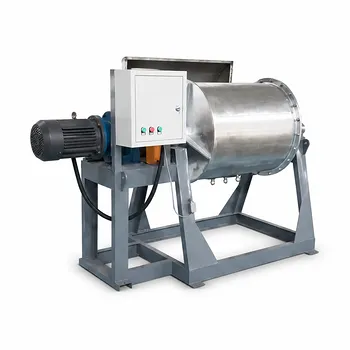
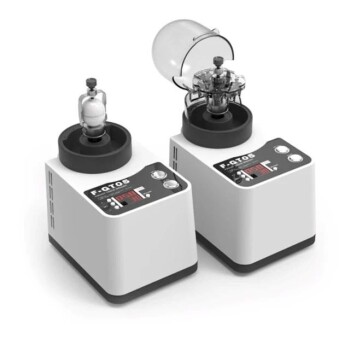
The preference for vibratory or miniature ball mills stems from their ability to provide "gentle yet uniform" mixing. unlike high-energy ball milling, which relies on aggressive impact forces, vibratory milling mixes cathode active materials (such as NCM811) and solid electrolytes effectively without causing structural damage. This method ensures the materials achieve close contact for performance while preserving the particle morphology essential for battery longevity.

Core Insight: In all-solid-state batteries, performance is dictated by the quality of the interface between the cathode and the electrolyte. Vibratory milling creates the necessary "close contact" for ion transport without pulverizing the delicate crystal structure of the cathode material, directly resulting in superior cycling stability.

The Critical Balance in Composite Preparation

The Goal: Efficient Transport Channels

For a solid-state battery to function, ions and electrons must move freely between the cathode and the electrolyte.

This requires intimate physical contact between the two distinct solid phases.

If the materials are not mixed uniformly, gaps occur, creating resistance that throttles battery performance.

The Risk: Material Degradation

Cathode materials like NCM811 are structurally complex and often sensitive to mechanical stress.

Subjecting these materials to excessive force can shatter their crystal lattice or alter their particle shape.

Once this morphology is damaged, the material degrades faster during charging and discharging cycles.

Why High-Energy Milling is Often Unsuitable

Excessive Impact Force

High-energy ball milling is designed to pulverize and alloy materials through intense collisions.

While effective for raw material synthesis, this intensity is destructive when mixing delicate composites.

Destruction of Morphology

The aggressive nature of high-energy milling often fractures the cathode particles.

This damage disrupts the protective surface layers and crystal alignment of the cathode material.

The result is a battery with poor structural integrity that fails to maintain capacity over time.

The Specific Advantages of Vibratory Milling

Gentle, Low-Energy Mixing

Vibratory and miniature ball mills operate on a mechanism that emphasizes friction and low-impact collisions.

This "gentle" approach blends the powders thoroughly without subjecting them to crushing forces.

Preserving Cycling Stability

By avoiding damage to the crystal structure, the cathode retains its electrochemical properties.

The primary reference confirms that this preservation of particle morphology helps maintain the cycling stability of the final battery cell.

establishing Contact Without Destruction

The process achieves the best of both worlds: it forces the electrolyte and cathode into close contact to form efficient transport channels.

However, it stops short of altering the fundamental structure of the active materials.

Understanding the Trade-offs

Process Speed vs. Material Quality

Vibratory milling is generally a slower, less aggressive process compared to high-energy alternatives.

It may take longer to achieve a visually homogeneous mixture.

Agglomeration Handling

Because the forces are lower, vibratory milling may struggle to break up extremely hard agglomerates compared to high-energy mills.

However, in the context of cathode composites, leaving the primary particles intact is usually the priority over aggressive size reduction.

Making the Right Choice for Your Goal

When selecting a mixing protocol for solid-state battery composites, consider your specific material constraints.

  • If your primary focus is long-term cycling stability: Prioritize vibratory or miniature ball milling to preserve the crystal structure of sensitive cathodes like NCM811.
  • If your primary focus is establishing ion transport: Rely on the gentle uniformity of vibratory milling to maximize phase contact without inducing mechanical degradation.

Ultimately, the choice of a vibratory mill is a choice to prioritize the structural health of your cathode over the aggressive kinetics of high-energy processing.

Summary Table:

Feature Vibratory/Miniature Ball Mill High-Energy Ball Milling
Mechanism Friction & Low-impact collision Aggressive high-intensity impact
Material Impact Gentle; Preserves crystal structure High; Risk of pulverization/damage
Interface Quality Intimate contact without degradation Excellent mixing but structural loss
Particle Shape Maintains original morphology Fractures and shatters particles
Primary Benefit Superior long-term cycling stability Rapid synthesis and alloying
Target Use Sensitive Cathode (e.g., NCM811) + Electrolyte Raw material synthesis and grinding

Elevate Your Battery Research with KINTEK Precision

Maximize the performance and longevity of your all-solid-state batteries with KINTEK’s specialized equipment. We understand that preserving cathode morphology is critical for cycling stability, which is why we offer a comprehensive range of vibratory ball mills, miniature crushing and milling systems, and high-precision sieving equipment tailored for sensitive materials like NCM811.

Beyond mixing, KINTEK provides everything your lab needs: from high-temperature furnaces (CVD, vacuum, dental) and hydraulic pellet presses for electrode fabrication to battery research tools, electrolytic cells, and high-pressure reactors. Our high-quality consumables, including PTFE products, ceramics, and crucibles, ensure your results remain pure and reproducible.

Ready to optimize your material processing? Contact our technical experts today to find the perfect solution for your laboratory needs!

Related Products

People Also Ask

Related Products

Laboratory Ten-Body Horizontal Jar Mill for Lab Use

Laboratory Ten-Body Horizontal Jar Mill for Lab Use

The Ten-body horizontal jar mill is for 10 ball mill pots (3000ml or less). It has frequency conversion control, rubber roller movement, and PE protective cover.

Laboratory Vibratory Sieve Shaker Machine Slap Vibrating Sieve

Laboratory Vibratory Sieve Shaker Machine Slap Vibrating Sieve

KT-T200TAP is a slapping and oscillating sieving instrument for laboratory desktop use, with 300 rpm horizontal circular motion and 300 vertical slapping motions to simulate manual sieving to help sample particles pass through better.

Laboratory Vibratory Sieve Shaker Machine for Dry and Wet Three-Dimensional Sieving

Laboratory Vibratory Sieve Shaker Machine for Dry and Wet Three-Dimensional Sieving

KT-VD200 can be used for sieving tasks of dry and wet samples in the laboratory. The screening quality is 20g-3kg. The product is designed with a unique mechanical structure and an electromagnetic vibrating body with a vibration frequency of 3000 times per minute.

Vibratory Sieve Shaker Machine Dry Three-Dimensional Vibrating Sieve

Vibratory Sieve Shaker Machine Dry Three-Dimensional Vibrating Sieve

The KT-V200 product focuses on solving common sieving tasks in the laboratory. It is suitable for sieving 20g-3kg dry samples.

Laboratory Test Sieves and Vibratory Sieve Shaker Machine

Laboratory Test Sieves and Vibratory Sieve Shaker Machine

Efficiently process powders, granules, and small blocks with a high-frequency vibration sieve. Control vibration frequency, screen continuously or intermittently, and achieve accurate particle size determination, separation, and classification.

Small Injection Molding Machine for Lab Use

Small Injection Molding Machine for Lab Use

The small injection molding machinehas fast and stable movements; good controllability and repeatability, super energy saving; the product can be automatically dropped and formed; the machine body is low, convenient for feeding, easy to maintain, and no height restrictions on the installation site.

Powerful Plastic Crusher Machine

Powerful Plastic Crusher Machine

KINTEK's powerful plastic crusher machines process 60-1350 KG/H of diverse plastics, ideal for labs and recycling. Durable, efficient, and customizable.

Small Lab Rubber Calendering Machine

Small Lab Rubber Calendering Machine

Small lab rubber calendering machine is used for producing thin, continuous sheets of plastic or rubber materials. It is commonly employed in laboratories, small-scale production facilities, and prototyping environments to create films, coatings, and laminates with precise thickness and surface finish.

Lab Internal Rubber Mixer Rubber Kneader Machine for Mixing and Kneading

Lab Internal Rubber Mixer Rubber Kneader Machine for Mixing and Kneading

Lab internal rubber mixer is suitable for mixing, kneading and dispersing various chemical raw materials such as plastics, rubber, synthetic rubber, hot melt adhesive and various low-viscosity materials.

12 Inch 24 Inch High Precision Automatic Diamond Wire Cutting Machine Laboratory Saw Precision Wire EDM Cutting Machine

12 Inch 24 Inch High Precision Automatic Diamond Wire Cutting Machine Laboratory Saw Precision Wire EDM Cutting Machine

The high precision automatic diamond wire cutting machine is a versatile cutting tool that uses a diamond wire to cut through a wide range of materials, including conductive and non-conductive materials, ceramics, glass, rocks, gems, jade, meteorites, monocrystalline silicon, silicon carbide, polycrystalline silicon, refractory bricks, epoxy boards, and ferrite bodies. It is especially suitable for cutting various brittle crystals with high hardness, high value, and easy to break.

Automatic Heated Hydraulic Press Machine with Heated Plates for Laboratory Hot Press 25T 30T 50T

Automatic Heated Hydraulic Press Machine with Heated Plates for Laboratory Hot Press 25T 30T 50T

Efficiently prepare your samples with our Automatic Heated Lab Press. With a pressure range up to 50T and precise control, it's perfect for various industries.

Single Punch Electric Tablet Press Machine TDP Tablet Punching Machine

Single Punch Electric Tablet Press Machine TDP Tablet Punching Machine

The electric tablet punching machine is a laboratory equipment designed for pressing various granular and powdery raw materials into discs and other geometric shapes. It is commonly used in pharmaceutical, healthcare products, food, and other industries for small batch production and processing. The machine is compact, lightweight, and easy to operate, making it suitable for use in clinics, schools, laboratories, and research units.

Precision Wire Saw Laboratory Cutting Machine with 800mm x 800mm Workbench for Diamond Single Wire Circular Small Cutting

Precision Wire Saw Laboratory Cutting Machine with 800mm x 800mm Workbench for Diamond Single Wire Circular Small Cutting

Diamond wire cutting machines are mainly used for precision cutting of ceramics, crystals, glass, metals, rocks, thermoelectric materials, infrared optical materials, composite materials, biomedical materials and other material analysis samples. Especially suitable for precision cutting of ultra-thin plates with thickness up to 0.2mm.

Electric Split Lab Cold Isostatic Press CIP Machine for Cold Isostatic Pressing

Electric Split Lab Cold Isostatic Press CIP Machine for Cold Isostatic Pressing

Split cold isostatic presses are capable of providing higher pressures, making them suitable for testing applications that require high pressure levels.

Heated Hydraulic Press Machine with Integrated Manual Heated Plates for Lab Use

Heated Hydraulic Press Machine with Integrated Manual Heated Plates for Lab Use

Efficiently process heat-pressing samples with our Integrated Manual Heated Lab Press. With a heating range up to 500°C, it's perfect for various industries.

Single Punch Tablet Press Machine and Mass Production Rotary Tablet Punching Machine for TDP

Single Punch Tablet Press Machine and Mass Production Rotary Tablet Punching Machine for TDP

Rotary tablet punching machine is an automatic rotating and continuous tableting machine. It is mainly used for tablet manufacturing in the pharmaceutical industry, and is also suitable for industrial sectors such as food, chemicals, batteries, electronics, ceramics, etc. to compress granular raw materials into tablets.

Lab Plastic PVC Calender Stretch Film Casting Machine for Film Testing

Lab Plastic PVC Calender Stretch Film Casting Machine for Film Testing

The cast film machine is designed for the molding of polymer cast film products and has multiple processing functions such as casting, extrusion, stretching, and compounding.

Metallographic Specimen Mounting Machine for Laboratory Materials and Analysis

Metallographic Specimen Mounting Machine for Laboratory Materials and Analysis

Precision metallographic mounting machines for labs—automated, versatile, and efficient. Ideal for sample prep in research and quality control. Contact KINTEK today!

Rubber Vulcanizer Vulcanizing Machine Plate Vulcanizing Press for Lab

Rubber Vulcanizer Vulcanizing Machine Plate Vulcanizing Press for Lab

The Plate vulcanizing press is a kind of equipment used in the production of rubber products, mainly used for the vulcanization of rubber products. Vulcanization is a key step in rubber processing.

Automatic High Temperature Heated Hydraulic Press Machine with Heated Plates for Lab

Automatic High Temperature Heated Hydraulic Press Machine with Heated Plates for Lab

The High Temperature Hot Press is a machine specifically designed for pressing, sintering and processing materials in a high temperature environment. It is capable of operating in the range of hundreds of degrees Celsius to thousands of degrees Celsius for a variety of high temperature process requirements.


Leave Your Message