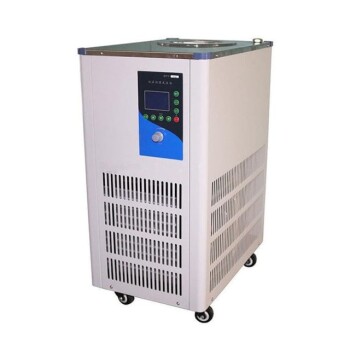
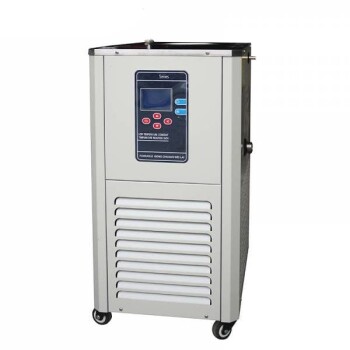
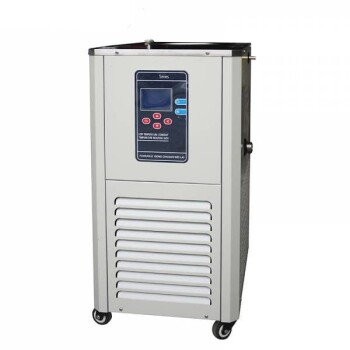
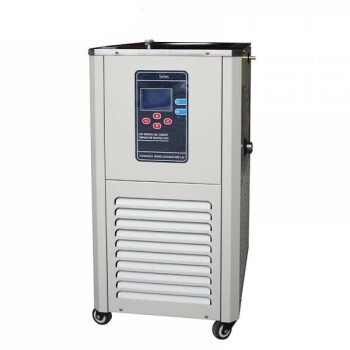
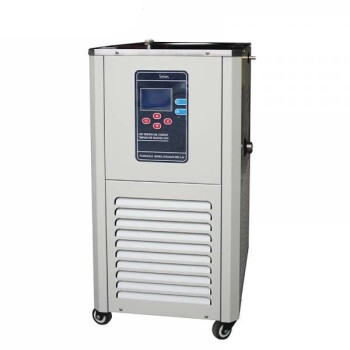
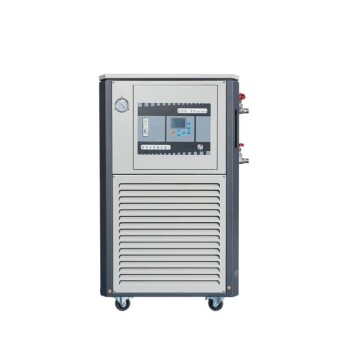
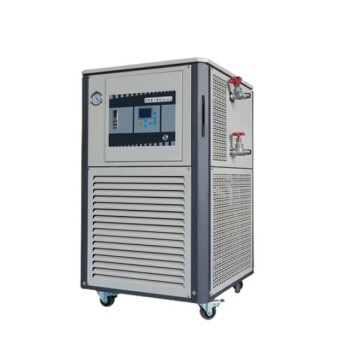
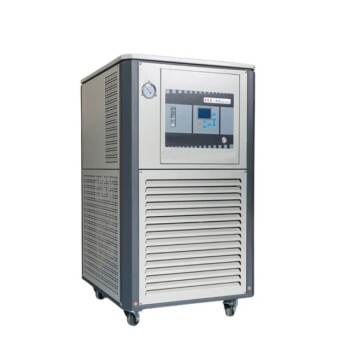
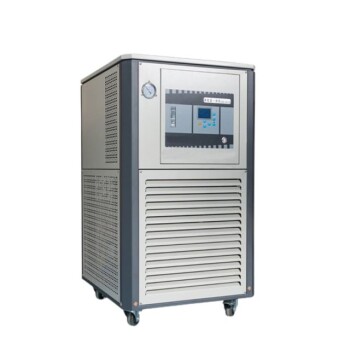
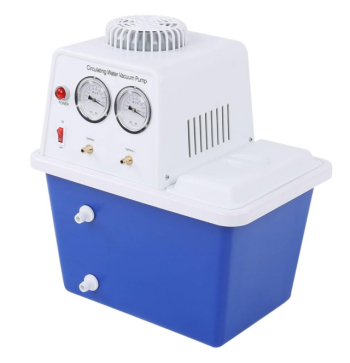
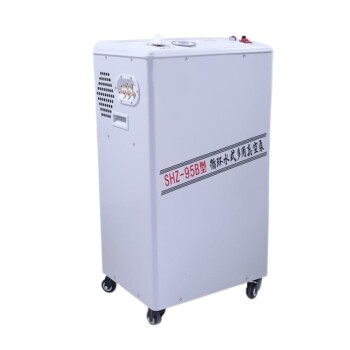
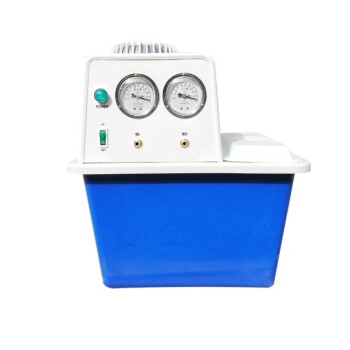
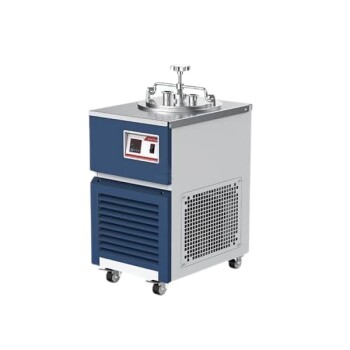
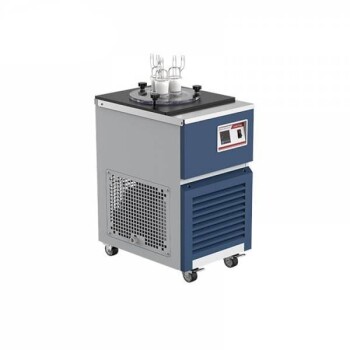
Maintaining precise thermal equilibrium is the primary function of the water-cooled refrigeration circulation system during acid leaching. Connected directly to the reactor jacket, this system actively counteracts heat buildup caused by mechanical stirring and external heating, preventing the reaction mixture from overheating during prolonged extraction experiments.
The core purpose of this system is to prevent uncontrolled temperature fluctuations that compromise material quality. By neutralizing heat generated by friction and reaction duration, it ensures the consistent removal of impurities, guaranteeing the final precursor meets exact chemical specifications.
The Mechanics of Thermal Regulation
Managing Heat from Mechanical Friction
During the acid leaching of rice husks, the process often requires prolonged extraction times and continuous agitation.
The physical action of stirring creates friction, which naturally generates heat within the mixture. Without intervention, this internal heat generation can cause the temperature to drift above the desired set point.
The Role of the Reactor Jacket
The refrigeration system operates by circulating coolant through a jacket surrounding the reactor.
This creates a thermal buffer that absorbs excess energy. It ensures that the internal environment remains at a stable, set temperature, regardless of the duration of the experiment or the intensity of the stirring.
Impact on Chemical Consistency
Controlled Removal of Impurities
The acid leaching process is designed to remove specific organic components, primarily cellulose and lignin, from the rice husks.
The efficiency of this removal is highly sensitive to temperature. If the temperature fluctuates due to lack of cooling, the rate of removal becomes unpredictable.
Ensuring Target Component Ratios
To produce a high-quality precursor, the final material must have specific component ratios.
The water-cooled system ensures that the reaction proceeds exactly as calculated. By locking in the temperature, researchers can guarantee that the resulting precursor possesses the intended chemical composition and physical properties.
The Consequence of Thermal Instability
Loss of Temperature Control
The most significant risk in omitting this system is the loss of temperature control (thermal runaway) in the later stages of extraction.
As the experiment creates its own heat through friction, the reaction mixture can exceed the safe or optimal processing window.
Inconsistent Material Quality
If the heat balance is not regulated, the resulting rice husk precursor will suffer from inconsistent removal of lignin and cellulose.
This leads to a product that fails to meet the necessary specifications for subsequent processing or application.
Making the Right Choice for Your Goal
To ensure your acid leaching process yields usable results, apply the following guidelines:
- If your primary focus is Product Uniformity: You must use the water-cooled system to ensure the consistent removal of cellulose and lignin across every batch.
- If your primary focus is Process Stability: The system is required to offset the heat generated by stirring friction during long extraction periods.
Precision in temperature control is the only way to transform raw rice husks into a chemically precise precursor.
Summary Table:
| Feature | Function in Acid Leaching | Benefit to Process |
|---|---|---|
| Mechanical Heat Offset | Neutralizes friction heat from stirring | Prevents temperature drift & overheating |
| Reactor Jacket Flow | Circulates coolant around the reaction | Maintains stable, set thermal environment |
| Impurity Control | Regulates cellulose and lignin removal | Ensures high-quality, uniform precursors |
| Thermal Stability | Prevents uncontrolled heat fluctuations | Guarantees consistent chemical specifications |
Elevate Your Chemical Research with KINTEK Precision
Achieving exact chemical specifications requires more than just a reaction—it demands absolute thermal control. KINTEK specializes in advanced laboratory equipment designed for the most rigorous material processing. From high-temperature high-pressure reactors and autoclaves to precise cooling solutions (chillers and ULT freezers), we provide the tools necessary to maintain process stability and product uniformity.
Whether you are refining rice husk precursors or developing complex battery materials, KINTEK’s comprehensive range of crushing systems, hydraulic presses, and specialized electrolytic cells ensures your lab operates at peak efficiency.
Ready to optimize your acid leaching process? Contact us today to discover how our tailored laboratory solutions can bring precision to your research.
References
- Anna Liashenko, Kateryna Plyasovskaya. Studying the kinetics of extraction treatment of rice husk when obtaining silicon carbide. DOI: 10.15587/1729-4061.2020.195881
This article is also based on technical information from Kintek Solution Knowledge Base .
Related Products
- 100L Chilling Circulator Cooling Water Circulator for Low Temperature Constant Temperature Reaction Bath Water Bath Cooling
- 80L Chilling Circulator Cooling Water Circulator for Water Bath Cooling and Low Temperature Constant Temperature Reaction Bath
- 30L Chiller Water Bath Cooling Circulator Low Temperature Constant Temperature Reaction Bath
- 40L Chiller Water Bath Cooling Circulator Low Temperature Constant Temperature Reaction Bath
- 5L Chilling Circulator Cooling Water Bath Circulator for Low Temperature Constant Temperature Reaction Bath
People Also Ask
- What function does a circulating cooling chiller perform during the gas adsorption isotherm testing of nanoporous carbon?
- Why is a circulating water chiller required for Prussian Blue nanoparticles? Ensure Stability & Batch Reproducibility
- What is the purpose of a cooling circulation water bath system in electrochemical experiments? Enhance Lab Precision
- How does a constant temperature circulator support the leaching reaction of gold scrap? Optimize Gold Recovery Results
- How do constant temperature circulators impact weight-loss immersion tests? Ensure Precision in Corrosion Analysis