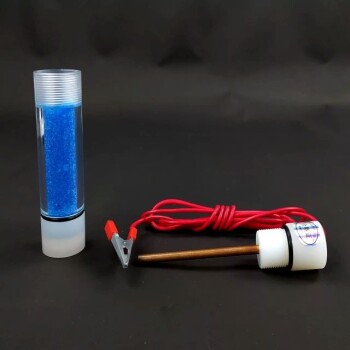
The Hg/HgO reference electrode is the standard for alkaline electrochemistry because it offers unparalleled chemical stability and potential reproducibility in high-pH environments. It effectively eliminates measurement errors and potential drift that occur when using traditional electrodes in strong bases like 1 M or 3 M KOH. This stability is essential for the precise determination of absolute potentials and overpotentials during the characterization of NiFeP/NF electrodes.
The Hg/HgO electrode provides a reliable, constant potential benchmark that is chemically compatible with alkaline electrolytes, ensuring that data for oxygen and hydrogen evolution reactions (OER/HER) is accurate and repeatable.
The Necessity of Chemical Compatibility in Alkaline Media
Stability in Strong Bases
The Hg/HgO electrode is specifically designed for high-pH environments, such as 1 M or 3 M KOH. Its internal chemistry is inherently stable in these conditions, allowing it to maintain a consistent potential over long durations. This makes it the ideal "zero-potential" reference point for testing advanced catalysts like NiFeP/NF.
Eliminating Potential Drift
In alkaline testing, reference potential drift can lead to significant errors in voltage window measurements and capacity calculations. The Hg/HgO electrode prevents this drift, ensuring that the measured cathodic working potential and redox reaction windows remain precise. This reliability is crucial when evaluating the cycle life and kinetic characteristics of an electrode.
Minimizing Measurement Errors
Using this specific reference electrode eliminates errors caused by pH fluctuations within the electrolyte. By providing an accurate and constant benchmark, researchers can precisely calculate the overpotential shifts of the NiFeP/NF electrode, which is vital for assessing catalytic efficiency during OER and HER.
The Limitations of Traditional Reference Electrodes
The Failure of Ag/AgCl and SCE
Common reference electrodes like the Saturated Calomel Electrode (SCE) or Silver/Silver Chloride (Ag/AgCl) are often unsuitable for strong alkaline media. These electrodes frequently experience significant electrolyte leakage or potential instability when exposed to high concentrations of hydroxide ions.
Salt Bridge Clogging
In strong bases, traditional electrodes are prone to salt bridge clogging. This physical failure disrupts the ionic path, leading to erratic potential readings and unreliable polarization curve data. The Hg/HgO electrode avoids these mechanical and chemical failures, ensuring a clear signal.
Preventing Contamination
Standard electrodes can leak chloride ions into the alkaline electrolyte, which may poison the NiFeP/NF catalyst or alter the reaction kinetics. The Hg/HgO electrode maintains a clean testing environment, preserving the integrity of the electrochemical characterization.
Precision in Data Analysis and Calibration
Facilitating RHE Conversion
For electrochemical data to be comparable across different studies, it must often be converted to the Reversible Hydrogen Electrode (RHE) scale. The high stability and known potential of the Hg/HgO electrode allow for accurate calibration and conversion, ensuring that your results are scientifically robust.
Defining Redox Kinetic Characteristics
Testing NiFeP/NF involves analyzing Cyclic Voltammetry (CV) and Galvanostatic Charge-Discharge (GCD) curves. A stable Hg/HgO reference ensures that the charge-discharge platforms and nucleation overpotentials are defined with high accuracy, reflecting the true performance of the material.
Understanding the Trade-offs
Handling and Toxicity
The primary downside of the Hg/HgO electrode is the use of mercury and mercury oxide, which are toxic substances. This requires strict adherence to safety protocols for handling, storage, and disposal to prevent environmental contamination and health risks.
Maintenance and Filling Solutions
The internal filling solution of the Hg/HgO electrode should ideally match the concentration of the KOH electrolyte used in the main cell. Discrepancies in concentration can introduce liquid junction potentials, which, while small, can affect the precision of highly sensitive measurements.
Temperature Sensitivity
Like most reference electrodes, the potential of the Hg/HgO couple is temperature-dependent. To ensure the highest level of accuracy, experiments should be conducted in a temperature-controlled environment, or the potential must be corrected for thermal deviations.
How to Apply This to Your Research
Selecting the right reference electrode is a foundational step in ensuring the validity of your electrochemical data.
- If your primary focus is OER/HER in 1 M KOH: Use the Hg/HgO electrode to ensure stable overpotential measurements and prevent salt bridge clogging.
- If your primary focus is long-term stability testing: Prioritize the Hg/HgO electrode to avoid potential drift that could invalidate your aging or cycling data.
- If your primary focus is data comparability: Use the Hg/HgO electrode to provide a reliable baseline for accurate conversion to the RHE scale.
By matching the reference electrode to the alkaline nature of your electrolyte, you ensure that the performance of your NiFeP/NF electrode is accurately represented.
Summary Table:
| Feature | Hg/HgO Reference Electrode | Traditional (Ag/AgCl/SCE) |
|---|---|---|
| Optimal pH Range | High pH (Alkaline/Basic) | Neutral to Acidic |
| Stability in KOH | High; Excellent reproducibility | Low; Prone to potential drift |
| Durability | Resistant to salt bridge clogging | High risk of leakage/clogging |
| OER/HER Accuracy | Superior; Essential for overpotential | Poor; Risk of ion contamination |
Elevate Your Electrochemical Research with KINTEK
Precision in the lab starts with the right equipment. KINTEK specializes in providing high-performance laboratory solutions, including specialized Hg/HgO electrodes, electrolytic cells, and electrodes designed for the most demanding alkaline environments.
Whether you are characterizing NiFeP/NF catalysts or optimizing OER/HER kinetics, our comprehensive range of battery research tools, high-temperature furnaces, and essential consumables like PTFE and ceramic products ensure your data is robust and repeatable.
Don't let potential drift compromise your results. Contact KINTEK today to discover how our expert-grade tools can enhance your research efficiency and accuracy.
References
- Qixian Han, Lian Gao. Self-Standing Hierarchical Porous Nickel-Iron Phosphide/Nickel Foam for Long-Term Overall Water Splitting. DOI: 10.3390/catal13091242
This article is also based on technical information from Kintek Solution Knowledge Base .
Related Products
- Reference Electrode Calomel Silver Chloride Mercury Sulfate for Laboratory Use
- Gold Electrochemical Sheet Electrode Gold Electrode
- Copper Sulfate Reference Electrode for Laboratory Use
- Gold Disc Electrode
- Glassy Carbon Electrochemical Electrode
People Also Ask
- What is the function of a reference electrode? Master Precision in Three-Electrode Reactor Reconstruction
- What is the recommended maintenance for the filling solution of a reference electrode? A Guide to Stable & Accurate Readings
- Which electrode is used as a ground reference? Master the Key to Accurate Electrochemical Measurements
- What is the reference electrode in potentiometry? The Key to Stable & Accurate Measurements
- Which electrode is used as a reference? A Guide to Accurate Electrochemical Measurements