High-precision vibrating sieving is the foundation of high-performance composite powder preparation. It is essential for strictly controlling the particle size of powders like $FeAl_2O_4$ and $RGO/Cu$ within narrow, specific ranges, such as 10–30 µm or 10–15 µm. This precision ensures the material flows consistently through feeding systems and achieves the uniform heating required for high-quality microstructural coatings.
High-precision vibrating sieving eliminates particle size variability, which is the primary cause of uneven heating and structural defects in composite materials. By maintaining a strict size distribution, manufacturers can guarantee consistent material flow, optimal thermal reaction kinetics, and superior mechanical properties.
The Critical Role of Particle Size in Material Processing
Precise particle control is not merely a matter of classification; it is a requirement for predictable material behavior during downstream processing.
Ensuring Consistent Feed Material Flowability
The flowability of $FeAl_2O_4$ and $RGO/Cu$ powders is directly tied to their size distribution. Consistent flowability is necessary for automated feeding systems to prevent clogs and ensure a steady supply of material during manufacturing.
Optimizing Thermal Energy Absorption
In processes like plasma spraying, the size of a particle determines how it absorbs heat. A narrow particle size range ensures that all particles reach the same state of melting or softening simultaneously, resulting in a uniform and high-quality coating.
Controlling Reaction Kinetics and Sintering
For materials undergoing sintering, the specific surface area—which is dictated by particle size—influences liquid phase distribution and final densification. Precise grading allows researchers to achieve repeatable experimental data and reliable material density.
Enhancing Microstructural Integrity and Performance
The performance of a composite depends on how its various phases are distributed at the microscopic level.
Promoting Uniform Dispersion of Reinforcements
In $RGO/Cu$ composites, the high-precision sieving of fillers (like reduced graphene oxide) is critical for dispersion efficiency. Keeping particles below specific thresholds (e.g., 600 µm) ensures they distribute evenly within the matrix, preventing stress concentration points.
Eliminating Structural Defects and Fracture Points
Large-particle impurities or aggregates are often the primary sites for fracture initiation in composite materials. Removing these outliers through high-precision meshes (such as 20 µm) ensures the final material is free of coarse defects that compromise structural integrity.
Improving Surface Quality and Coating Thickness
Uniform particle sizes prevent the formation of scratches and uneven thickness in electrode slurries or composite coatings. This leads to a smoother surface finish and more predictable performance in electronic and structural applications.
Understanding the Trade-offs
While high-precision sieving is vital, it introduces specific operational challenges that must be managed.
Throughput vs. Precision
The use of extremely fine meshes (e.g., 400 mesh) significantly slows down the processing speed compared to coarser sieves. Achieving high-precision classification often requires a trade-off in volume, making it more suitable for high-value composite materials than bulk commodities.
Mesh Blinding and Material Loss
Fine powders are prone to mesh blinding, where particles become stuck in the sieve openings, reducing efficiency. Additionally, the vibration process can sometimes cause material degradation or the loss of ultra-fine particles that are essential for specific reactions.
Equipment Maintenance and Calibration
Maintaining the integrity of high-precision screens is difficult, as even minor tears or warping can compromise the entire particle distribution. Regular calibration and careful handling are required to ensure the sieving equipment remains an objective standard for quality control.
How to Apply This to Your Project
Selecting the right sieving parameters depends entirely on the intended application of the composite powder.
- If your primary focus is plasma spraying or thermal coating: Utilize sieving equipment that can isolate a very narrow range (e.g., 10–15 µm) to ensure uniform melting and prevent "unmelted core" defects.
- If your primary focus is liquid-phase exfoliation or filler dispersion: Focus on removing all aggregates above a specific threshold to ensure the reinforcing phase (like RGO) disperses without clumping.
- If your primary focus is sintering and densification: Use multi-layered screens to grade powders into specific fractions, allowing you to control the specific surface area and predict the final density of the part.
By mastering particle size distribution through high-precision sieving, you transform a raw powder into a predictable, high-performance engineering material.
Summary Table:
| Key Benefit | Impact on Composite Quality | Primary Application Area |
|---|---|---|
| Narrow Size Distribution | Uniform heating & melting; avoids "unmelted cores" | Plasma spraying & thermal coatings |
| Consistent Flowability | Prevents clogs in automated feeding systems | Automated manufacturing & 3D printing |
| Dispersion Control | Prevents aggregates & structural fracture points | RGO/Cu & reinforced composites |
| Surface Area Optimization | Precise liquid phase distribution & densification | Sintering & powder metallurgy |
Elevate Your Powder Precision with KINTEK
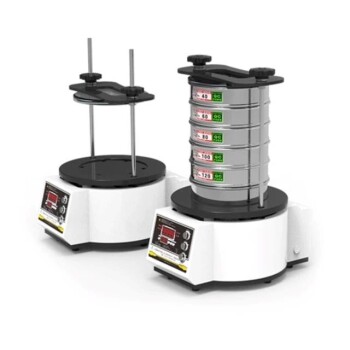
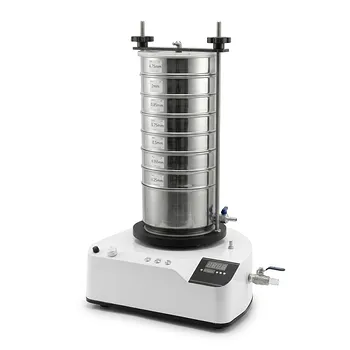
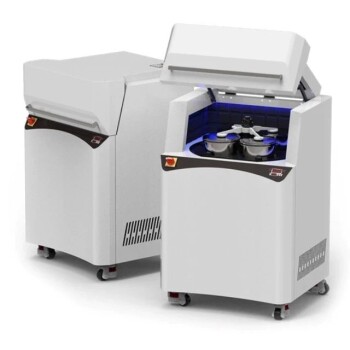
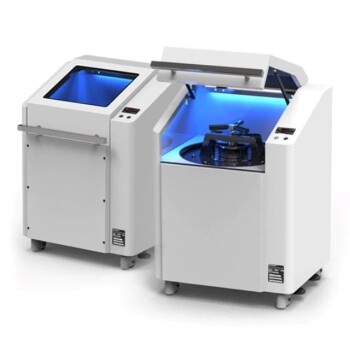
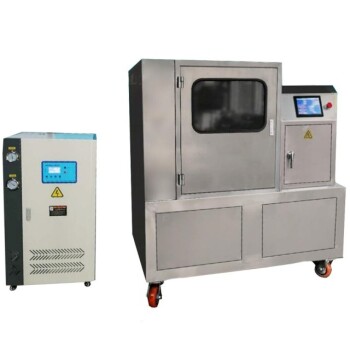
Achieving the perfect composite material starts with uncompromising particle control. KINTEK specializes in high-performance laboratory equipment designed to meet the rigorous demands of material science. Whether you are processing FeAl2O4, RGO/Cu, or advanced ceramics, our high-precision sieving equipment ensures the uniformity required for superior thermal kinetics and structural integrity.
Beyond sieving, KINTEK offers a comprehensive range of solutions for your lab:
- Sample Preparation: Crushing and milling systems, hydraulic presses (pellet, hot, isostatic).
- Thermal Processing: Muffle, tube, vacuum, CVD, and PECVD furnaces.
- Advanced Reactors: High-temperature high-pressure reactors and autoclaves.
- Consumables: High-purity ceramics, crucibles, and PTFE products.
Ready to eliminate particle variability and enhance your research outcomes? Contact our technical experts today to find the ideal equipment for your workflow!
References
- Zhenhua Chu, Qingsong Hu. Synthesis of RGO/Cu@ FeAl2O4 Composites and Its Applications in Electromagnetic Microwave Absorption Coatings. DOI: 10.3390/ma16020740
This article is also based on technical information from Kintek Solution Knowledge Base .
Related Products
- Vibratory Sieve Shaker Machine Dry Three-Dimensional Vibrating Sieve
- Laboratory Vibratory Sieve Shaker Machine for Dry and Wet Three-Dimensional Sieving
- Laboratory Wet Three-Dimensional Vibratory Sieve Shaker Machine
- Laboratory Test Sieves and Vibratory Sieve Shaker Machine
- Laboratory Vibratory Sieve Shaker Machine Slap Vibrating Sieve
People Also Ask
- How is a vibratory sieve shaker used in the particle size analysis of mechanically alloyed powders? Expert Guide
- Why use a vibratory sieve shaker for PET powder? Achieve Precise Particle Size Control for Chemical Research
- What is the principle of vibratory sieve shaker? Achieve Accurate Particle Size Analysis
- What is the function of a vibratory sieve shaker? Achieve Precise Particle Size Analysis
- What is the use of vibratory sieve shaker? Achieve Precise Particle Size Analysis for Your Lab