Establishing a deep vacuum (≤0.20 mbar) is the foundational step for successful Metal-Organic Framework (MOF) modification using PECVD. This process is strictly necessary to evacuate adsorbed moisture and air impurities trapped within the porous structure, ensuring the precursors can penetrate and modify the material's internal surface rather than just the exterior.
Core Takeaway Achieving low pressure is not just about chamber cleanliness; it is a mechanical requirement to "empty" the MOF's pores. Without this step, trapped gases physically block the modification precursors, resulting in superficial coatings and chemically contaminated plasma.
The Mechanics of Vacuum in MOF Modification
Evacuating the Internal "Sponge"
MOFs are highly porous materials that act like sponges, naturally adsorbing moisture and air from the atmosphere.
Before any modification can occur, a vacuum pump must remove these adsorbed impurities. If these occupants are not evacuated, there is physically no space for the new chemical agents to enter the complex pore structure.
Enabling Deep Pore Diffusion
Once the pores are cleared of contaminants, the vacuum environment significantly aids diffusion.
Low pressure ensures that the introduced perfluoroalkyl gases can smoothly diffuse into the internal channels of the MOF. This facilitates modification deep within the pores, rather than limiting the reaction to the outer surface of the material.
Ensuring Chemical Precision
Creating a Pure Plasma Environment
Plasma Enhanced Chemical Vapor Deposition (PECVD) relies on specific chemical reactions driven by ionized gas.
Residual air or moisture acts as a contaminant, destabilizing the plasma and potentially causing unwanted side reactions like oxidation. A deep vacuum creates a pristine environment, ensuring that only the intended precursor gases participate in the modification process.
Preventing Vapor Interference
In a vacuum, the mean free path of gas molecules increases, reducing collisions with background gases.
This ensures an undisturbed flux of the modification gas toward the substrate. It prevents the precursors from reacting with atmospheric contaminants before they even reach the MOF surfaces.
Understanding the Risks (Trade-offs)
The Cost of Insufficient Vacuum
Failing to reach the target pressure (≤0.20 mbar) creates a barrier to effective modification.
If the vacuum is too weak, trapped air remains inside the pores, acting as a shield against the plasma. This leads to non-uniform modification, where the internal surface area—the MOF's most valuable feature—remains untreated.
Contamination and Stability
Operating at higher pressures increases the presence of oxygen and water vapor.
This can degrade sensitive MOF structures or lead to dust formation (gas-phase nucleation) within the chamber. These byproducts can deposit on the material, ruining the purity and performance of the final modified product.
Making the Right Choice for Your Goal
To ensure the highest quality MOF modification, apply the vacuum protocols based on your specific requirements:
- If your primary focus is Internal Surface Modification: Ensure the vacuum pump runs long enough to fully degas the pores, allowing the precursor to coat the entire internal structure.
- If your primary focus is Chemical Purity: Verify that the pressure reaches ≤0.20 mbar to eliminate moisture that could cause oxidation or interfere with the plasma chemistry.
Ultimately, the vacuum step is the gatekeeper that determines whether you are modifying the entire material or merely painting its surface.
Summary Table:
| Vacuum Function | Impact on MOF Structure | Process Benefit |
|---|---|---|
| Evacuation | Removes adsorbed moisture/air | Clears internal pore space |
| Diffusion | Facilitates gas penetration | Enables deep internal modification |
| Plasma Purity | Eliminates contaminants | Prevents oxidation & side reactions |
| Flux Stability | Increases mean free path | Ensures uniform precursor delivery |
Enhance Your MOF Research with KINTEK Precision
Achieving the perfect vacuum is the foundation of high-quality material modification. KINTEK specializes in advanced laboratory equipment, including state-of-the-art PECVD, CVD, and vacuum furnace systems designed to ensure the deep pore diffusion and chemical purity your research demands.
Our comprehensive portfolio also features high-temperature high-pressure reactors, autoclaves, and specialized crushing/milling systems to support every stage of your workflow. Don't let insufficient vacuum or contaminants compromise your results—contact our technical experts today to find the ideal high-performance solution for your laboratory's needs!
References
- Jared B. DeCoste, Gregory W. Peterson. Preparation of Hydrophobic Metal-Organic Frameworks via Plasma Enhanced Chemical Vapor Deposition of Perfluoroalkanes for the Removal of Ammonia. DOI: 10.3791/51175
This article is also based on technical information from Kintek Solution Knowledge Base .
Related Products
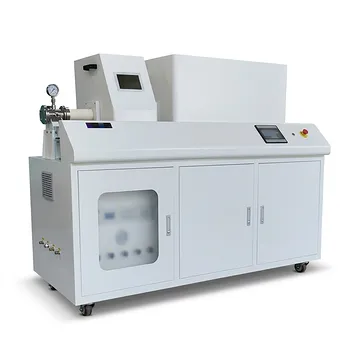
- Chemical Vapor Deposition CVD Equipment System Chamber Slide PECVD Tube Furnace with Liquid Gasifier PECVD Machine
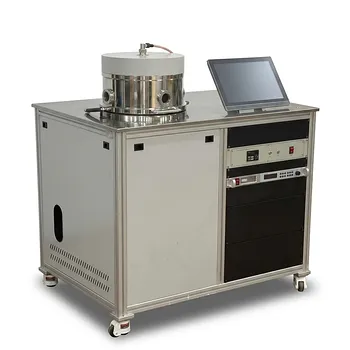
- RF PECVD System Radio Frequency Plasma-Enhanced Chemical Vapor Deposition RF PECVD
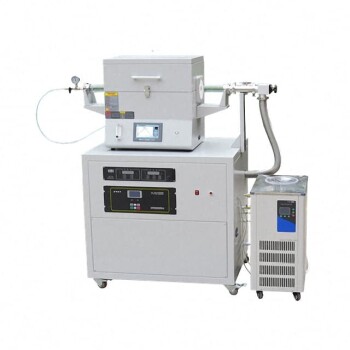
- Inclined Rotary Plasma Enhanced Chemical Vapor Deposition PECVD Equipment Tube Furnace Machine
- Inclined Rotary Plasma Enhanced Chemical Vapor Deposition PECVD Equipment Tube Furnace Machine
- 915MHz MPCVD Diamond Machine Microwave Plasma Chemical Vapor Deposition System Reactor
People Also Ask
- What are the advantages of chemical vapor deposition? Achieve Superior Thin Films for Your Lab
- What types of substrates are used in CVD to facilitate graphene films? Optimize Graphene Growth with the Right Catalyst
- What is the chemical vapor deposition growth process? Build Superior Thin Films from the Atom Up
- How expensive is chemical vapor deposition? Understanding the True Cost of High-Performance Coating
- Why is Chemical Vapor Deposition (CVD) equipment uniquely suited for constructing hierarchical superhydrophobic structures?