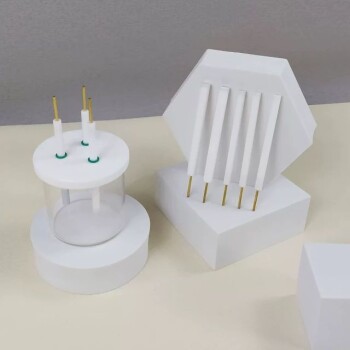
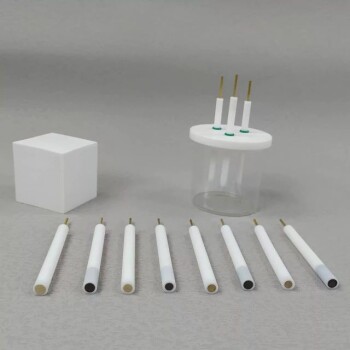
Magnéli phase titanium suboxide (M-TiSO) is the preferred anode material in Tubular Electrode Assembly Reactors because it solves the fundamental inefficiency of standard electrochemical water treatment. It combines the electrical performance of a metal with the durability of a ceramic, specifically engineered to direct energy toward destroying pollutants rather than generating gas.
Core Takeaway By possessing an exceptionally high oxygen evolution potential, M-TiSO effectively blocks the wasteful production of oxygen gas. This forces the reactor to utilize electrical energy for the generation of powerful hydroxyl radicals, maximizing the efficient degradation of organic pollutants.
The Three Pillars of M-TiSO Performance
To understand why M-TiSO is utilized, one must look at the specific physical and chemical properties that distinguish it from conventional anode materials.
Exceptional Electrical Conductivity
An effective anode must allow electricity to flow freely to facilitate reactions.
M-TiSO possesses exceptional electrical conductivity, comparable to that of metals. This ensures that the energy input into the reactor is delivered efficiently to the interface where treatment occurs, rather than being lost as heat due to resistance.
High Physicochemical Stability
Electrochemical reactors create harsh environments that degrade many materials over time.
M-TiSO is selected for its high physicochemical stability. It resists corrosion and breakdown during operation, ensuring a longer lifespan for the reactor components and maintaining consistent performance over time.
High Oxygen Evolution Potential
This is the defining characteristic of M-TiSO. It boasts an oxygen evolution potential of approximately +2.6 V versus the Standard Hydrogen Electrode (SHE).
In electrochemical terms, this is a very high "energy barrier." It makes it thermodynamically difficult for water to split into oxygen gas, which is the primary competing reaction in these systems.
How M-TiSO Optimizes Pollutant Degradation
The "Deep Need" for using M-TiSO is not just about the material itself, but about how it alters the chemical reactions within the reactor.
Suppressing Wasteful Side Reactions
In many electrochemical systems, the oxygen evolution reaction (OER) is a "parasitic" process.
When the reactor generates oxygen gas, it consumes electrical current that could have been used for treatment. Because M-TiSO has such a high potential barrier (+2.6 V), it significantly suppresses this side reaction, preventing energy waste.
Enhancing Current Efficiency
By blocking the easy path (making oxygen), the system is forced to take the productive path (treating water).
This results in high current efficiency. A larger percentage of the electricity fed into the reactor is directly utilized for the intended chemical changes, making the system more cost-effective and energy-efficient.
Generating Hydroxyl Radicals
The suppression of oxygen evolution facilitates the generation of hydroxyl radicals (·OH).
These radicals are highly oxidative species. Because the M-TiSO anode prevents the current from being wasted on oxygen, that energy is used to produce these radicals, which are capable of the efficient degradation of organic pollutants.
Understanding the Operational Trade-offs
While M-TiSO is highly effective for pollutant degradation, it is important to understand the balance of reactions involved.
The Selectivity Trade-off
The use of M-TiSO represents a deliberate choice to prioritize oxidation over gas generation.
If your goal were to produce oxygen (as in some electrolysis applications), M-TiSO would be the wrong choice because it inhibits that process. Its utility is strictly tied to applications where side reactions—like oxygen creation—detract from the primary goal of cleaning the water.
Making the Right Choice for Your Goal
The decision to use M-TiSO depends on the specific outcome required from your electrochemical system.
- If your primary focus is organic pollutant degradation: M-TiSO is ideal because it generates high concentrations of hydroxyl radicals by suppressing oxygen evolution.
- If your primary focus is energy efficiency: M-TiSO is recommended because its high oxygen evolution potential minimizes wasted current on side reactions.
M-TiSO effectively turns the reactor into a precision tool, focusing all available energy on the destruction of contaminants.
Summary Table:
| Property | M-TiSO Specification | Operational Benefit |
|---|---|---|
| Electrical Conductivity | Metal-equivalent | Efficient energy delivery with minimal heat loss |
| Oxygen Evolution Potential | ~+2.6 V (vs. SHE) | Suppresses gas generation to focus energy on pollutants |
| Chemical Stability | High Ceramic-grade | Superior corrosion resistance in harsh environments |
| Active Species | Hydroxyl Radicals (·OH) | High oxidation power for organic pollutant degradation |
| Current Efficiency | High | Minimizes energy waste from parasitic side reactions |
Revolutionize Your Electrochemical Treatment with KINTEK
Maximize your reactor's efficiency and lifespan with KINTEK’s high-performance materials. As a leading specialist in laboratory equipment and advanced materials, KINTEK provides high-precision solutions including electrolytic cells and electrodes specifically engineered for demanding research and industrial applications.
Whether you are scaling up organic pollutant degradation or optimizing battery research, our comprehensive portfolio—from high-temperature furnaces and hydraulic presses to specialized ceramics and crucibles—ensures your lab has the tools to succeed.
Ready to upgrade your anode performance? Contact us today to consult with our experts on the best Magnéli phase solutions and consumables for your specific needs!
References
- Jiabin Liang, Yuan Yuan. A tubular electrode assembly reactor for enhanced electrochemical wastewater treatment with a Magnéli-phase titanium suboxide (M-TiSO) anode and <i>in situ</i> utilization. DOI: 10.1039/d1ra02236a
This article is also based on technical information from Kintek Solution Knowledge Base .
Related Products
- Platinum Auxiliary Electrode for Laboratory Use
- Platinum Sheet Electrode for Laboratory and Industrial Applications
- Gold Disc Electrode
- Platinum Sheet Electrode for Battery Lab Applications
- Electrode Fixture for Electrochemical Experiments
People Also Ask
- What is the function of a platinum electrode as an auxiliary electrode? Ensure Precise Nickel Coating Corrosion Testing
- Why is platinum typically selected as the auxiliary electrode for electrochemical testing of oxazoline inhibitors?
- What does the auxiliary electrode do? Ensuring Accurate Electrochemical Measurements
- What are the roles of Pt counter and reference electrodes in nitrided steel testing? Optimize Your Electrochemical Data
- What are the advantages of using a platinum counter electrode? Ensure Purity in Photocatalytic Coating Deposition