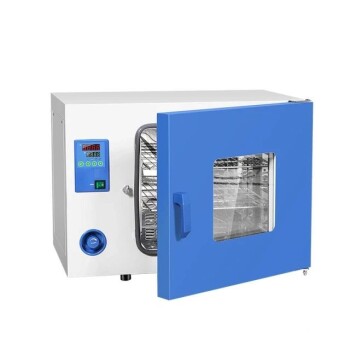
Knowledge Why is precise temperature-controlled heating equipment required for chitosan synthesis? Ensure High-Quality Deacetylation
Author avatar

Tech Team · Kintek Solution

Updated 1 day ago

Why is precise temperature-controlled heating equipment required for chitosan synthesis? Ensure High-Quality Deacetylation


Precise thermal regulation is the critical variable in converting chitin to quality chitosan. The deacetylation process relies on strong chemical bases and is inherently sensitive to heat; without exact control, the reaction becomes unpredictable. Specialized heating equipment ensures the thermal stability necessary to prevent product degradation and achieve the specific physicochemical properties required for the final material.

The quality of chitosan is defined by its molecular weight and solubility, both of which are dictated by reaction stability. Using precise heating equipment prevents temperature fluctuations that lead to uneven deacetylation or the destruction of the polymer chain.

The Chemistry of Deacetylation

The Role of Temperature Sensitivity

The synthesis of chitosan involves removing acetyl groups from chitin using strong bases. This chemical reaction is not static; its rate and efficiency are directly tied to the thermal environment.

Even minor deviations in heat can alter how the reagents interact with the biopolymer.

Achieving Reaction Stability

To ensure the process yields a usable product, the reaction environment must remain stable at specific temperatures.

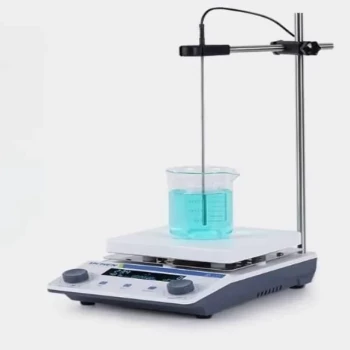
Equipment such as constant temperature water baths or heated stirring reactors provides the necessary consistency that manual or uncontrolled heating methods cannot match.

Consequences of Poor Thermal Control

Preventing Uneven Deacetylation

If the temperature fluctuates, the removal of acetyl groups becomes inconsistent across the batch.

This results in a heterogeneous mixture where some molecules are fully deacetylated and others are not. This lack of uniformity directly negatively impacts the solubility characteristics of the final chitosan.

Avoiding Polymer Degradation

Excessive or spiking heat does more than just speed up the reaction; it can break the polymer chains entirely.

Uncontrolled heat leads to polymer degradation, drastically reducing the molecular weight of the chitosan. This renders the material less effective for high-performance applications that rely on long, intact polymer chains.

Understanding the Trade-offs

Equipment Cost vs. Batch Consistency

Implementing high-precision equipment like heated stirring reactors requires a higher initial capital investment compared to basic heating elements.

However, the trade-off is a significant reduction in wasted batches. The cost of "failed" synthesis due to poor solubility or low molecular weight often outweighs the expense of proper thermal control hardware.

Complexity of Operation

Precise equipment often requires more rigorous setup and calibration than standard laboratory hotplates.

While this adds a layer of operational complexity, it removes the variable of "operator error" regarding temperature monitoring, allowing chemists to focus on optimizing reaction time and reagent concentrations.

Making the Right Choice for Your Goal

To maximize the quality of your chitosan synthesis, align your equipment choice with your specific end-product requirements.

  • If your primary focus is consistent solubility: Prioritize equipment that ensures uniform heat distribution to guarantee even deacetylation across the entire batch.
  • If your primary focus is high molecular weight: Utilize high-precision controllers to prevent temperature spikes that cause polymer chain degradation.

Control the temperature, and you control the quality of the polymer.

Summary Table:

Factor Precise Temperature Control Uncontrolled/Fluctuating Heat
Deacetylation Uniformity Consistent and homogeneous results Uneven, heterogeneous mixture
Molecular Weight Maintained (prevents chain breakage) Reduced (due to polymer degradation)
Product Solubility High and predictable Poor or inconsistent
Process Reliability High batch-to-batch consistency High risk of failed batches
Material Integrity Preserved biopolymer structure Thermal destruction of polymer chains

Elevate Your Biopolymer Synthesis with KINTEK Precision

Achieving the perfect molecular weight and solubility in chitosan production requires uncompromising thermal stability. KINTEK specializes in high-performance laboratory equipment designed to handle the rigors of chemical deacetylation.

Whether you need heated stirring reactors for precise reaction stability, high-temperature furnaces for advanced material processing, or crushing and milling systems for chitin preparation, our comprehensive portfolio ensures your research and production meet the highest standards. From autoclaves and high-pressure reactors to specialized PTFE consumables and cooling solutions, KINTEK provides the tools necessary to prevent polymer degradation and maximize yield.

Ready to optimize your lab’s efficiency and product quality? Contact our technical experts today to find the perfect equipment solution for your specific application needs.

References

  1. Abidoye Olafadehan Olaosebikan, Morufat Bello Adebukola. Isotherms, kinetic and thermodynamic studies of methylene blue adsorption on chitosan flakes derived from African giant snail shell. DOI: 10.5897/ajest2021.3065

This article is also based on technical information from Kintek Solution Knowledge Base .

Related Products

People Also Ask

Related Products

Customizable Laboratory High Temperature High Pressure Reactors for Diverse Scientific Applications

Customizable Laboratory High Temperature High Pressure Reactors for Diverse Scientific Applications

High-pressure lab reactor for precise hydrothermal synthesis. Durable SU304L/316L, PTFE liner, PID control. Customizable volume & materials. Contact us!

1400℃ Controlled Atmosphere Furnace with Nitrogen and Inert Atmosphere

1400℃ Controlled Atmosphere Furnace with Nitrogen and Inert Atmosphere

Achieve precise heat treatment with KT-14A controlled atmosphere furnace. Vacuum sealed with a smart controller, it's ideal for lab and industrial use up to 1400℃.

High Pressure Laboratory Autoclave Reactor for Hydrothermal Synthesis

High Pressure Laboratory Autoclave Reactor for Hydrothermal Synthesis

Discover the applications of Hydrothermal Synthesis Reactor - a small, corrosion-resistant reactor for chemical labs. Achieve rapid digestion of insoluble substances in a safe and reliable way. Learn more now.

Mini SS High Pressure Autoclave Reactor for Laboratory Use

Mini SS High Pressure Autoclave Reactor for Laboratory Use

Mini SS High Pressure Reactor - Ideal for medicine, chemical, and scientific research industries. Programmed heating temp and stirring speed, up to 22Mpa pressure.

Manual High Temperature Heated Hydraulic Press Machine with Heated Plates for Lab

Manual High Temperature Heated Hydraulic Press Machine with Heated Plates for Lab

The High Temperature Hot Press is a machine specifically designed for pressing, sintering and processing materials in a high temperature environment. It is capable of operating in the range of hundreds of degrees Celsius to thousands of degrees Celsius for a variety of high temperature process requirements.

Visual High-Pressure Reactor for In-Situ Observation

Visual High-Pressure Reactor for In-Situ Observation

The visual high-pressure reactor uses transparent sapphire or quartz glass, maintaining high strength and optical clarity under extreme conditions for real-time reaction observation.

Graphite Vacuum Continuous Graphitization Furnace

Graphite Vacuum Continuous Graphitization Furnace

High-temperature graphitization furnace is a professional equipment for graphitization treatment of carbon materials. It is a key equipment for the production of high-quality graphite products. It has high temperature, high efficiency and uniform heating. It is suitable for various high-temperature treatments and graphitization treatments. It is widely used in metallurgy, electronics, aerospace, etc. industry.

Optical Water Bath Electrolytic Electrochemical Cell

Optical Water Bath Electrolytic Electrochemical Cell

Upgrade your electrolytic experiments with our Optical Water Bath. With controllable temperature and excellent corrosion resistance, it's customizable for your specific needs. Discover our complete specifications today.

Ultra-High Temperature Graphite Vacuum Graphitization Furnace

Ultra-High Temperature Graphite Vacuum Graphitization Furnace

The ultra-high temperature graphitization furnace utilizes medium frequency induction heating in a vacuum or inert gas environment. The induction coil generates an alternating magnetic field, inducing eddy currents in the graphite crucible, which heats up and radiates heat to the workpiece, bringing it to the desired temperature. This furnace is primarily used for graphitization and sintering of carbon materials, carbon fiber materials, and other composite materials.

Small Vacuum Heat Treat and Tungsten Wire Sintering Furnace

Small Vacuum Heat Treat and Tungsten Wire Sintering Furnace

The small vacuum tungsten wire sintering furnace is a compact experimental vacuum furnace specially designed for universities and scientific research institutes. The furnace features a CNC welded shell and vacuum piping to ensure leak-free operation. Quick-connect electrical connections facilitate relocation and debugging, and the standard electrical control cabinet is safe and convenient to operate.

915MHz MPCVD Diamond Machine Microwave Plasma Chemical Vapor Deposition System Reactor

915MHz MPCVD Diamond Machine Microwave Plasma Chemical Vapor Deposition System Reactor

915MHz MPCVD Diamond Machine and its multi-crystal effective growth, the maximum area can reach 8 inches, the maximum effective growth area of single crystal can reach 5 inches. This equipment is mainly used for the production of large-size polycrystalline diamond films, the growth of long single crystal diamonds, the low-temperature growth of high-quality graphene, and other materials that require energy provided by microwave plasma for growth.

Microwave Plasma Chemical Vapor Deposition MPCVD Machine System Reactor for Lab and Diamond Growth

Microwave Plasma Chemical Vapor Deposition MPCVD Machine System Reactor for Lab and Diamond Growth

Get high-quality diamond films with our Bell-jar Resonator MPCVD machine designed for lab and diamond growth. Discover how Microwave Plasma Chemical Vapor Deposition works for growing diamonds using carbon gas and plasma.

Custom PTFE Teflon Parts Manufacturer for PTFE Tweezers

Custom PTFE Teflon Parts Manufacturer for PTFE Tweezers

PTFE tweezers inherit the excellent physical and chemical properties of PTFE, such as high temperature resistance, cold resistance, acid and alkali resistance, and corrosion resistance to most organic solvents.

Twin Screw Extruder Plastic Granulation Machine

Twin Screw Extruder Plastic Granulation Machine

Twin screw extruder plastic granulation machine is designed for the mixing and processing experiments of engineering plastics, modified plastics, waste plastics and masterbatches.

Manual Heated Hydraulic Press Machine with Heated Plates for Laboratory Hot Press

Manual Heated Hydraulic Press Machine with Heated Plates for Laboratory Hot Press

The Manual Heat Press is a versatile piece of equipment suitable for a variety of applications, operated by a manual hydraulic system that applies controlled pressure and heat to the material placed on the piston.

Graphite Vacuum Furnace Negative Material Graphitization Furnace

Graphite Vacuum Furnace Negative Material Graphitization Furnace

Graphitization furnace for battery production has uniform temperature and low energy consumption. Graphitization furnace for negative electrode materials: an efficient graphitization solution for battery production and advanced functions to enhance battery performance.

Split Chamber CVD Tube Furnace with Vacuum Station Chemical Vapor Deposition System Equipment Machine

Split Chamber CVD Tube Furnace with Vacuum Station Chemical Vapor Deposition System Equipment Machine

Efficient split chamber CVD furnace with vacuum station for intuitive sample checking and quick cooling. Up to 1200℃ max temperature with accurate MFC mass flowmeter control.

Laboratory Oscillating Orbital Shaker

Laboratory Oscillating Orbital Shaker

Mixer-OT orbital shaker uses brushless motor, which can run for a long time. It is suitable for vibration tasks of culture dishes, flasks and beakers.

Laboratory Jaw Crusher

Laboratory Jaw Crusher

Discover the small jaw crusher for efficient, flexible, and affordable crushing in labs and small mines. Ideal for coal, ores, and rocks. Learn more now!

Double Layer Five-Port Water Bath Electrolytic Electrochemical Cell

Double Layer Five-Port Water Bath Electrolytic Electrochemical Cell

Experience optimal performance with our Water Bath Electrolytic Cell. Our double-layer, five-port design boasts corrosion resistance and longevity. Customizable to fit your specific needs. View specs now.


Leave Your Message