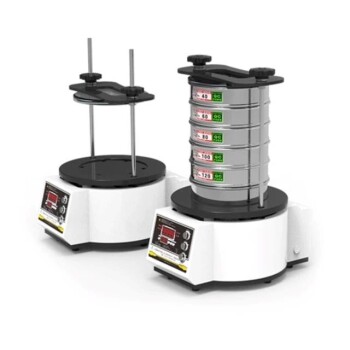
Precision sieving is essential for controlling carbon fiber particle size to a rigorous range of ≤0.4 mm. This precise sizing ensures that active metal nitrates—such as zinc, barium, chromium, or magnesium—are distributed uniformly across the fiber surface during the incipient wetness impregnation process. By standardizing the physical dimensions of the support, engineers can achieve consistent catalyst loading and significantly reduce diffusion resistance during chemical reactions.
Core Takeaway: Precision sieving transforms non-uniform carbon fibers into a standardized catalytic support, which is the foundational requirement for uniform metal distribution and the elimination of mass transfer limitations in heterogeneous reactions.
Optimizing the Active Phase Distribution
Standardizing the Incipient Wetness Process
The impregnation of metal nitrates onto carbon fibers relies on the capillary action of the support. If particle sizes vary wildly, the liquid precursor will distribute unevenly, leading to "hot spots" of high metal concentration and areas of inactive support. Precision sieving to ≤0.4 mm ensures that every particle has a similar surface-area-to-volume ratio, facilitating a homogenous coating of zinc, barium, chromium, or magnesium.
Improving Catalyst Loading Consistency
Consistent loading is vital for maintaining the stoichiometric balance required for complex reactions like the glycerolysis of urea. Without precision sieving, the mass of the active component per gram of support fluctuates between batches. By strictly controlling the fiber size, researchers ensure that the active components are predictably accessible to the reactants.
Overcoming Kinetic and Mass Transfer Barriers
Eliminating Diffusion Limitations
In heterogeneous catalysis, reactants must travel to the catalyst surface and products must move away. Large or irregular carbon fibers create internal and external diffusion resistance, which slows down the reaction rate. Reducing fiber size to a uniform, fine powder minimizes the distance molecules must travel, ensuring the reaction is limited by chemistry rather than physics.
Ensuring Experimental Repeatability
Variations in particle size introduce "noise" into experimental data, making it difficult to determine the true efficiency of a catalyst. Precision sieving eliminates particle size distribution as a variable, allowing for the collection of highly repeatable and comparable kinetic data. This consistency is critical when transitioning from laboratory-scale experiments to industrial-grade production.
Understanding the Trade-offs
Material Yield vs. Precision
The primary downside of high-precision sieving is the potential for material loss. While a tighter mesh (such as 0.4 mm) ensures superior performance, it may result in a significant portion of the raw carbon fiber being discarded if the initial grinding process was inefficient. Balancing the intensity of the pre-grinding stage with the required sieve size is necessary to maintain a cost-effective yield.
Equipment Maintenance and Clogging
Finely ground carbon fibers can be prone to blinding or clogging the sieve mesh due to their fibrous geometry and static charge. Maintaining the accuracy of a precision sieve requires regular cleaning and calibration. Failure to manage "near-mesh" particles can lead to a gradual shift in the actual particle size distribution, undermining the benefits of the sieving process.
How to Apply This to Your Catalyst Synthesis
To achieve the best results when preparing supported metal oxide catalysts, your sieving strategy should align with your specific performance requirements:
- If your primary focus is maximizing reaction rates: Use precision sieving to achieve the smallest uniform size possible (typically <0.1 mm) to virtually eliminate internal diffusion resistance.
- If your primary focus is industrial scalability: Target a wider but still controlled range (e.g., 0.2 mm to 0.4 mm) to balance catalyst performance with the throughput of sieving equipment.
- If your primary focus is experimental validation: Prioritize high-precision standard sieves (e.g., 45μm to 400μm) to ensure that kinetic data is not skewed by inconsistent heat and mass transfer.
By mastering the particle size of your carbon fiber support, you establish the physical foundation necessary for high-performance, predictable chemical catalysis.
Summary Table:
| Key Parameter | Impact on Synthesis | Primary Advantage |
|---|---|---|
| Particle Size (≤0.4mm) | Standardizes surface-area-to-volume ratio | Ensures uniform metal nitrate distribution |
| Pore Accessibility | Facilitates capillary action | Optimizes incipient wetness impregnation |
| Mass Transfer | Reduces internal/external diffusion | Minimizes resistance and boosts reaction rates |
| Data Consistency | Eliminates size distribution variables | Enhances experimental repeatability |
Maximize Your Catalyst Efficiency with KINTEK Precision Solutions
High-performance supported metal oxide catalysts demand rigorous material standards. At KINTEK, we understand that achieving uniform active phase distribution starts with the perfect support particle size.
We offer a specialized range of precision sieving equipment and crushing and milling systems to ensure your carbon fibers meet the exact specifications required to eliminate mass transfer limitations. Beyond preparation, our portfolio features high-temperature high-pressure reactors and autoclaves, vacuum and atmosphere furnaces, and PTFE consumables to support every stage of your catalyst synthesis and testing.
Don't let inconsistent particle sizes skew your results. Contact KINTEK experts today to explore our full range of laboratory solutions designed for cutting-edge chemical research.
References
- Karolina Ptaszyńska, Mieczysław Kozłowski. A Green Approach to Obtaining Glycerol Carbonate by Urea Glycerolysis Using Carbon-Supported Metal Oxide Catalysts. DOI: 10.3390/molecules28186534
This article is also based on technical information from Kintek Solution Knowledge Base .
Related Products
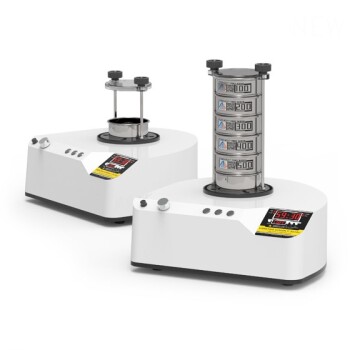
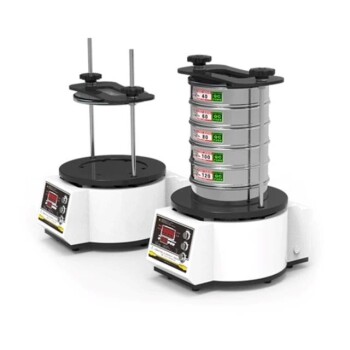
- Three-dimensional electromagnetic sieving instrument
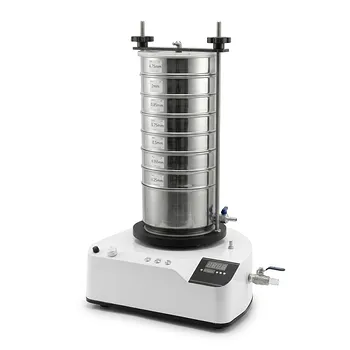
- Laboratory Vibratory Sieve Shaker Machine for Dry and Wet Three-Dimensional Sieving
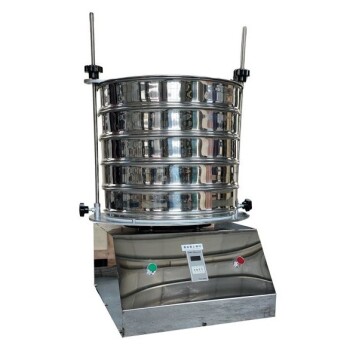
- Laboratory Test Sieves and Sieving Machines
- Precision Wire Saw Laboratory Cutting Machine with 800mm x 800mm Workbench for Diamond Single Wire Circular Small Cutting
- Laboratory Test Sieves and Vibratory Sieve Shaker Machine
People Also Ask
- Why is sieving equipment essential for the classification of processed bio-activated carbon? Optimize Performance
- What are the limitations of sieving? Understanding the Constraints of Particle Size Analysis
- What are advantages and disadvantages of sieving method? A Guide to Reliable & Cost-Effective Particle Sizing
- How is sieving important? The Critical Role of Particle Size Analysis in Quality Control
- What is sieving and how does it work? A Guide to Accurate Particle Size Analysis