The selection of grinding media is the single most significant variable controlling both the quality and timeline of your mechanical alloying process. It directly dictates the purity of your self-passivating tungsten alloy and determines the efficiency of kinetic energy transfer within the mill. Selecting the wrong material risks introducing detrimental impurities or failing to generate the "energy release density" required to fuse the powder into a unified state.
The material composition of grinding balls and jars determines the energy density delivered to the powder and serves as the primary source of process-induced contamination. Success requires balancing high-impact energy transfer with chemical compatibility to ensure the final alloy retains its oxidation-resistant properties.
Controlling Alloy Purity and Contamination
The mechanical alloying process involves violent collisions that inevitably cause wear on the grinding media. The debris from this wear becomes part of your final powder.
Minimizing Foreign Impurities
If the grinding media material is chemically distinct from your target alloy, wear debris acts as a contaminant. This is critical for self-passivating alloys where compositional precision defines oxidation resistance.
According to the primary data, utilizing chromium steel balls can minimize the introduction of foreign impurities. This is particularly effective when the tungsten alloy already contains chromium, making the wear debris chemically compatible rather than a pollutant.
Reducing Metal Contamination with Ceramics
For applications requiring extreme purity, metallic wear debris may be unacceptable.
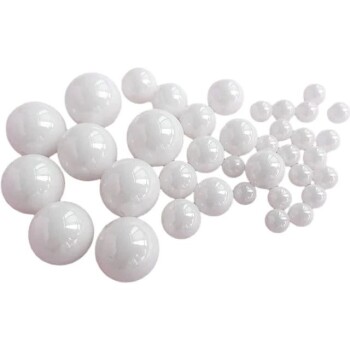
In these scenarios, high-performance ceramic tools, specifically yttria-stabilized zirconia (YSZ), are essential. YSZ offers high wear resistance and significantly reduces metal contamination compared to steel alternatives.
Optimizing Kinetic Energy Transfer
Beyond purity, the material properties of the balls and jars drive the physics of the milling process.
Defining Energy Release Density
The specific material properties (density and hardness) of the grinding media determine the energy release density.
This is the amount of kinetic energy transferred to the tungsten powder during collisions. High-hardness materials ensure that the energy is used to deform, fracture, and cold-weld the powder particles rather than elastically deforming the balls themselves.
Reducing Processing Time
Efficiency is a direct function of the media material. Higher energy release density leads to faster processing.
The material choice directly impacts the time required to reach a fully alloyed state. Dense, hard media accelerate the repeated fracturing and re-welding cycles necessary to achieve a uniform atomic mixture.
Understanding the Trade-offs
When selecting materials, you are often balancing the need for kinetic force against the risk of contamination.
The Hardness vs. Purity Conflict
Harder materials generally transfer energy more efficiently, facilitating the breakdown of oxide film barriers on metal particles.
However, harder materials can also be brittle or abrasive. If you prioritize energy transfer by using extremely hard steel, you must accept a baseline level of iron or chromium enrichment in your alloy.
The Density vs. Time Equation
Ceramic beads like YSZ are excellent for purity, but they often have a lower density than steel.
Using lower-density media reduces the impact force of each collision. This lowers the energy release density, potentially extending the milling duration required to achieve the same level of alloying compared to heavier steel media.
Making the Right Choice for Your Goal
To select the correct grinding media, you must prioritize your project's specific constraints regarding chemical composition versus process efficiency.
- If your primary focus is Absolute Purity: Choose yttria-stabilized zirconia (YSZ) to virtually eliminate metallic contamination, accepting that the alloying process may take longer.
- If your primary focus is Process Efficiency and Speed: Opt for high-hardness stainless steel to maximize energy release density and shorten the time to reach a fully alloyed state.
- If your primary focus is Chemical Compatibility: Select chromium steel media if your tungsten alloy contains chromium, as this turns inevitable wear debris into a compatible alloying element rather than an impurity.
The optimal choice aligns the media's wear products with your alloy's chemistry while ensuring enough kinetic energy to drive the cold-welding process.
Summary Table:
| Grinding Material | Primary Benefit | Trade-off | Best Application |
|---|---|---|---|
| Chromium Steel | Chemical Compatibility | Trace iron/Cr enrichment | Tungsten alloys containing Chromium |
| High-Hardness Steel | Max Energy Transfer | Higher metal contamination | Speed-focused processing & efficiency |
| YSZ (Zirconia) | Absolute Purity | Lower density / Longer time | High-purity labs & sensitive research |
Achieve precision in your mechanical alloying with KINTEK’s high-performance grinding solutions. Whether you require yttria-stabilized zirconia for extreme purity or high-hardness crushing and milling systems for maximum energy release density, our team provides the specialized laboratory equipment you need. From planetary ball mills to essential consumables like ceramics and crucibles, we empower researchers to produce superior self-passivating alloys. Contact KINTEK today to optimize your lab's milling efficiency and material purity!
References
- A. Litnovsky, Anicha Reuban. Advanced Self-Passivating Alloys for an Application under Extreme Conditions. DOI: 10.3390/met11081255
This article is also based on technical information from Kintek Solution Knowledge Base .
Related Products
- Laboratory Jar Ball Mill with Alumina Zirconia Grinding Jar and Balls
- Laboratory Ball Mill Jar Mill with Metal Alloy Grinding Jar and Balls
- Laboratory Jar Mill with Agate Grinding Jar and Balls
- Laboratory Four-Body Horizontal Jar Mill
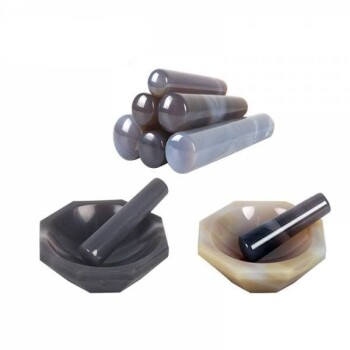
- Nature Agate Mortar and Pestle for Grinding and Mixing
People Also Ask
- What are the primary functions of using a ball mill for BZCY72 powder? Achieve High Purity and Enhanced Sintering
- In what way does a laboratory ball mill affect material properties when modifying PHBV/pulp fiber composites?
- Why is a laboratory ball mill required for ultra-fine fly ash? Unlock Nano-Scale Adsorption Power
- What is the function of a laboratory ball mill in the preparation of AMMCs? Optimize Dispersion & Grain Refinement
- What is the function of a laboratory ball mill in the pretreatment of waste tire char (WTC)? Optimize Material Reactivity