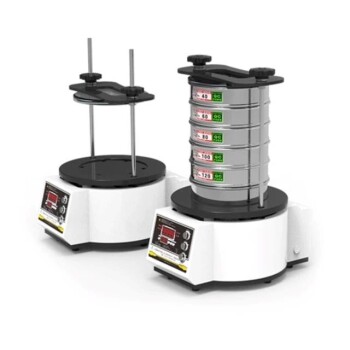
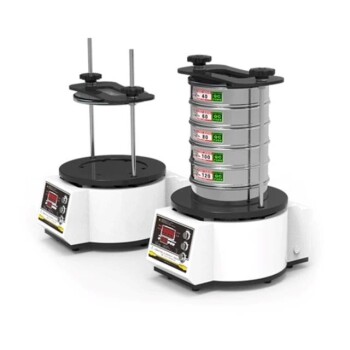
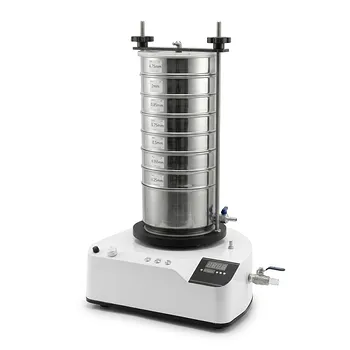
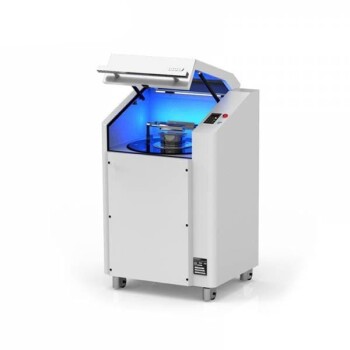
Sieving is the critical step that ensures uniform particle size distribution, which is mandatory for maintaining a consistent pressure drop and preventing gas flow channeling within a reactor. By using a standard laboratory vibrating sieve, researchers eliminate variations in heat and mass transfer resistance, ensuring that the resulting kinetic data is accurate, reproducible, and reflective of the catalyst's true performance rather than physical inconsistencies.
Central Takeaway: The use of a standard vibrating sieve transforms raw catalyst material into a uniform bed that guarantees predictable fluid dynamics, prevents localized "hot spots" or flow short-circuiting, and provides the necessary surface area consistency for reliable chemical analysis.
Optimizing Reactor Fluid Dynamics
Controlling the Bed Pressure Drop
A uniform particle size distribution is essential for managing backpressure within a fixed-bed reactor. If particles are too fine, they can clog the voids in the bed, leading to excessive pressure build-up that can damage equipment or alter reaction equilibrium. Conversely, using a sieve to remove oversized particles ensures that the gas permeability remains within the designed parameters for the experiment.
Eliminating Channeling and Short-Circuiting
When catalyst particles vary significantly in size, the reacting gas will naturally follow the path of least resistance, a phenomenon known as channeling or short-circuiting. By screening calcined catalysts through specific mesh sizes—typically between 150 µm and 180 µm or 40–60 mesh—you ensure a homogenous bed. This uniformity forces the gas to distribute evenly across the entire catalyst volume, maximizing the efficiency of the gas-solid contact.
Balancing Diffusion and Reaction Rates
Sieving helps manage the delicate balance between internal diffusion and reaction speed. Coarse particles often suffer from internal diffusion limitations, where the reactant cannot reach the center of the catalyst quickly enough, while uniform, sieved particles ensure that the entire surface and internal structure are utilized effectively. This synchronization is vital for studying parameters like potassium release or pyrolysis kinetics without the interference of physical mass transfer barriers.
Ensuring Data Integrity and Stability
Maximizing Active Surface Area
The chemical reaction rate is directly proportional to the available contact area between the catalyst and the reactants. Standard laboratory sieves ensure that the powder or pellets have a consistent surface exposure rate. This consistency is what allows for the production of crystals with regular morphological structures and ensures that subsequent experiments, such as ibuprofen elimination, yield reproducible results.
Maintaining Mechanical and Thermal Stability
Catalysts often undergo high-pressure pelletizing (up to 40 MPa) before being crushed and sieved to a specific range, such as 300–425 μm. This process ensures the particles possess sufficient mechanical strength to withstand the flow of gas without breaking down into fines. Furthermore, uniform sizes eliminate localized differences in heat conduction, preventing thermal gradients that could destabilize the reaction or skew kinetic calculations.
Understanding the Trade-offs and Limitations
The Risk of Material Loss and Attrition
While sieving is necessary, the mechanical action of a vibrating sieve can cause attrition in fragile catalyst structures, potentially creating new "fines" during the process. Users must balance the duration of vibration to achieve a clean cut-off without degrading the integrity of the catalyst particles themselves. Additionally, significant material loss can occur if the initial crushing process is not precisely controlled, leading to low yields of the desired mesh size.
Sieve Blinding and Contamination
Standard sieves can suffer from blinding, where particles become wedged in the mesh openings, altering the effective hole size and reducing screening efficiency. Furthermore, if sieves are not meticulously cleaned between batches, cross-contamination of different catalyst formulations can occur. This is particularly dangerous in high-sensitivity kinetic studies where trace amounts of a previous material could act as a promoter or poison.
Applying Sieving Standards to Your Project
Recommendations for Material Processing
- If your primary focus is fundamental kinetic data: Use a narrow mesh range (e.g., 150–180 µm) to eliminate mass transfer resistance and ensure the data reflects chemical kinetics rather than physical diffusion.
- If your primary focus is preventing reactor backpressure: Prioritize the removal of "fines" using a 125-mesh or 150-mesh sieve to ensure optimal gas permeability through the bed.
- If your primary focus is scaling up pelletized catalysts: Utilize a laboratory hydraulic press to form pellets before sieving to the 40–60 mesh range to ensure mechanical durability under industrial flow conditions.
- If your primary focus is biomass or raw material consistency: Screen ground materials to a range of 280–450 µm to eliminate heat transfer variations caused by irregular particle dimensions.
Uniformity in particle size is the foundational requirement for turning a raw chemical substance into a reliable, high-performance catalyst bed.
Summary Table:
| Key Aspect | Impact on Reactor Performance | Target Particle Range |
|---|---|---|
| Particle Uniformity | Prevents gas channeling and flow short-circuiting | 150 µm - 180 µm |
| Pressure Drop | Ensures gas permeability and prevents bed clogging | 40 - 60 Mesh |
| Mass Transfer | Eliminates internal diffusion limitations | Material Specific |
| Thermal Stability | Prevents localized hot spots and thermal gradients | 300 µm - 425 µm |
Precision Catalyst Preparation with KINTEK
Don't let inconsistent particle sizes compromise your reactor's performance or the integrity of your kinetic data. KINTEK provides the professional-grade tools required for meticulous catalyst processing.
Our comprehensive range includes:
- Sieving & Milling: High-precision vibrating sieves, crushing systems, and sieving equipment.
- Pelletizing: Hydraulic presses (pellet, hot, isostatic) for superior mechanical strength.
- Reaction Environments: High-temperature high-pressure reactors, autoclaves, and a full suite of furnaces (muffle, tube, CVD/PECVD).
Whether you are studying fundamental kinetics or scaling up for industrial applications, KINTEK’s equipment ensures accuracy and reproducibility. Enhance your laboratory efficiency—contact our experts today to find the right solution for your research.
References
- Marina Maddaloni, Nancy Artioli. Novel Ionic Liquid Synthesis of Bimetallic Fe–Ru Catalysts for the Direct Hydrogenation of CO2 to Short Chain Hydrocarbons. DOI: 10.3390/catal13121499
This article is also based on technical information from Kintek Solution Knowledge Base .
Related Products
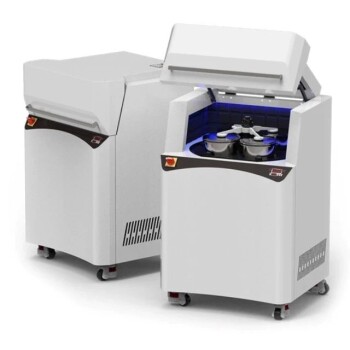
- Vibratory Sieve Shaker Machine Dry Three-Dimensional Vibrating Sieve
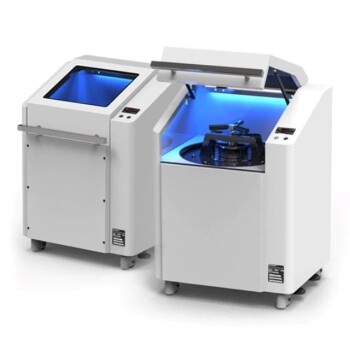
- Laboratory Vibratory Sieve Shaker Machine Slap Vibrating Sieve
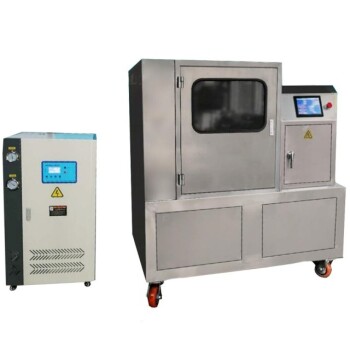
- Laboratory Wet Three-Dimensional Vibratory Sieve Shaker Machine
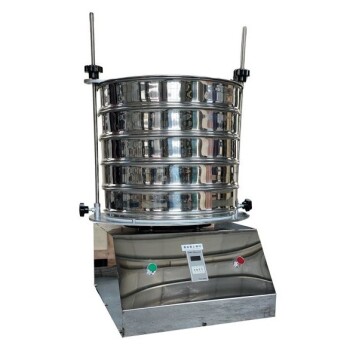
- Laboratory Test Sieves and Vibratory Sieve Shaker Machine
- Laboratory Vibratory Sieve Shaker Machine for Dry and Wet Three-Dimensional Sieving
People Also Ask
- How is a vibratory sieve shaker used in the particle size analysis of mechanically alloyed powders? Expert Guide
- Why use a vibratory sieve shaker for PET powder? Achieve Precise Particle Size Control for Chemical Research
- What is the principle of vibratory sieve shaker? Achieve Accurate Particle Size Analysis
- What is the function of a vibratory sieve shaker? Achieve Precise Particle Size Analysis
- What is the use of vibratory sieve shaker? Achieve Precise Particle Size Analysis for Your Lab