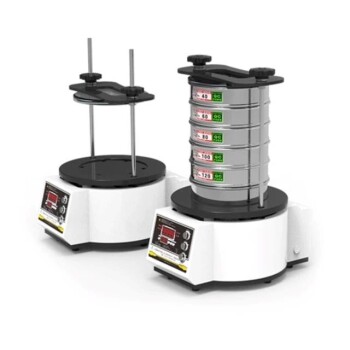
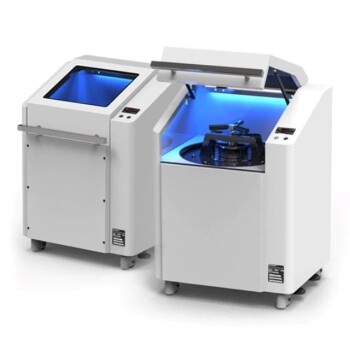
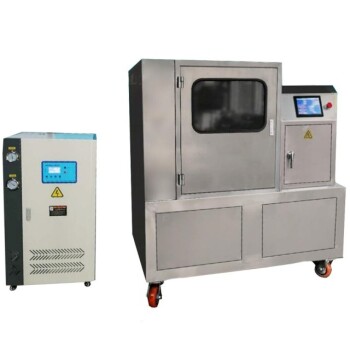
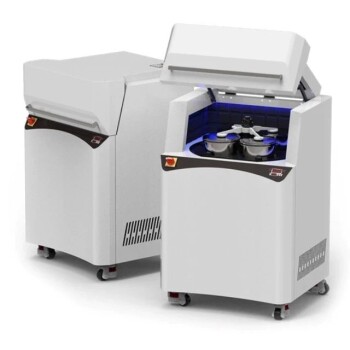
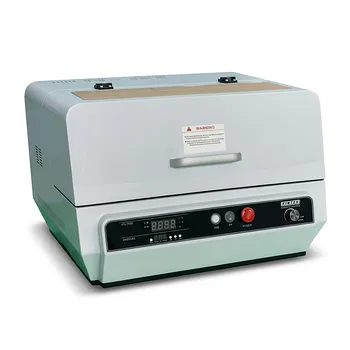
Precision in particle size distribution is the defining factor in reproducible reaction kinetics. A laboratory vibratory sieve contributes to study consistency by isolating carbonate rock powder into specific, uniform size ranges, such as 150 microns. This mechanical standardization ensures that the physical surface area available for reaction is constant across all samples, preventing geometric irregularities from skewing the data.
Reaction kinetics are fundamentally driven by the surface area available for chemical interaction. By using a vibratory sieve to guarantee uniform particle sizes, researchers can isolate and accurately measure the impact of chemical variables—such as mineral composition and fluid salinity—on CO2 sequestration efficiency.
The Critical Role of Surface Area
Reaction kinetics studies rely on the principle that the rate of reaction is proportional to the surface area exposed to the reactant.
Defining the Reaction Interface
In carbonate rock studies, the reaction occurs at the solid-fluid interface. If particle sizes vary randomly, the total surface area changes, causing fluctuations in reaction rates that have nothing to do with the chemical properties of the rock.
Controlling the Surface-to-Volume Ratio
A vibratory sieve ensures that every sample batch maintains a comparable surface-to-volume ratio. This control allows you to attribute changes in reaction speed directly to the material's reactivity rather than its physical grind.
Isolating Experimental Variables
To conduct an objective evaluation of CO2 mineral sequestration, you must eliminate confounding variables. The sieve acts as a filter for physical noise.
Removing Geometric Bias
Without sieving, a sample with finer dust would react faster than a sample with coarser grains, regardless of their mineral makeup. Sieving removes this geometric bias, creating a level playing field for all experimental groups.
Focusing on Chemical Composition
Once physical size is standardized, differences in data can be confidently linked to initial mineral composition. You can determine if a specific carbonate structure inherently sequesters CO2 more efficiently.
Evaluating Environmental Factors
Precise sizing also allows for the accurate assessment of external factors, such as fluid salinity. Researchers can observe how saline environments retard or accelerate reactions without worrying that particle size discrepancies are masking the true effects.
Understanding the Constraints
While vibratory sieving is essential for consistency, it is important to recognize the limitations inherent in physical separation methods.
Shape Irregularities
Sieves separate particles based on their second-largest dimension, not their total surface area. It is possible for particles of different shapes (e.g., flat plates versus spheres) to pass through the same mesh yet possess slightly different surface areas.
Potential for Attrition
The mechanical vibration used to separate the particles can occasionally cause friable carbonate rocks to break down further during the sieving process. This can introduce additional "fines" (extremely small particles) that may need to be washed or air-classified out to maintain strict accuracy.
Making the Right Choice for Your Goal
To maximize the reliability of your kinetic data, align your sieving protocol with your specific research objectives.
- If your primary focus is comparative mineral analysis: strict adherence to a narrow size range (e.g., 150 microns) is non-negotiable to ensure surface area is not a variable.
- If your primary focus is simulating real-world sequestration: select a sieve mesh size that mimics the actual grind size used in industrial carbon capture applications.
Consistency in physical preparation is the only way to reveal the true chemical behavior of your samples.
Summary Table:
| Feature | Impact on Reaction Kinetics Study |
|---|---|
| Particle Size Isolation | Ensures uniform surface area for reproducible chemical reaction rates. |
| Variable Control | Eliminates physical noise to isolate mineral composition and fluid salinity effects. |
| Standardization | Normalizes surface-to-volume ratios across different rock samples. |
| Experimental Focus | Allows researchers to attribute reactivity changes directly to chemical properties. |
| Protocol Alignment | Enables selection of mesh sizes that mimic industrial carbon capture conditions. |
Elevate Your Geochemical Research with KINTEK
Achieve unmatched precision in your reaction kinetics studies with KINTEK’s high-performance laboratory vibratory sieves and sieving equipment. As specialists in laboratory equipment and consumables, we understand that consistency in physical preparation is the only way to reveal the true chemical behavior of your samples.
Beyond our precision sieving systems, KINTEK offers a comprehensive range of tools designed for advanced material research, including:
- Crushing and Milling Systems: Achieve the perfect grind for your carbonate samples.
- High-Temperature Reactors & Autoclaves: Ideal for simulating CO2 sequestration environments.
- Hydraulic Presses: For pelletizing and sample preparation.
- Consumables: High-quality ceramics, crucibles, and PTFE products to ensure zero contamination.
Don't let geometric bias skew your critical data. Partner with KINTEK for reliable, high-quality laboratory solutions that bring accuracy to every experiment. Contact us today to find the perfect equipment for your lab!
References
- Kaisar Ahmat, Jie Li. CO2-Water-Rock Interactions in Carbonate Formations at the Tazhong Uplift, Tarim Basin, China. DOI: 10.3390/min12050635
This article is also based on technical information from Kintek Solution Knowledge Base .
Related Products
- Vibratory Sieve Shaker Machine Dry Three-Dimensional Vibrating Sieve
- Laboratory Vibratory Sieve Shaker Machine Slap Vibrating Sieve
- Laboratory Test Sieves and Vibratory Sieve Shaker Machine
- Laboratory Wet Three-Dimensional Vibratory Sieve Shaker Machine
- Laboratory Vibratory Sieve Shaker Machine for Dry and Wet Three-Dimensional Sieving
People Also Ask
- How is a vibratory sieve shaker used in the particle size analysis of mechanically alloyed powders? Expert Guide
- Why use a vibratory sieve shaker for PET powder? Achieve Precise Particle Size Control for Chemical Research
- What is the principle of vibratory sieve shaker? Achieve Accurate Particle Size Analysis
- What is the function of a vibratory sieve shaker? Achieve Precise Particle Size Analysis
- What is the use of vibratory sieve shaker? Achieve Precise Particle Size Analysis for Your Lab