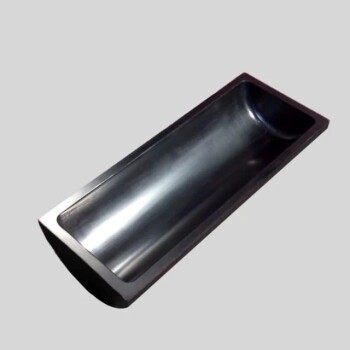
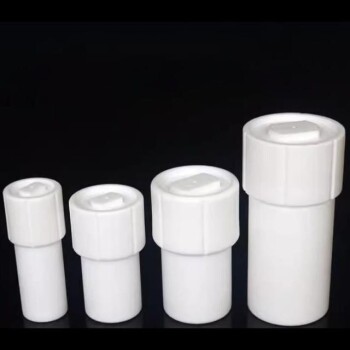
High-pressure stainless steel reaction tubes are essential because they provide a robust, leak-proof environment capable of withstanding the extreme thermal and mechanical stresses inherent in hydrogen cycling. These specialized vessels ensure that magnesium-based materials can undergo activation and isothermal charging at temperatures up to 673 K and pressures reaching 4 MPa without structural failure. By resisting hydrogen embrittlement and maintaining a tight seal, these tubes protect both the integrity of the experimental data and the safety of the laboratory personnel.
To achieve reliable results in hydrogen storage research, reaction vessels must maintain their structural integrity under high-pressure hydrogen atmospheres while preventing gas leakage or material degradation through embrittlement.
Maintaining Structural Integrity in Extreme Conditions
Resistance to High Thermal and Mechanical Stress
Hydrogen absorption and desorption often require temperatures as high as 673 K and pressures up to 4 MPa. Stainless steel reaction tubes are engineered to maintain their shape and sealing performance under these volatile conditions.
This structural stability is critical for the isothermal charging and discharging tests used to evaluate magnesium-based storage materials. Without this resilience, the vessel could deform, leading to catastrophic failure or inaccurate volume measurements.
Prevention of Hydrogen Embrittlement
Exposure to high-pressure hydrogen can cause many metals to become brittle and crack, a phenomenon known as hydrogen embrittlement. High-pressure stainless steel alloys are specifically selected for their ability to resist this type of degradation.
Ensuring the vessel remains ductile throughout repeated cycles is vital for long-term testing. This resistance prevents micro-cracks that would otherwise lead to hazardous hydrogen leaks and compromised experiments.
Ensuring Experimental Precision and Safety
Controlling the Gas-Solid Reaction Environment
The reaction tube acts as a definitive gas-solid reaction vessel, isolating the sample from external contaminants. This isolation is necessary to ensure that the measured weight or pressure changes are due solely to the hydrogen interacting with the sample.
Precision pressure regulation within these tubes allows researchers to simulate industrial production environments. This setup is necessary to verify how materials will perform in real-world hydrogen storage or catalytic applications.
Modification of Surface States
The interior surface of the stainless steel can be pretreated at high temperatures to reduce oxide layers, such as chromium or iron oxide. This process increases the exposure of metallic adsorption sites within the testing system.
By controlling the surface oxidation state, researchers can better understand how materials behave in reducing conditions. This is particularly important when simulating specific industrial or reactor-based accident sequences.
Understanding the Trade-offs
Potential for Surface Catalytic Interference
While stainless steel is chosen for its durability, the metallic surface of the tube itself may occasionally exhibit catalytic activity. This can sometimes interfere with the kinetic data of the sample being tested, especially at very high temperatures.
Thermal Lag and Gradient Issues
The wall thickness required to withstand 4 MPa of pressure can create a thermal barrier. This may result in a thermal lag between the external furnace temperature and the actual temperature of the sample inside the tube.
Cost and Complexity of Maintenance
High-pressure systems require specialized fittings and frequent integrity inspections. The need for specialized alloys and precision machining makes these reaction tubes significantly more expensive than standard laboratory glassware or low-pressure vessels.
How to Apply This to Your Research
Making the Right Choice for Your Goal
- If your primary focus is Laboratory Safety: Prioritize tubes with certified pressure ratings that exceed your maximum testing parameters to prevent accidental rupture or leakage.
- If your primary focus is Data Accuracy: Use high-temperature pretreatment to stabilize the internal surface oxides, ensuring that the vessel does not participate in the hydrogen adsorption process.
- If your primary focus is Industrial Simulation: Utilize reactors equipped with precision stirring and pressure regulation to mimic the confinement effects and molecular sieving found in large-scale production.
Selecting the appropriate high-pressure reaction vessel is the foundational step in ensuring that hydrogen cycling experiments are both safe and scientifically valid.
Summary Table:
| Feature | Advantage | Performance Impact |
|---|---|---|
| Structural Integrity | Resists high thermal/mechanical stress | Supports isothermal charging up to 673 K |
| Material Alloy | Resists hydrogen embrittlement | Prevents micro-cracks and hazardous leaks |
| Pressure Rating | Rated for up to 4 MPa | Enables simulation of industrial environments |
| Isolation | Sealed gas-solid environment | Ensures data accuracy by preventing contamination |
| Surface Control | Pre-treatable internal walls | Reduces oxide layers to expose adsorption sites |
Elevate Your Hydrogen Research with KINTEK Precision
Achieving reliable results in hydrogen absorption and desorption cycles requires equipment engineered for extreme conditions. KINTEK specializes in providing high-performance laboratory solutions that ensure your research is both safe and scientifically valid.
Our extensive portfolio includes:
- High-Temperature High-Pressure Reactors and Autoclaves designed to resist embrittlement.
- Precision Muffle, Tube, and Atmosphere Furnaces for stable thermal environments.
- Advanced Crushing, Milling, and Pellet Presses for superior sample preparation.
- High-Quality Consumables including specialized ceramics and crucibles for high-purity testing.
Whether you are developing magnesium-based storage materials or conducting industrial simulations, KINTEK provides the durability and precision you need to succeed.
Ready to upgrade your laboratory setup? Contact our experts today to find the perfect high-pressure solution for your application!
References
- Bing Zhang, Xiubo Xie. Phase Transformation and Performance of Mg-Based Hydrogen Storage Material by Adding ZnO Nanoparticles. DOI: 10.3390/nano13081321
This article is also based on technical information from Kintek Solution Knowledge Base .
Related Products
- Stainless High Pressure Autoclave Reactor Laboratory Pressure Reactor
- Mini SS High Pressure Autoclave Reactor for Laboratory Use
- Laboratory High Pressure Vacuum Tube Furnace
- Customizable High Pressure Reactors for Advanced Scientific and Industrial Applications
- Custom PTFE Teflon Parts Manufacturer for Centrifuge Tubes
People Also Ask
- Why is a laboratory high-pressure reactor necessary for synthesizing fly ash-based zeolite? Achieve Pure Crystallization
- Why is a laboratory high-pressure reactor used in the hydrothermal synthesis of hydroxyapatite catalysts?
- What role does a laboratory high-pressure reactor play in the leaching process of spent cathode materials? Optimize Recovery
- What conditions do laboratory high-pressure reactors provide for HTC? Optimize Your Biochar Production Processes
- How are high-pressure reactors used to prepare metaphosphate electrocatalysts? Master In-Situ Precursor Growth