The Hidden Flaw in Brute Force
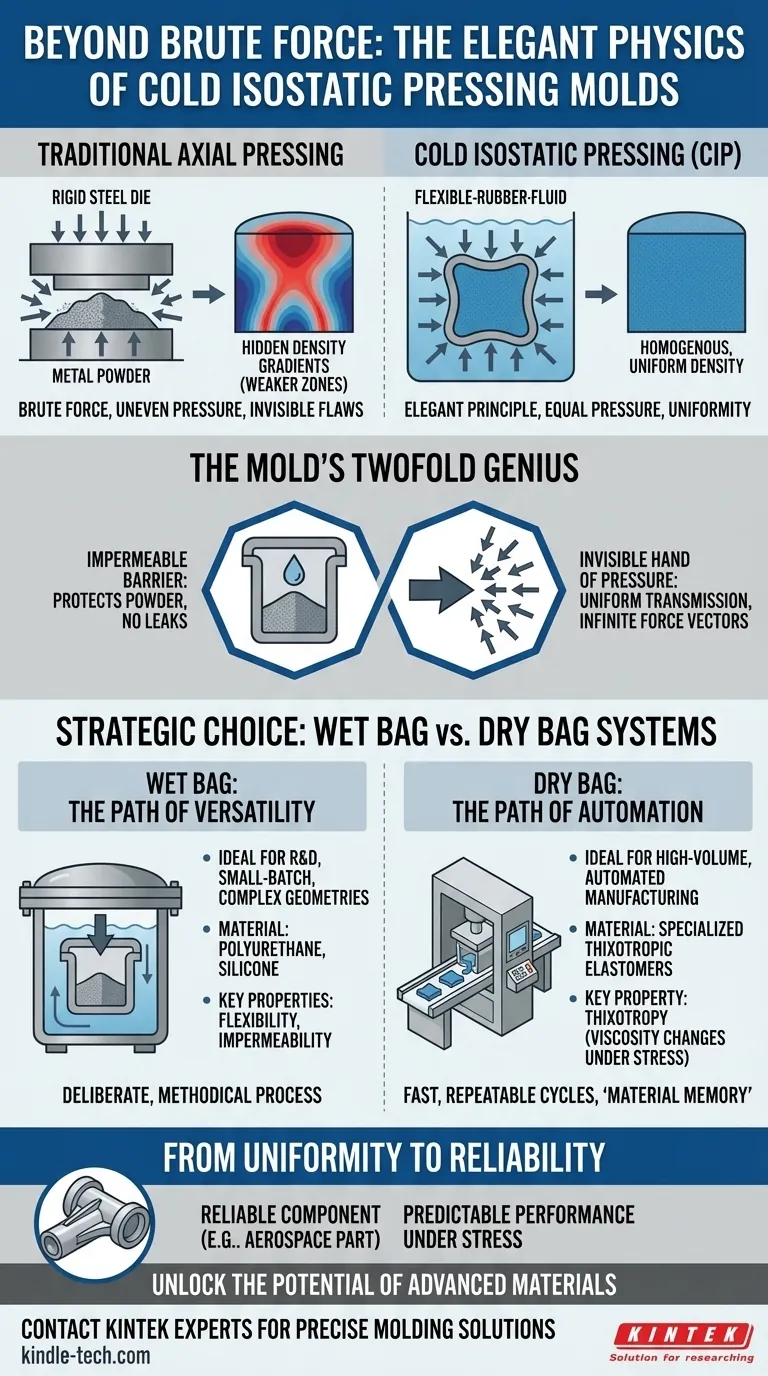
Imagine applying tons of force to a metal powder in a rigid steel die. The part emerges looking perfect. But under a microscope, hidden density gradients lurk—weaker zones in the middle, born from pressure that only came from two directions. This is the fundamental limitation of traditional axial pressing: it's a method of brute force, and force applied unevenly creates invisible flaws.
This is more than a technical problem; it's a psychological one. We are conditioned to believe that more force yields a stronger result. Yet, in the world of advanced materials, the opposite is often true. The most uniform, reliable components are not created by crushing, but by a far more elegant principle.
A Shift in Philosophy: From Crushing to Embracing
Isostatic pressing operates on a completely different philosophy. The name itself, "isostatic," means "equal pressure." The goal is not to smash powder into submission but to squeeze it gently and uniformly from all directions at once.
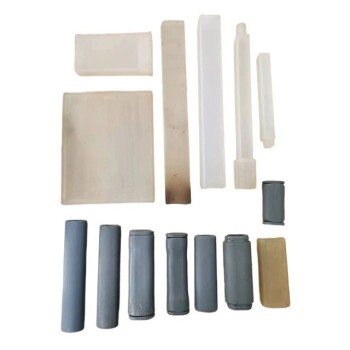
To achieve this, the rigid steel die is replaced by something that seems counterintuitive: a flexible, rubber-like mold. This pliable mold is the heart of the process. Its job is not to shape by force but to serve as a perfect medium for transmitting pressure. It’s a shift from a hammer to a hug.
The Mold's Twofold Genius
The success of Cold Isostatic Pressing (CIP) hinges on the mold performing two critical functions with absolute perfection.
The Perfect, Impermeable Barrier
First, the mold is a container. It must hold the loose powder in its desired shape while being completely sealed from the hydraulic fluid (usually water or oil) used to create the pressure. Any leak would contaminate the material and ruin the part. It's a simple mandate with zero margin for error.
The Invisible Hand of Pressure
Second, and more elegantly, the mold transmits pressure. When the chamber is pressurized, the flexible elastomer deforms and transfers that pressure perfectly and evenly onto every surface of the powder within. It transforms a single hydraulic pressure value into an infinite number of force vectors, all pointing inward. This eliminates the density gradients that plague axial pressing, resulting in a homogenous, highly uniform green body.
The Strategic Choice: Wet Bag vs. Dry Bag Systems
The specific way you use this principle dictates the type of mold material you need. This choice isn't just technical; it's a strategic decision based on your goals for versatility versus volume.
Wet Bag: The Path of Versatility
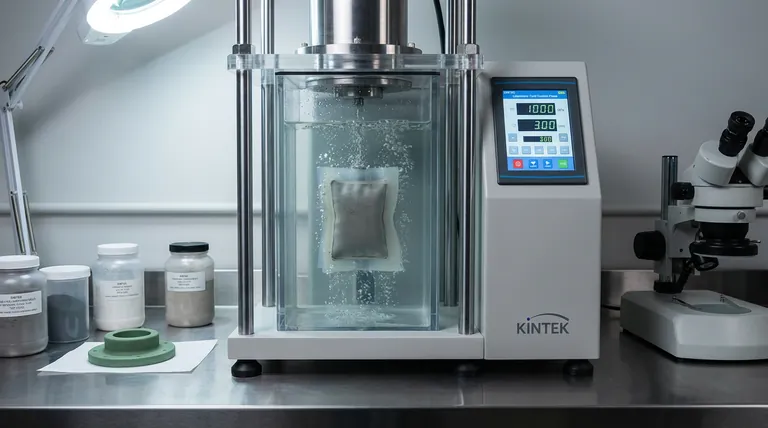
In wet bag CIP, the powder-filled mold is sealed and completely submerged in the pressure fluid. The process is deliberate and methodical. This makes it ideal for laboratory R&D, small-batch production, and forming large or complex geometries.
The material requirements for the mold are straightforward:
- Flexibility to transmit pressure.
- Durability to withstand repeated cycles.
- Impermeability to protect the powder.
Standard materials like polyurethane or silicone excel in this role, offering a cost-effective and adaptable solution for innovation.
Dry Bag: The Path of Automation
In dry bag CIP, the flexible mold is an integrated, permanent part of the pressure vessel. This allows for much faster, automated cycles, making it the choice for high-volume manufacturing. But this speed and integration demand a more sophisticated material.
The mold must not only be durable but also possess a unique property known as thixotropy.
A thixotropic elastomer has a viscosity that changes under stress. When immense pressure is applied, its viscosity drops, allowing it to "flow" slightly and transmit pressure flawlessly. When the pressure is released, its viscosity instantly increases, and it snaps back to its original, firm state, ready for the next part in seconds. It is this "material memory" that enables the speed and repeatability of industrial production.
Matching the Mold to the Mission
The right mold unlocks the potential of advanced materials, from high-performance ceramics (Al₂O₃, SiC) and powder metallurgy to graphite and sputtering targets. The decision between a wet or dry bag system—and its corresponding mold material—is critical.
| Feature | Wet Bag Molds | Dry Bag Molds |
|---|---|---|
| Material | Polyurethane, Silicone | Specialized Thixotropic Elastomers |
| Key Property | Flexibility, Impermeability | Thixotropic Effect (Viscosity changes with stress) |
| Best Application | Lab-Scale, R&D, Small-Batch Production | High-Volume, Automated Manufacturing |
| Primary Goal | Versatility and complex geometry capability | Speed and repeatable high-throughput cycles |
From Uniformity to Reliability
Ultimately, the goal of CIP is not just uniform density; it's predictability. A part free of internal density gradients is a part that behaves reliably under thermal and mechanical stress, whether it's an aerospace component or a medical implant.
Achieving this level of control, from lab-scale experiments to a bustling production floor, depends on sourcing the right consumables. The choice between a versatile polyurethane mold for R&D and a specialized thixotropic elastomer for production is a critical decision point. At KINTEK, we specialize in providing the high-quality lab equipment and consumables that bridge the gap between theory and reliable, repeatable results.
Don't let material inconsistencies limit your innovation. Contact Our Experts to find the precise molding solution for your application.
Visual Guide
Related Products
- Isostatic Molding Pressing Molds for Lab
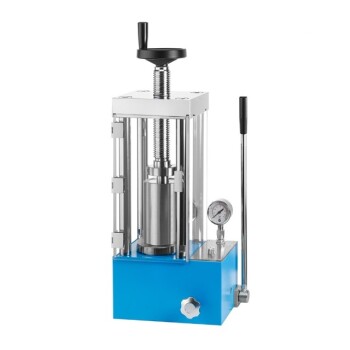
- Manual Cold Isostatic Pressing Machine CIP Pellet Press
- Automatic Lab Cold Isostatic Press CIP Machine Cold Isostatic Pressing
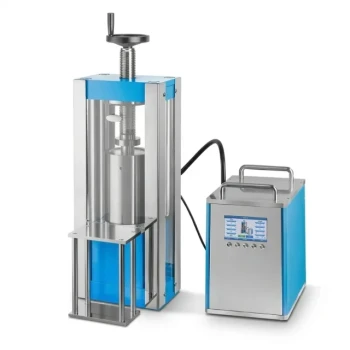
- Electric Split Lab Cold Isostatic Press CIP Machine for Cold Isostatic Pressing
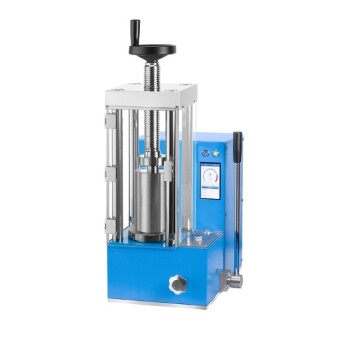
- Electric Lab Cold Isostatic Press CIP Machine for Cold Isostatic Pressing
Related Articles
- Comprehensive Guide to Isostatic Pressing Molds: Types, Processes, and Applications
- Forging Perfection: The Hidden Battle Against Material Flaws with CIP and HIP
- Exploring the Applications of Isostatic Pressing
- Isostatic Pressing in Aerospace and Defense Industries
- Cold Isostatic Pressing vs. Hot Isostatic Pressing Which is Better