The Enemy You Can't See
Imagine a turbine blade spinning at 10,000 RPM inside a jet engine. Or a titanium hip implant designed to last a lifetime. In these applications, failure is catastrophic.
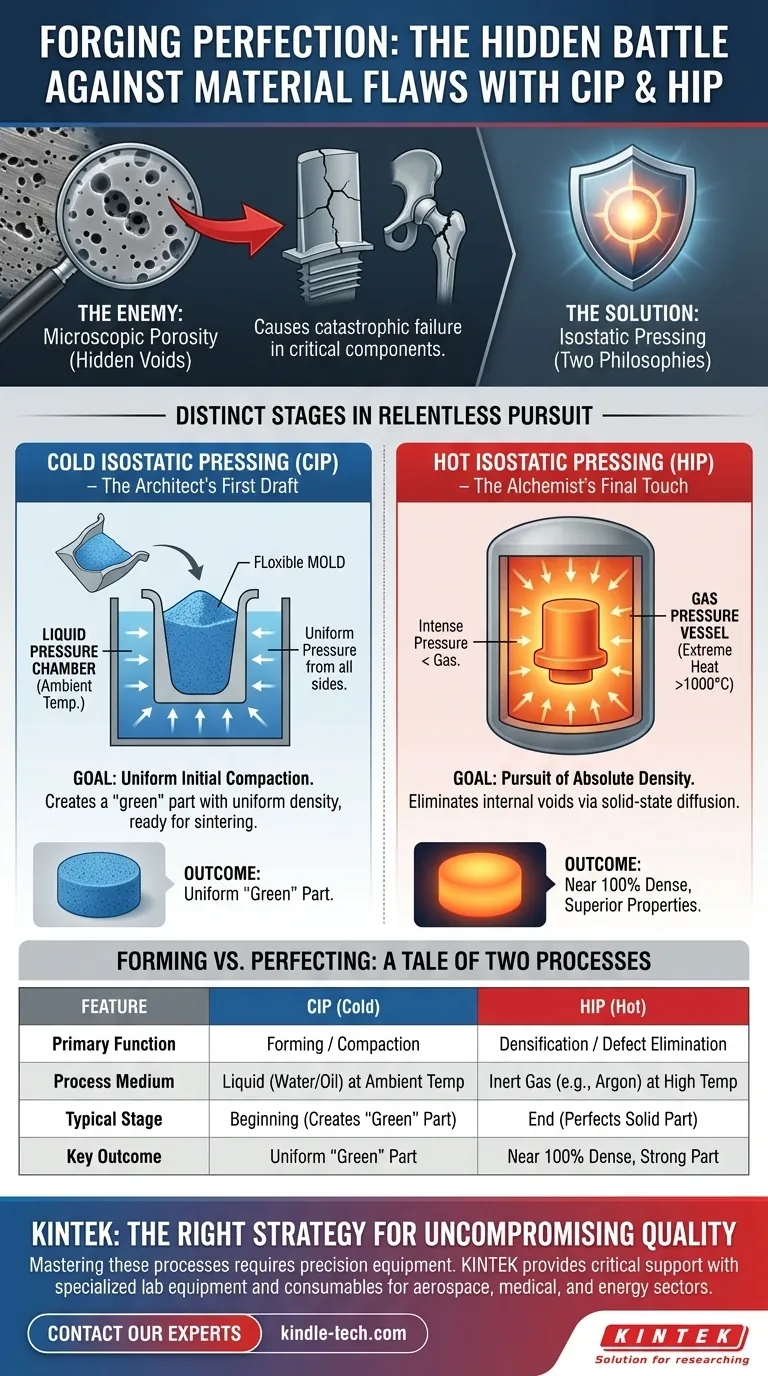
The greatest threat to these components is often not a visible crack or an external force, but an invisible enemy lurking within: microscopic porosity. These tiny voids, trapped inside the material during manufacturing, are the starting points for fatigue and fracture.
Eradicating this hidden enemy requires more than just good design; it demands a deep understanding of how materials are fundamentally shaped and perfected. This is the world of isostatic pressing.
Forming a Blueprint vs. Forging a Masterpiece
At the heart of advanced manufacturing, there are two distinct philosophies. The first is about forming—creating an initial, accurate shape from raw material. The second is about perfecting—taking that shape and elevating it to a state of near-flawless integrity.
Cold Isostatic Pressing (CIP) and Hot Isostatic Pressing (HIP) embody these two philosophies. They are not competing methods; they are distinct stages in the relentless pursuit of material perfection.
The Architect's First Draft: Cold Isostatic Pressing (CIP)
CIP is the architect's initial, masterful sketch. Its purpose is to take a loose powder and compact it into a solid, handleable form with remarkable uniformity.
The Goal: Uniform Initial Compaction
The primary objective of CIP is to create a "green" part—a fragile but uniformly dense component ready for the next step. By applying pressure equally from all directions, CIP avoids the density gradients and internal stresses that plague traditional pressing methods. This uniformity is critical, as it prevents warping and defects during the final high-temperature sintering phase.
The Method: A Gentle, Uniform Embrace
In the CIP process:
- A powder is sealed in a flexible, watertight mold.
- The mold is submerged in a liquid-filled pressure chamber.
- Immense hydraulic pressure is applied to the liquid at room temperature.
This isostatic pressure—equal from all directions—gently and evenly compacts the powder, creating a precise blueprint of the final part.
The Alchemist's Final Touch: Hot Isostatic Pressing (HIP)
If CIP is the architect, HIP is the alchemist. It's a transformative process that takes an already solid component and purges its deepest flaws, turning a good part into a perfect one.
The Goal: The Pursuit of Absolute Density
The sole purpose of HIP is to hunt down and eliminate internal voids. These microscopic pores, whether left over from casting or a sintering process, are stress concentrators. Under load, they are the epicenters from which cracks propagate. HIP is the final defense against this mode of failure.
The Method: Trial by Fire and Pressure
During HIP:
- A solid component is placed inside a high-pressure vessel.
- The vessel is heated to extreme temperatures (often over 1,000°C), making the material plastically deformable on a microscopic level.
- Simultaneously, the vessel is filled with a high-pressure inert gas, like argon.
This combination of intense heat and crushing isostatic pressure forces the material's internal voids to collapse and fuse shut through a process called solid-state diffusion. The atoms themselves migrate to heal the gaps, leaving behind a structure that is almost 100% dense.
A Tale of Two Processes: Forming vs. Perfecting
Choosing between CIP and HIP isn't a choice at all; it's about understanding which stage of your manufacturing workflow you need to address.
| Feature | Cold Isostatic Pressing (CIP) | Hot Isostatic Pressing (HIP) |
|---|---|---|
| Primary Function | Forming / Compaction | Densification / Defect Elimination |
| Process Medium | Liquid (water/oil) at ambient temperature | Inert gas (e.g., argon) at high temperature (>1000°C) |
| Typical Stage | Beginning: Creates a uniform "green" part from powder | End: Perfects an already solid part |
| Key Outcome | A "green" part with uniform density ready for sintering | A near 100% dense part with superior mechanical properties |
| Ideal Application | Cost-effective forming of complex shapes from powder | Critical components where failure is not an option (aerospace, medical) |
The Right Strategy for Uncompromising Quality
Your manufacturing strategy depends entirely on your goal:
- To create a complex initial shape from powder: CIP is your tool. It provides the uniform, well-compacted green part that serves as a perfect foundation for final sintering.
- To achieve maximum reliability and performance: HIP is the essential final step. It elevates a cast or sintered part to its peak potential, ensuring its integrity in the most demanding environments.
Mastering these processes requires not only knowledge but also precision equipment. The ability to control pressure and temperature with absolute reliability is paramount. This is where KINTEK provides critical support, offering the specialized lab equipment and consumables that enable researchers and engineers in aerospace, medical, and energy sectors to push the boundaries of material science.
Whether you are shaping the future with CIP or perfecting it with HIP, having the right partner and tools is what turns a good component into an unbreakable one. Contact Our Experts
Visual Guide
Related Products
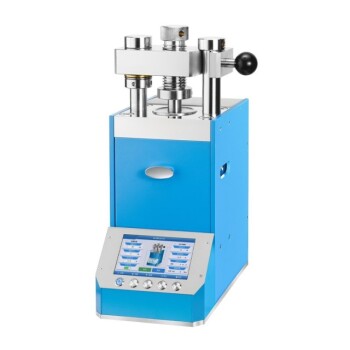
- Automatic Lab Cold Isostatic Press CIP Machine Cold Isostatic Pressing
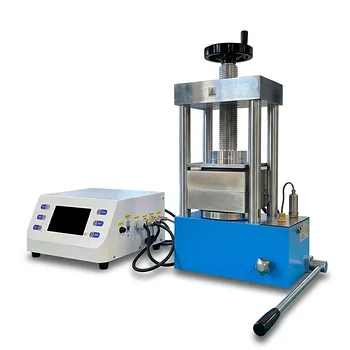
- Warm Isostatic Press for Solid State Battery Research
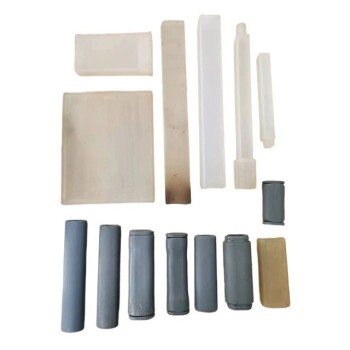
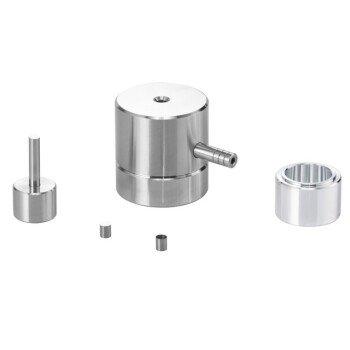
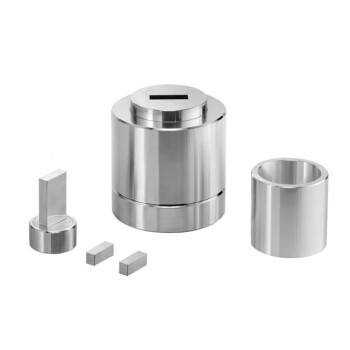
- Isostatic Molding Pressing Molds for Lab
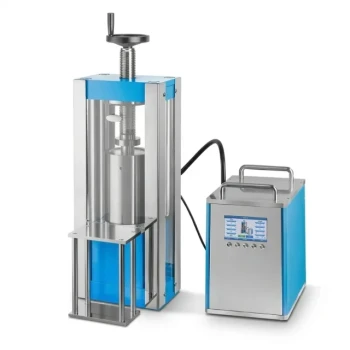
- Electric Split Lab Cold Isostatic Press CIP Machine for Cold Isostatic Pressing
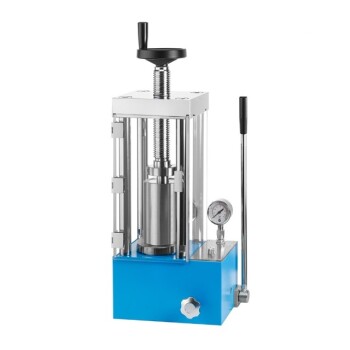
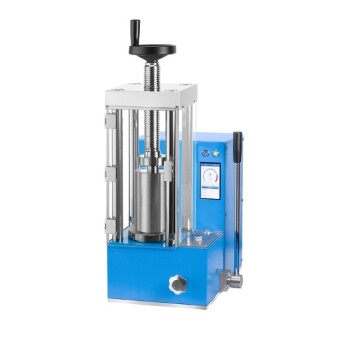
- Manual Cold Isostatic Pressing Machine CIP Pellet Press
Related Articles
- Perfect Density, Imperfect Form: The Hidden Trade-Offs of Cold Isostatic Pressing
- Cold Isostatic Pressing A Game Changer in Material Science
- Principle and Process of Cold Isostatic Pressing
- Automatic isostatic press operation steps
- Beyond Brute Force: The Physics of Perfect Density in Cold Isostatic Pressing