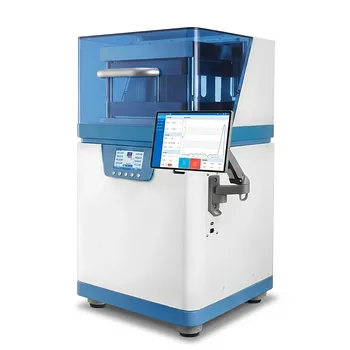
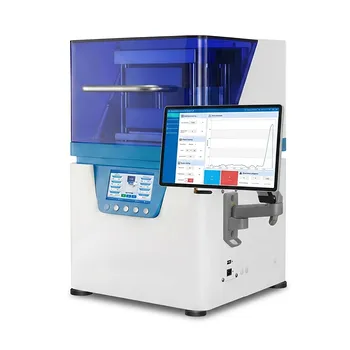
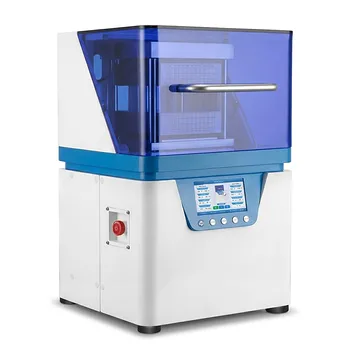
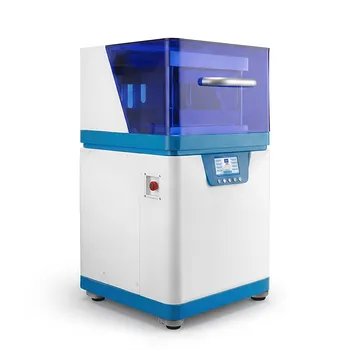
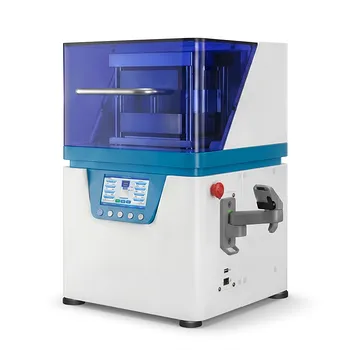
Precision molding is the foundation of reliable material data. A laboratory hydraulic hot press and standardized steel molds ensure quality by providing simultaneous control over heat, pressure, and cooling rates. This synergy allows wood-plastic composites (WPC) to reach a fully molten state, eliminate internal voids, and achieve the exact dimensions required by international testing standards like ASTM D638 and ISO.
The combination of controlled thermal fields and constant static pressure eliminates microscopic defects and ensures a uniform thermal history across all specimens. This process transforms raw composite pellets into high-density, standardized samples that produce reproducible and scientifically valid test results.
Thermal and Pressure Dynamics in WPC Processing
Achieving Complete Polymer Melting
The laboratory hot press provides a precise thermal field, often reaching temperatures between 180°C and 200°C, to re-melt compounded WPC pellets. This constant temperature ensures the polymer matrix is fully molten, allowing it to thoroughly impregnate the wood fibers and create a cohesive material structure.
Eliminating Voids and Air Gaps
High-pressure environments, ranging from 1 MPa to over 20 MPa, are applied to exclude interfacial air trapped between material components. By eliminating these microscopic voids, the press ensures the specimens reach their designed density and prevents weak points that could lead to premature failure during mechanical testing.
Promoting Phase Interface Fusion
Sustained pressure during the heating phase promotes better interfacial shear strength between the fiber and the matrix. This physical rearrangement and tight packing of particles result in a "green body" with the structural integrity needed for accurate rheological and tensile analysis.
The Role of Standardized Steel Molds
Ensuring Dimensional Accuracy
High-strength steel molds are engineered to produce specimens with exact geometries, such as dog-bone shapes for tensile testing. This precision ensures that every sample meets the strict thickness and width requirements of standards like ASTM D790, making data comparable across different batches.
Controlling Surface Finish and Density
The rigid walls of a steel mold provide a smooth surface finish, which is critical for reducing surface stress concentrators in the material. Furthermore, the mold contains the material under pressure to ensure a uniform density gradient throughout the entire specimen, from the core to the surface.
Advanced Process Control and Stability
Managing Thermal History and Cooling
A critical feature of modern laboratory presses is the integrated water-cooling system. By controlling the cooling rate, the system prevents the build-up of internal stress or warping that can occur if the temperature drops too rapidly or unevenly.
Guaranteeing Reproducibility
The ability to replicate the exact holding time, heating curve, and pressure profile is vital for scientific research. This control ensures that all test specimens have an identical thermal history, eliminating molding techniques as a variable in the final experimental data.
Understanding the Trade-offs
The Risk of Thermal Degradation
While high temperatures are necessary for melting the matrix, excessive heat or prolonged holding times can degrade the natural fibers in WPC. Finding the balance between "fully molten" and "thermally stable" is a primary challenge for the technician.
Pressure Management and Flash
Applying too little pressure results in internal porosity and low density. Conversely, excessive pressure can lead to "flash"—where material escapes the mold cavity—potentially causing dimensional inaccuracies or damaging the mold surfaces over time.
How to Apply This to Your Project
Recommendations for Specimen Preparation
- If your primary focus is ASTM/ISO Compliance: Utilize high-strength steel molds and a press with a water-cooling system to ensure dimensional stability and eliminate internal warping.
- If your primary focus is Maximizing Mechanical Strength: Prioritize high-pressure settings (above 11 MPa) to maximize interfacial shear strength and eliminate microscopic air gaps.
- If your primary focus is Comparative Material Research: Maintain a strictly documented and consistent thermal history (temperature and holding time) for every batch to ensure data is scientifically comparable.
By mastering the balance of heat, pressure, and containment, you ensure that your material testing reflects the true properties of the composite rather than the flaws of the molding process.
Summary Table:
| Feature | Function in WPC Processing | Benefit for Specimen Quality |
|---|---|---|
| Precise Thermal Field | Re-melts polymer pellets (180°C-200°C) | Ensures complete wood fiber impregnation |
| High Static Pressure | Excludes interfacial air and voids | Achieves designed density and structural integrity |
| Standardized Molds | Defines exact dog-bone/rectangular shapes | Guarantees dimensional accuracy for ASTM/ISO |
| Integrated Cooling | Manages thermal history and cooling rates | Prevents internal stress, warping, and deformation |
| Pressure Control | Promotes interfacial shear strength | Enhances mechanical bond between fiber and matrix |
Elevate Your Material Research with KINTEK Precision Engineering
Achieving reproducible results in wood-plastic composite testing requires more than just heat—it requires total process control. KINTEK specializes in high-performance laboratory equipment designed to meet the rigorous demands of material science and R&D.
Whether you need a high-precision laboratory hydraulic hot press, customized standardized steel molds, or advanced crushing and milling systems, our solutions ensure your specimens meet the strictest ASTM and ISO standards. Our extensive portfolio also includes:
- High-Temperature Furnaces: Muffle, tube, vacuum, and atmosphere furnaces for diverse thermal treatments.
- Sample Preparation: Pellet, hot, and isostatic hydraulic presses, plus high-purity crucibles and ceramics.
- Advanced Reactivity: High-temperature high-pressure reactors, autoclaves, and electrolytic cells.
- Lab Essentials: ULT freezers, freeze dryers, homogenizers, and cooling solutions.
Ready to eliminate variables and maximize your data accuracy? Contact KINTEK today to discuss your specific application and discover how our expert-grade tools can streamline your laboratory workflow.
References
- Jaka Gašper Pečnik, David DeVallance. Utilization of Torrefied and Non-Torrefied Short Rotation Willow in Wood–Plastic Composites. DOI: 10.3390/polym15193997
This article is also based on technical information from Kintek Solution Knowledge Base .
Related Products
- Automatic Laboratory Hot Press 400x400 mm with Programmable High Temperature and Hydraulic Force Control
- 30T 40T Split Automatic Heated Hydraulic Press Machine with Heated Plates for Laboratory Hot Press
- 24T 30T 60T Heated Hydraulic Press Machine with Heated Plates for Laboratory Hot Press
- Automatic Heated Hydraulic Press Machine with Heated Plates for Laboratory Hot Press 25T 30T 50T
- Heated Hydraulic Press Machine with Heated Plates for Vacuum Box Laboratory Hot Press
People Also Ask
- What is the primary function of a laboratory hot press in MEA assembly? Optimize Fuel Cell Bonding & Performance
- What specific conditions does a laboratory hot press provide for the assembly of fuel cell MEA? Expert Bond Tips.
- What are the core advantages of using a laboratory hot press to produce Bi2Se3? Achieve 93% Density & High Conductivity
- How does a laboratory heating hydraulic press contribute to the preparation of recycled graphite green bodies? - Optimize Density.
- What is the function of a laboratory hot press in DAAFC assembly? Optimize MEA Lamination & Power Density