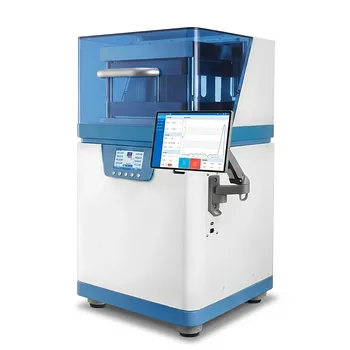
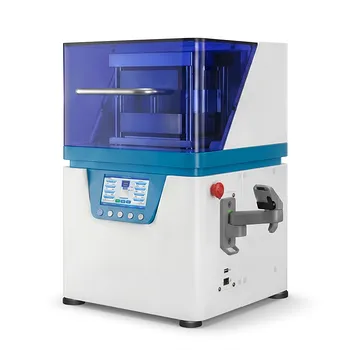
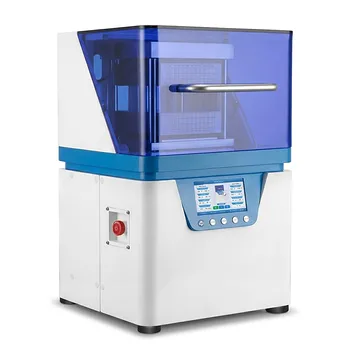
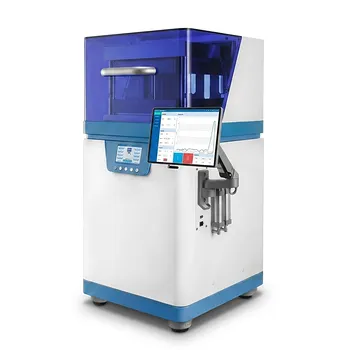
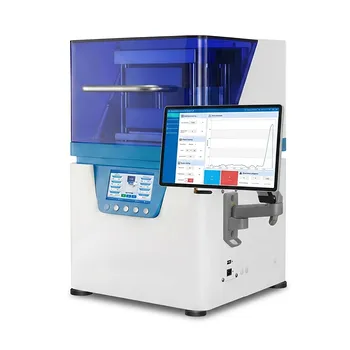
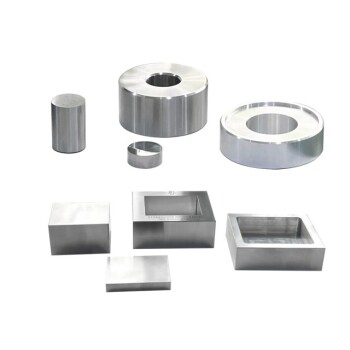
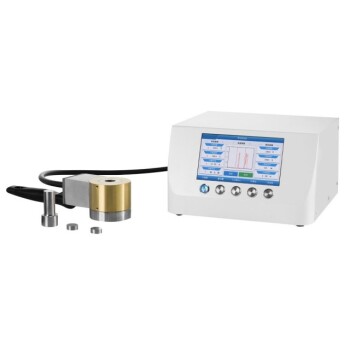
A laboratory hot press provides the critical synchronization of uniform pressure and precise thermal control required to bond fuel cell components. Specifically, it delivers consistent mechanical loads (ranging from 25 kgf/cm² to 400 kg/cm²) alongside controlled temperatures (typically 80°C to 135°C) to integrate the catalyst layer, proton exchange membrane, and gas diffusion layer into a single, cohesive unit.
The central takeaway of this process is that hot pressing transforms a stack of individual components into a functional Membrane Electrode Assembly (MEA) by minimizing interfacial contact resistance. This thermal compression is essential for establishing the continuous proton and electron conduction channels required for efficient energy conversion.
The Dual Role of Thermal Control
The application of heat during the pressing process is not merely for bonding; it fundamentally alters the material properties at the interface.
Facilitating Micro-Melting and Fusion
Precision temperatures, often centered around 125°C to 130°C, induce a state of micro-melting at the polymer electrolyte interface. This allows the catalyst layer to fuse tightly with the proton exchange membrane (PEM), ensuring the assembly does not delaminate during the hydration cycles of fuel cell operation.
Rearrangement of Polymer Chains
For specific membrane materials, appropriate heating facilitates the rearrangement of polymer chains. This molecular alignment enhances the mechanical stability of the interface and prevents the peeling or "bubbling" of layers when the cell is subjected to long-term electrochemical stress.
Mechanical Load and Pressure Uniformity
While heat softens the materials, the mechanical pressure provided by the hydraulic system ensures structural integrity and electrical connectivity.
Achieving Intimate Interfacial Contact
A laboratory hot press applies uniform pressure across the entire active area of the MEA. This force eliminates microscopic gaps between the catalyst particles and the membrane, which is the primary method for reducing interfacial contact resistance.
Optimizing Transport Channels
The simultaneous application of pressure and temperature optimizes the architecture of proton and electron transport channels. By compressing the layers to a specific thickness, the hot press ensures that the "triple-phase boundary"—where the catalyst, electrolyte, and gas meet—is maximized for peak performance.
Understanding the Trade-offs and Pitfalls
While hot pressing is essential, it is a process defined by a narrow window of "optimal" conditions where excessive force or heat can be detrimental.
The Risk of Component Degradation
Applying temperatures that exceed the glass transition phase of the membrane for too long can lead to thermal degradation or thinning. This compromises the membrane's ability to act as a gas barrier, potentially leading to "crossover" and cell failure.
Mechanical Over-Compression
Excessive pressure can crush the Gas Diffusion Layer (GDL) or the carbon support structure within the catalyst layer. This reduces the porosity of the materials, hindering the ability of oxygen and hydrogen to reach the catalyst sites and trapping byproduct water within the assembly.
Non-Uniform Heat Distribution
In lower-quality presses, thermal gradients across the heating plates can cause inconsistent bonding. This results in an MEA with "hot spots" or areas of high resistance, which leads to uneven current distribution and accelerated localized aging.
How to Apply These Conditions to Your Project
Selecting the correct parameters depends heavily on your specific materials and the intended application of the fuel cell.
- If your primary focus is maximizing proton conductivity: Prioritize temperatures near the glass transition point of your membrane (e.g., 125°C-130°C for Nafion-based systems) to ensure deep interfacial fusion.
- If your primary focus is preserving GDL porosity: Utilize lower pressures (closer to 25-50 kgf/cm²) and use "stop-blocks" or shims to prevent the press from over-compressing the carbon fiber structure.
- If your primary focus is long-term mechanical durability: Focus on a longer "dwell time" at a moderate temperature (e.g., 80°C to 100°C) to allow for gradual polymer chain relaxation without risking thermal shock.
By precisely balancing these thermal and mechanical loads, you can engineer an MEA that achieves the ideal equilibrium between low internal resistance and high structural integrity.
Summary Table:
| Parameter | Typical Range | Key Role in MEA Assembly |
|---|---|---|
| Temperature | 80°C – 135°C | Induces micro-melting for polymer chain fusion and layer bonding. |
| Pressure | 25 – 400 kgf/cm² | Establishes intimate contact to minimize interfacial resistance. |
| Process Goal | High Uniformity | Optimizes proton/electron transport channels and prevents delamination. |
| Critical Risk | Excessive Force | Risk of GDL over-compression or thermal degradation of the membrane. |
Elevate Your MEA Fabrication with KINTEK Precision
Achieving the perfect balance of thermal fusion and mechanical integrity requires equipment you can trust. KINTEK specializes in high-performance laboratory hydraulic presses, including manual, electric, and heated pellet presses, designed to deliver the uniform pressure and precise temperature control essential for fuel cell research.
Our extensive portfolio also supports your entire lab workflow with high-temperature reactors, autoclaves, and specialized ceramics, alongside essential consumables like PTFE products and crucibles. Whether you are optimizing proton conductivity or preserving GDL porosity, KINTEK provides the reliability your innovations demand.
Contact Our Technical Experts Today to Find Your Ideal Pressing Solution
References
- Laura Álvarez‐Manuel, M.J. Lázaro. Effect of Carbon Xerogel Activation on Fe−N−C Catalyst Activity in Fuel Cells. DOI: 10.1002/celc.202300549
This article is also based on technical information from Kintek Solution Knowledge Base .
Related Products
- Automatic Laboratory Hot Press 400x400 mm with Programmable High Temperature and Hydraulic Force Control
- Automatic Laboratory Hot Press Machine with Heated Platens 200x200mm Program Control Dual Heating Plates
- Automatic Laboratory Hot Press Dual Plate Heating Sintering Compaction System 120x120mm
- Large Format Automatic Laboratory Hot Press 400x400 Plate for Industrial Material Sintering and Polymer Lamination
- 30T 40T Split Automatic Heated Hydraulic Press Machine with Heated Plates for Laboratory Hot Press
People Also Ask
- What is the primary function of a laboratory hot press in MEA assembly? Optimize Fuel Cell Bonding & Performance
- How do a laboratory hydraulic hot press and standardized steel molds ensure the quality of WPC test specimens?
- What are the core advantages of using a laboratory hot press to produce Bi2Se3? Achieve 93% Density & High Conductivity
- How does a laboratory heating hydraulic press contribute to the preparation of recycled graphite green bodies? - Optimize Density.
- What is the function of a laboratory hot press in DAAFC assembly? Optimize MEA Lamination & Power Density