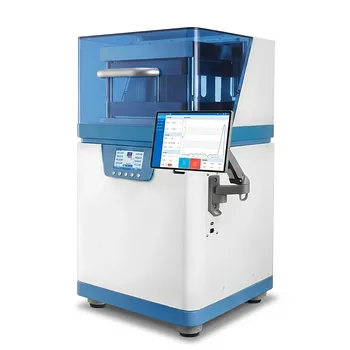
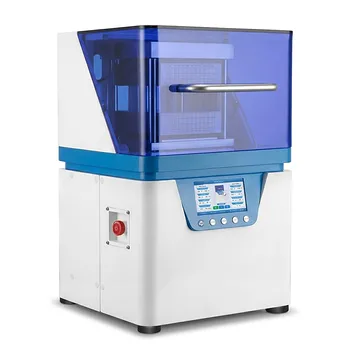
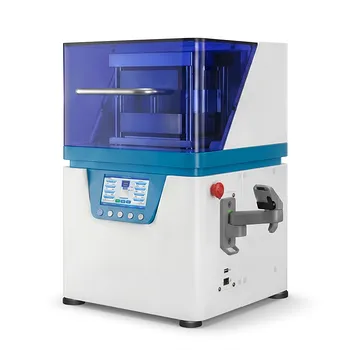
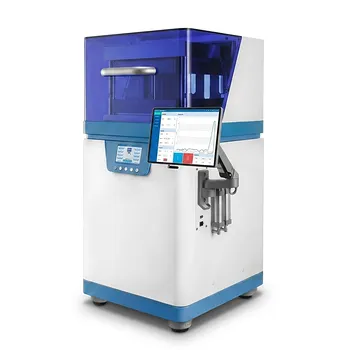
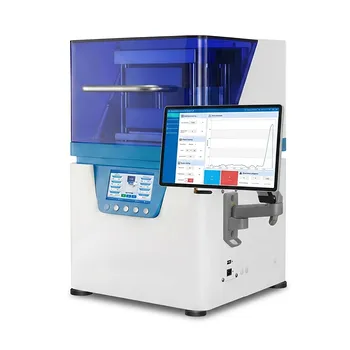
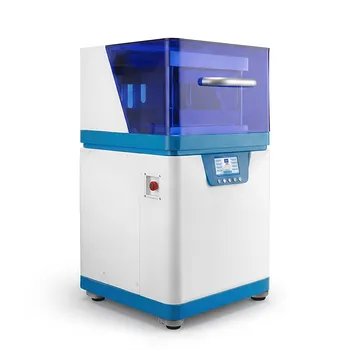
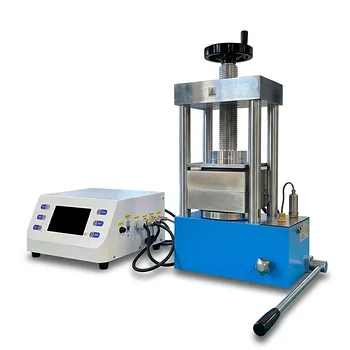
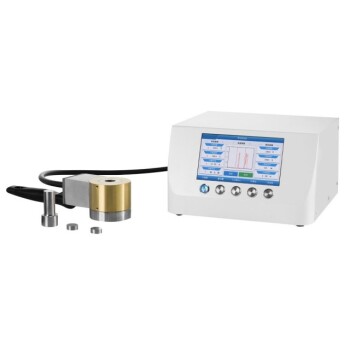
The primary function of a laboratory hot press in MEA assembly is to create a cohesive, integrated unit by bonding the catalyst layer, ion exchange membrane, and gas diffusion layer (GDL) under synchronized thermal and mechanical loads.
This process ensures intimate physical contact between disparate components, which is essential for minimizing interfacial contact resistance and establishing continuous pathways for proton and electron transport. By applying precise pressure and temperature simultaneously, the hot press transforms individual layers into a mechanically stable assembly capable of efficient energy conversion.
A laboratory hot press serves as the critical bridge between individual materials and a functional electrochemical system, using controlled interface fusion to eliminate gaps and maximize proton conductivity across the membrane.
Optimizing the Electrochemical Interface
Reducing Interfacial Contact Resistance
The most immediate benefit of hot pressing is the drastic reduction of resistance at the boundaries where different materials meet. By forcing the catalyst layer into direct contact with the membrane and the GDL, the press eliminates microscopic air gaps that would otherwise impede the flow of charge.
Enhancing Ion and Electron Transport
The simultaneous application of heat and pressure establishes efficient "channels" for protons and electrons to move through the assembly. This synchronization ensures that the polymer electrolyte and the catalyst particles are sufficiently intertwined to allow for high-speed transport during fuel cell or electrolyzer operation.
Maximizing Catalyst Utilization
A hot press ensures that the catalyst particles, such as Platinum or Iridium, are in "active" contact with the membrane surface. This tight bonding ensures that a higher percentage of the catalyst is electrochemically accessible, directly improving the efficiency of the energy conversion process.
Achieving Mechanical Stability and Durability
Preventing Layer Delamination
MEAs are subject to significant thermal and mechanical stress during operation; the hot press provides the structural integrity needed to prevent these layers from separating. A well-pressed MEA acts as a single monolithic structure, which is vital for maintaining performance over thousands of operational hours.
Inducing Interface Fusion
At specific temperatures, such as 130°C for certain membranes, the polymer at the interface undergoes "micro-melting." This allows the membrane and the catalyst binder to fuse together at a molecular level, creating a transition zone that is far more robust than a simple physical stack.
Ensuring Uniform Pressure Distribution
High-performance laboratory presses are designed to apply pressure with extreme uniformity across the entire surface area of the MEA. This uniformity prevents "hot spots" or localized areas of high resistance, which are common failure points in poorly assembled cells.
Understanding the Trade-offs and Pitfalls
The Risk of Over-Compression
While high pressure reduces resistance, excessive force can crush the delicate pore structure of the gas diffusion layer. If the GDL is over-compressed, gas permeability is reduced, leading to "mass transport limitations" where the fuel cannot reach the catalyst effectively.
Thermal Degradation of Components
Applying heat is necessary for bonding, but exceeding the glass transition temperature of the membrane or the degradation point of the catalyst binder can cause permanent damage. Precision control is required to find the "sweet spot" where bonding occurs without compromising the chemical integrity of the Nafion or other ionomers.
Material Specificity
The "ideal" settings for a hot press vary significantly depending on the materials used. An MEA using a Pt/C catalyst will require different temperature and pressure profiles than one using Iridium black or non-precious metal catalysts.
How to Apply This to Your Project
When selecting or operating a laboratory hot press for MEA assembly, your parameters should align with your specific research or production goals.
- If your primary focus is Maximizing Performance: Prioritize a press with high-precision temperature control (±1°C) to achieve the exact degree of interface fusion required for low resistance.
- If your primary focus is Long-Term Durability: Focus on the uniformity of pressure distribution to ensure the MEA does not suffer from localized delamination during thermal cycling.
- If your primary focus is High-Throughput Testing: Invest in a press with rapid heating and cooling cycles to minimize the dwell time required for each assembly without sacrificing bond quality.
The laboratory hot press remains the indispensable tool for translating advanced material science into a functional, high-performance electrochemical device.
Summary Table:
| Key Function | Impact on MEA Performance | Critical Control Parameter |
|---|---|---|
| Interfacial Fusion | Minimizes contact resistance and enables proton flow | Precise Temperature (e.g., 130°C) |
| Structural Bonding | Prevents delamination under thermal/mechanical stress | Synchronized Thermal/Mechanical Load |
| Pressure Uniformity | Eliminates "hot spots" and ensures consistent reaction | Platen Parallelism & Pressure Distribution |
| Catalyst Activation | Maximizes electrochemical surface area contact | Optimal Dwell Time & Pressure Profile |
Elevate Your Electrochemical Research with KINTEK Precision
Achieving the perfect bond in Membrane Electrode Assemblies (MEA) requires more than just heat—it requires precision. KINTEK specializes in high-performance laboratory equipment designed to bridge the gap between material science and functional energy systems.
Whether you are optimizing fuel cell efficiency or developing next-generation electrolyzers, our range of hydraulic presses (pellet, hot, isostatic) ensures the uniform pressure and temperature control necessary for superior interface fusion. Beyond pressing, our portfolio supports your entire workflow with:
- Electrolytic cells and electrodes for advanced electrochemical testing.
- Battery research tools and high-temperature furnaces (CVD, vacuum, muffle).
- High-pressure reactors and autoclaves for specialized material synthesis.
Ready to minimize resistance and maximize catalyst utilization? Contact KINTEK today to discuss your specific MEA assembly requirements and discover how our tailored solutions can accelerate your lab's breakthroughs.
References
- Zhe Jiang, Jin‐Song Hu. Interfacial assembly of binary atomic metal-Nx sites for high-performance energy devices. DOI: 10.1038/s41467-023-37529-2
This article is also based on technical information from Kintek Solution Knowledge Base .
Related Products
- Automatic Laboratory Hot Press 400x400 mm with Programmable High Temperature and Hydraulic Force Control
- Automatic Laboratory Hot Press Dual Plate Heating Sintering Compaction System 120x120mm
- Automatic Laboratory Hot Press Machine with Heated Platens 200x200mm Program Control Dual Heating Plates
- Large Format Automatic Laboratory Hot Press 400x400 Plate for Industrial Material Sintering and Polymer Lamination
- 30T 40T Split Automatic Heated Hydraulic Press Machine with Heated Plates for Laboratory Hot Press
People Also Ask
- What specific conditions does a laboratory hot press provide for the assembly of fuel cell MEA? Expert Bond Tips.
- How do a laboratory hydraulic hot press and standardized steel molds ensure the quality of WPC test specimens?
- What are the core advantages of using a laboratory hot press to produce Bi2Se3? Achieve 93% Density & High Conductivity
- How does a laboratory heating hydraulic press contribute to the preparation of recycled graphite green bodies? - Optimize Density.
- What is the function of a laboratory hot press in DAAFC assembly? Optimize MEA Lamination & Power Density