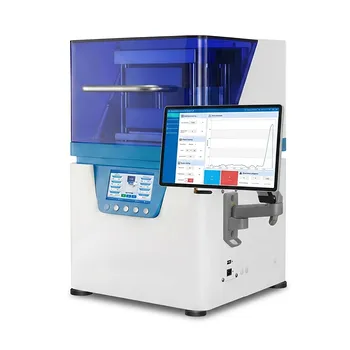
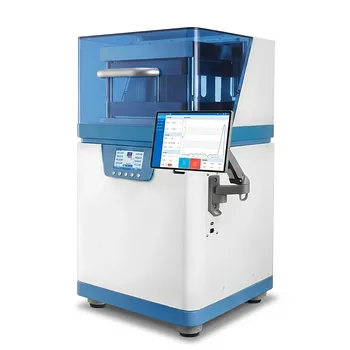
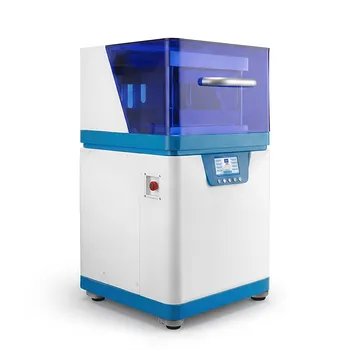
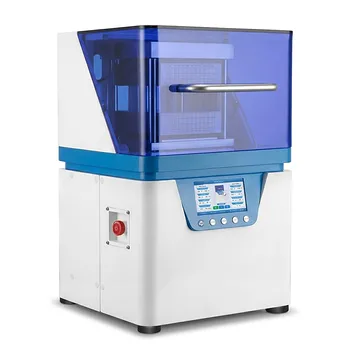
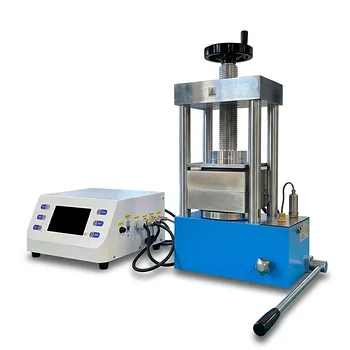
The laboratory heating hydraulic press is the critical instrument for transforming loose recycled graphite powder into a high-density, structurally sound "green body" preform. By applying simultaneous uniaxial pressure (typically 100 MPa) and controlled thermal energy (often around 150 °C), the press forces the graphite filler and binder into a cohesive matrix. This dual-action process ensures that the resulting green body possesses the necessary density and internal architecture to survive subsequent high-temperature carbonization and impregnation stages.
Core Takeaway: The heating hydraulic press uses a "hot-pressing" mechanism to soften coal-based binders and rearrange graphite particles, effectively eliminating internal voids and establishing a stable structural foundation for recycled graphite production.
The Mechanics of Thermal Consolidation
Softening the Coal-Based Binder
In the preparation of recycled graphite, the coal-based binder pitch must reach a softened state to function effectively. The integrated heating elements of the hydraulic press maintain a precise mold temperature that allows the binder to flow between the recycled graphite filler particles. This fluid state is essential for creating a continuous phase that can coat and bond individual particles together.
Simultaneous Uniaxial Compaction
As the binder softens, the press applies a stable uniaxial pressure to the mixture within a high-strength mold. This force physically rearranges the recycled graphite particles, pushing them into a more efficient packing arrangement. Without this mechanical force, the softened binder would not be able to overcome the internal friction of the dry filler powder.
Structural Optimization of the Green Body
Eliminating Internal Voids and Porosity
A primary role of the laboratory press is the removal of large internal voids that naturally occur in loose powder mixtures. By compressing the material at high pressure, the press increases the bulk density of the green body and reduces its initial porosity. This step is vital because high porosity in the green body stage leads to weak, brittle final products after firing.
Enhancing Particle Contact and Interlocking
The high-pressure environment facilitates mechanical interlocking between the recycled graphite flakes and the binder. This ensures tight contact between the filler and the matrix, which is necessary for the diffusion-controlled reactions that occur during later processing. A well-pressed green body has sufficient mechanical strength to be handled and loaded into furnaces without crumbling or deforming.
Impact on Downstream Graphite Quality
Establishing a Foundation for Carbonization
The quality of the final recycled graphite block is largely determined by the initial density established during the pressing stage. A uniform green body ensures that during the carbonization process, the escape of volatile gases from the binder does not create catastrophic structural cracks. This stability is the prerequisite for successful impregnation cycles used to further densify the graphite.
Minimizing Volumetric Shrinkage
Using a hydraulic press to achieve high packing density significantly reduces the volume shrinkage that occurs during high-pressure consolidation or sintering. By reaching a near-optimal density at the green body stage, researchers can more accurately predict the final dimensions of the sample. This precision is critical for maintaining geometric consistency and the repeatability of experimental data.
Understanding the Trade-offs
Pressure and Temperature Limits
While higher pressure generally increases density, exceeding the material's limits can cause "capping" or internal laminations when the pressure is released. Similarly, if the mold temperature is too low, the binder will not flow, leading to a weak green body; if it is too high, the binder may begin to prematurely volatize or degrade.
Uniaxial vs. Isostatic Limitations
The laboratory hydraulic press typically applies uniaxial pressure, which can lead to slight density gradients within the sample. While excellent for disk-shaped samples and uniform preforms, it may not produce the same level of multi-directional uniformity as Hot Isostatic Pressing (HIP). Engineers must account for this directional orientation of graphite flakes when analyzing the mechanical properties of the final green body.
Applying the Pressing Process to Your Project
Recommendations for Goal-Specific Preparation
- If your primary focus is maximizing bulk density: Utilize the maximum recommended pressure (e.g., 100 MPa) and ensure the mold temperature is held steady at the binder's optimal softening point to minimize voids.
- If your primary focus is experimental repeatability: Use high-strength stainless steel molds and a standardized cooling-under-pressure cycle to ensure consistent sample dimensions and surface area.
- If your primary focus is structural integrity during firing: Prioritize the "soak time" at the target temperature within the press to ensure the binder has fully permeated the recycled filler before releasing pressure.
By precisely controlling the intersection of mechanical force and thermal energy, the laboratory heating hydraulic press ensures that recycled graphite is transformed into a robust, high-performance engineering material.
Summary Table:
| Feature | Function in Graphite Preparation |
|---|---|
| Integrated Heating | Softens coal-based binders to allow flow and coating of filler particles. |
| Uniaxial Pressure | Physically rearranges graphite flakes to eliminate internal voids and porosity. |
| Thermal Consolidation | Establishes a stable structural foundation for subsequent carbonization. |
| High-Pressure Output | Facilitates mechanical interlocking between the filler and the binder matrix. |
| Precision Control | Minimizes volumetric shrinkage and ensures geometric consistency in final samples. |
Elevate Your Material Research with KINTEK Precision
Achieve superior structural integrity and high-density results in your recycled graphite projects with KINTEK’s advanced laboratory solutions. We specialize in providing the high-performance tools researchers need to bridge the gap between powder and product.
Our comprehensive portfolio includes:
- Laboratory Hydraulic Presses: Including pellet, hot, and isostatic presses for optimal green body consolidation.
- High-Temperature Furnaces: Muffle, tube, vacuum, and atmosphere furnaces for precise carbonization and sintering.
- Sample Preparation: Crushing and milling systems, sieving equipment, and high-quality crucibles.
- Specialized Lab Tools: From high-pressure reactors to cooling solutions and essential PTFE/ceramic consumables.
Ready to enhance your lab's efficiency and ensure experimental repeatability? Contact KINTEK today to find the perfect equipment configuration for your specific material science challenges.
References
- Sang-Hye Lee, Jae‐Seung Roh. Effect of Impregnation and Graphitization on EDM Performance of Graphite Blocks Using Recycled Graphite Scrap. DOI: 10.3390/pr11123368
This article is also based on technical information from Kintek Solution Knowledge Base .
Related Products
- 24T 30T 60T Heated Hydraulic Press Machine with Heated Plates for Laboratory Hot Press
- 30T 40T Split Automatic Heated Hydraulic Press Machine with Heated Plates for Laboratory Hot Press
- Automatic Heated Hydraulic Press Machine with Heated Plates for Laboratory Hot Press 25T 30T 50T
- Automatic Heated Hydraulic Press Machine with Heated Plates for Laboratory Hot Press
- Fully Automatic Heated Hydraulic Lab Press for Materials Sintering and Sample Preparation
People Also Ask
- What role does a heated hydraulic press play in Cold Sintering (CSP)? Enhancing LATP-Halide Densification
- Why is the heating function of a laboratory hydraulic press essential for MEA assembly in DEFC? Optimize Cell Bonding
- What technical conditions does a heated hydraulic press provide for PEO batteries? Optimize Solid-State Interfaces
- How is a heated hydraulic press used for Li-LLZO batteries? Optimize Interfacial Bonding with Thermal-Pressure
- What is the core function of a laboratory heated hydraulic press in CSP? Revolutionize Low-Temp Ceramic Sintering