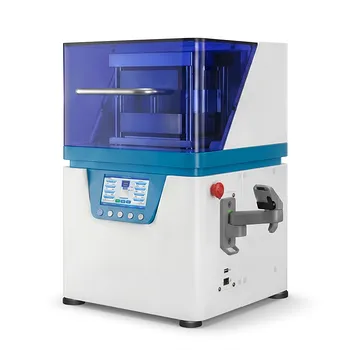
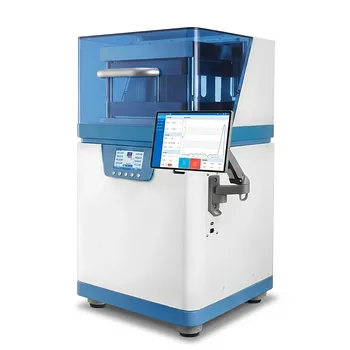
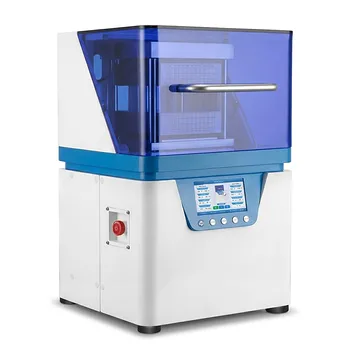
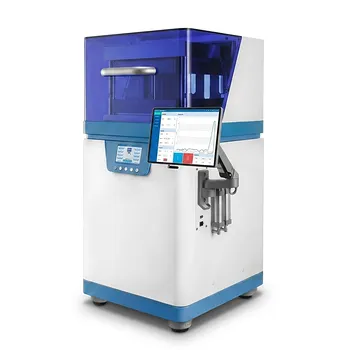
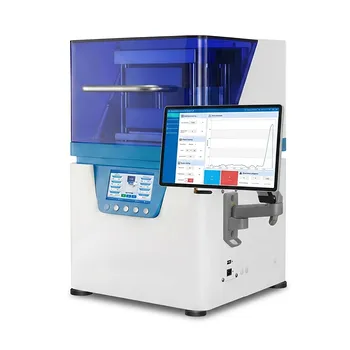
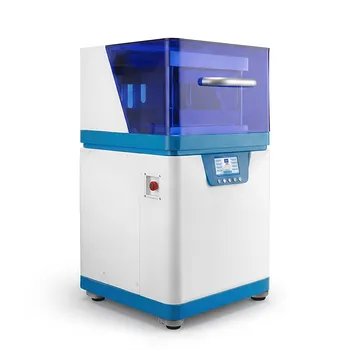
Utilizing a laboratory hot press for $Bi_2Se_3$ production is the most effective method for achieving high-density bulk materials with superior electronic properties. By simultaneously applying precise thermal energy (485 °C) and mechanical pressure (80 MPa), the process induces plastic deformation and diffusion bonding. This synergy allows researchers to reach 92%–93% of the material's theoretical density, drastically improving electrical conductivity compared to traditional cold-pressing methods.
Core Takeaway: The laboratory hot press transforms $Bi_2Se_3$ nanosheets into high-performance bulk solids by using simultaneous heat and pressure to eliminate porosity and fuse grain boundaries. This process is essential for creating materials that require both high mechanical integrity and optimized thermoelectric transport properties.
Achieving Superior Material Density
Diffusion Bonding and Porosity Reduction
The primary advantage of hot pressing is the facilitation of diffusion bonding between powder particles. In a $Bi_2Se_3$ system, the application of 80 MPa of pressure at elevated temperatures causes the particles to undergo plastic deformation, filling internal voids that would remain trapped during cold pressing.
Reaching Theoretical Density Limits
Through precise regulation of the environment, a hot press can densify $Bi_2Se_3$ to 92%–93% of its theoretical density. This level of densification is critical because it ensures the bulk material behaves more like a single crystal in terms of durability and consistency, rather than a fragile compressed powder.
Elimination of Internal Structural Defects
Beyond simple densification, the hot press significantly reduces the formation of internal cracks. By applying pressure while the material is in a more ductile, heated state, the equipment promotes "healing" of micro-fractures, which improves the overall electrical contact performance across the entire sample.
Optimization of Thermoelectric Properties
Enhancement of Electrical Conductivity
The most significant functional benefit for $Bi_2Se_3$ is the drastic increase in electrical conductivity. High density and improved grain boundary fusion allow charge carriers to move more freely throughout the bulk material, which is a fundamental requirement for high-performance electronic components.
Preservation of Nanostructured Benefits
Precise temperature control (specifically around 485 °C for $Bi_2Se_3$) allows for bonding without excessive thermal grain coarsening. This is vital for maintaining low thermal conductivity, as it preserves the nanostructures that scatter phonons, thereby maintaining a high Seebeck coefficient for thermal energy recovery applications.
Improving Grain Boundary Connectivity
The synergistic effect of heat and pressure enhances the connectivity between grains. In bismuth-based materials, this improved connectivity ensures that the material achieves its peak superconducting or semiconducting potential by minimizing the resistance typically found at the interfaces of poorly bonded particles.
Advantages in Process Purity and Efficiency
Binder-Free and Solvent-Free Fabrication
Hot pressing enables solvent-free dry film and bulk formation. Because the combination of force and temperature is sufficient to bond the parts completely, there is no need for chemical binders or additives that could introduce impurities or degrade the final material's performance.
Thermo-Mechanical Exfoliation Potential
The machine can also achieve thermo-mechanical exfoliation of bismuth-based particles. This provides an economical and efficient mechanical route for producing ultrathin nanosheets directly within the bulk processing phase, bypassing more complex chemical exfoliation steps.
Precision Control of Sample Geometry
Laboratory hot presses allow for the creation of dense films or pellets with controllable thickness (often ranging from 70-100 μm for films). This precision is necessary for standardized testing and for integrating $Bi_2Se_3$ into specific device architectures like batteries or thermoelectric generators.
Understanding the Trade-offs
Equipment and Operational Constraints
While highly effective, hot pressing requires specialized tooling (typically graphite or high-strength alloy dies) that can withstand simultaneous high heat and pressure. The cycle times are generally longer than cold pressing due to the necessary heating and cooling phases required to prevent thermal shock.
Geometry Limitations
Hot pressing is primarily suited for simple geometric shapes, such as discs, plates, or cylinders. Creating complex, near-net-shape components is difficult compared to other methods like injection molding or 3D printing, as the pressure must be applied uniaxially or isostatically.
Risk of Grain Growth
If the temperature is not strictly regulated—exceeding the optimal 485 °C for $Bi_2Se_3$—there is a significant risk of excessive grain growth. This can lead to a reduction in the material's beneficial "nano-effects," potentially increasing thermal conductivity and reducing the efficiency of the thermoelectric material.
How to Apply This to Your Project
When selecting your processing parameters for $Bi_2Se_3$, your choice should be driven by the intended application of the bulk material.
- If your primary focus is Maximum Electrical Conductivity: Prioritize achieving the 92%-93% density threshold by strictly maintaining the 80 MPa pressure and 485 °C temperature profile.
- If your primary focus is Thermoelectric Efficiency (High ZT): Focus on the shortest possible hot-pressing cycle to prevent grain coarsening, thereby preserving the low thermal conductivity of the nanostructure.
- If your primary focus is Chemical Purity: Utilize the binder-free nature of hot pressing to ensure no residual solvents or organic contaminants interfere with the bismuth-selenium bonding.
By mastering the simultaneous application of thermal and mechanical energy, you can produce $Bi_2Se_3$ bulk materials that meet the rigorous demands of modern electronic and energy-harvesting research.
Summary Table:
| Advantage | Mechanism | Primary Benefit |
|---|---|---|
| High Density | Diffusion bonding at 80 MPa | 92%–93% theoretical density; eliminates porosity |
| Enhanced Conductivity | Optimized grain boundary fusion | Drastic increase in electrical performance for electronics |
| Material Purity | Binder-free & solvent-free process | Zero chemical contamination; high-purity bulk solids |
| Thermoelectric Efficiency | Precise 485 °C thermal control | Preserves nanostructures while minimizing grain growth |
| Precision Geometry | Uniaxial pressure application | Controllable thickness (70-100 μm) for device integration |
Elevate Your Material Synthesis with KINTEK Precision
Achieving the perfect balance of density and conductivity in $Bi_2Se_3$ requires equipment that delivers unwavering precision. KINTEK specializes in advanced laboratory solutions designed for high-performance research. From our robust hydraulic pellet presses and isostatic presses to our specialized high-temperature furnaces and reactors, we provide the tools necessary to reach 93% theoretical density and beyond.
Whether you are focusing on thermoelectric energy harvesting or next-generation battery research, our comprehensive portfolio—including PTFE consumables, ceramics, and cooling solutions—ensures your lab operates at peak efficiency.
Ready to optimize your bulk material production? Contact our technical experts today to find the ideal hot pressing system tailored to your specific research requirements.
References
- Zicheng Yuan, Yu Liu. Exploring Material Properties and Device Output Performance of a Miniaturized Flexible Thermoelectric Generator Using Scalable Synthesis of Bi2Se3 Nanoflakes. DOI: 10.3390/nano13131937
This article is also based on technical information from Kintek Solution Knowledge Base .
Related Products
- Automatic Laboratory Hot Press Machine with Heated Platens 200x200mm Program Control Dual Heating Plates
- 30T 40T Split Automatic Heated Hydraulic Press Machine with Heated Plates for Laboratory Hot Press
- Automatic Laboratory Heat Press Machine
- Automatic Heated Hydraulic Press Machine with Heated Plates for Laboratory Hot Press
- Automatic Laboratory Hot Press 400x400 mm with Programmable High Temperature and Hydraulic Force Control
People Also Ask
- What is the primary function of a laboratory hot press in MEA assembly? Optimize Fuel Cell Bonding & Performance
- What specific conditions does a laboratory hot press provide for the assembly of fuel cell MEA? Expert Bond Tips.
- Why use a lab press to mold H-DRI pellets? Achieve Accurate EAF Simulation & Thermal Mass
- What impact does a laboratory press have on solid electrolyte samples? Optimize Density and Ionic Conductivity
- What is the function of a laboratory hot press in DAAFC assembly? Optimize MEA Lamination & Power Density