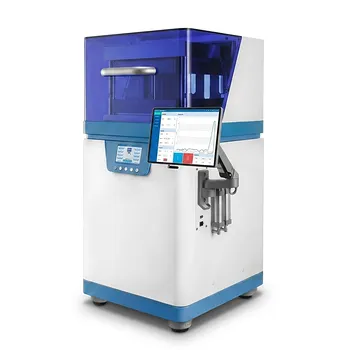
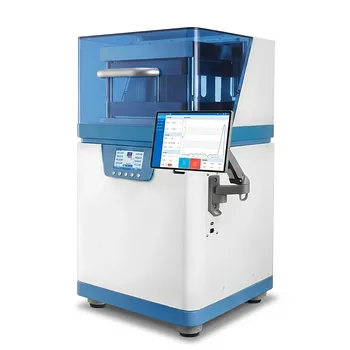
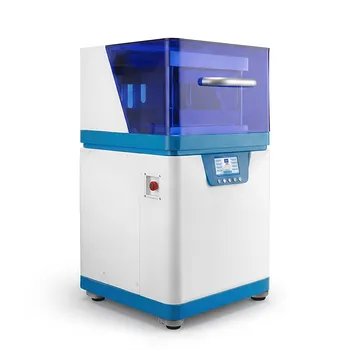
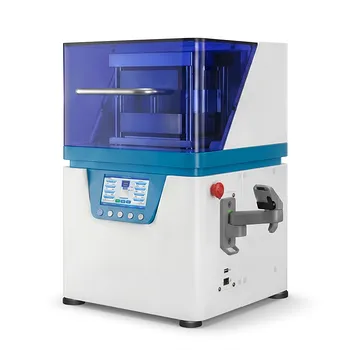
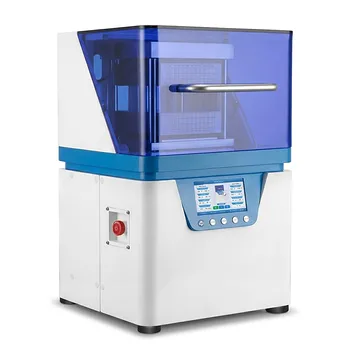
Industrial hot pressing is the definitive phase where thermal energy and mechanical force converge to lock carbon nanomaterials into the wood fiber matrix. By providing a precisely controlled environment, the hot press ensures that resin adhesives cure around the carbon nanotubes or graphene, creating a high-density composite. This process is responsible for establishing the mechanical interlocking and uniform distribution necessary to enhance the board's structural integrity and dimensional stability.
The core function of the hot press is to facilitate interface bonding and void elimination, ensuring that carbon nanomaterials are not just present, but are structurally integrated into the MDF to maximize load transfer and durability.
The Role of Precision Pressure Management
Eliminating Internal Porosity
High, consistent pressure is essential for eliminating internal pores and voids within the composite material. By removing these air pockets, the press increases the relative density of the MDF, which directly correlates to higher flexural strength and hardness.
Strengthening Interface Bonding
The application of pressure (often maintained at levels such as 15 MPa) ensures tight mechanical contact between the wood fibers and the nanomaterials. This contact is critical for the "dispersion strengthening" effect, where nanomaterials like graphene act as bridges that reinforce the bond between individual wood fibers.
Optimizing Material Density
Consistent pressure control prevents localized weak spots by ensuring the material is compressed uniformly across the entire surface of the board. This uniformity is what allows carbon-reinforced MDF to maintain its dimensional stability under varying environmental loads.
Thermal Dynamics and Resin Integration
Accelerating Chemical Cross-linking
Precise temperature control is required to trigger and accelerate the curing process of the resin adhesives. Without this thermal energy, the resin remains semi-liquid and cannot effectively "lock" the carbon nanomaterials into a permanent, rigid structure.
Enhancing Nanomaterial Distribution
Controlled heat reduces the viscosity of the resin during the initial stages of pressing, allowing it to flow more freely. This improved flow helps the resin—and the nanomaterials suspended within it—to penetrate deeper into the wood fibers, ensuring a more homogenous reinforcement.
Facilitating Molecular Interlocking
The combination of heat and pressure allows the nanomaterials to achieve a level of mechanical interlocking that is impossible at room temperature. This creates a composite where the nanotubes or graphene flakes are physically embedded into the fiber surface, rather than just sitting on top of it.
Understanding the Technical Trade-offs
Risk of Thermal Degradation
While heat is necessary for curing, excessive temperatures can cause the thermal degradation of the organic wood fibers. Finding the "sweet spot" is critical, as overheating leads to brittleness and a significant reduction in the board's impact resistance.
Impact of Excessive Pressure
Over-pressing the material can lead to the crushing of the wood's cellular structure, which diminishes the natural elasticity of the fibers. While the board may become harder, it may also become more prone to catastrophic failure under bending stress.
Curing Speed vs. Internal Stress
Rapid heating can accelerate production but may trap moisture or gases inside the board, leading to internal delamination. A gradual, controlled temperature ramp is often necessary to allow steam to escape while the resin sets.
How to Apply This to Your Manufacturing Process
The success of carbon nanomaterial reinforcement depends on how you calibrate your hot press parameters based on your specific performance requirements.
- If your primary focus is Maximum Mechanical Strength: Prioritize higher pressure settings (e.g., 15 MPa) to maximize relative density and ensure the most robust interface bonding between the matrix and the nanomaterials.
- If your primary focus is Dimensional Stability: Focus on precise temperature ramping and longer dwell times to ensure the resin is fully cured and the nanomaterials are uniformly distributed throughout the board.
- If your primary focus is Production Throughput: Optimize the resin chemistry to react at lower temperatures, allowing for faster press cycles without risking the thermal degradation of the wood fibers.
The industrial hot press is not merely a tool for shaping, but the essential reactor that defines the final physical properties of nanocarbon-reinforced MDF.
Summary Table:
| Parameter | Core Function | Performance Benefit |
|---|---|---|
| Pressure Management | Void elimination & interface bonding | Higher flexural strength, density, & hardness |
| Thermal Dynamics | Resin curing & molecular interlocking | Enhanced structural integrity & stability |
| Parameter Control | Preventing fiber degradation/crushing | Optimal elasticity & impact resistance |
| Curing Cycle | Controlled degassing & cross-linking | Reduced internal stress & delamination risk |
Elevate Your Composite Research with KINTEK Precision
Achieving the perfect balance of pressure and temperature is critical for high-performance carbon-reinforced materials. KINTEK specializes in advanced laboratory solutions, offering a robust range of hydraulic presses (pellet, hot, and isostatic) and high-temperature furnaces designed for precision and reliability.
Whether you are optimizing resin curing cycles or strengthening interface bonding in advanced MDF, our equipment ensures consistent results and maximum material durability. We provide the technical expertise and high-performance tools—including vacuum furnaces and crushing systems—to help you lead in material innovation. Contact our technical team today to discover how KINTEK can enhance your manufacturing process!
References
- Damian Łukawski, Agnieszka Łękawa-Raus. Functional materials based on wood, carbon nanotubes, and graphene: manufacturing, applications, and green perspectives. DOI: 10.1007/s00226-023-01484-4
This article is also based on technical information from Kintek Solution Knowledge Base .
Related Products
- Large Format Automatic Laboratory Hot Press 400x400 Plate for Industrial Material Sintering and Polymer Lamination
- Automatic Laboratory Hot Press 400x400 mm with Programmable High Temperature and Hydraulic Force Control
- Automatic Hydraulic Hot Press with 500x500mm Heating Plates and Multi Stage PLC Control for Material Sintering
- Automatic Laboratory Hot Press Machine with Heated Platens 200x200mm Program Control Dual Heating Plates
- Automatic Heated Hydraulic Press Machine with Heated Plates for Laboratory Hot Press 25T 30T 50T
People Also Ask
- What is the primary function of a laboratory hot press in MEA assembly? Optimize Fuel Cell Bonding & Performance
- What specific conditions does a laboratory hot press provide for the assembly of fuel cell MEA? Expert Bond Tips.
- What are the core advantages of using a laboratory hot press to produce Bi2Se3? Achieve 93% Density & High Conductivity
- What is the function of a laboratory hot press in DAAFC assembly? Optimize MEA Lamination & Power Density
- What role does a laboratory press play in cathode sheet preparation? Optimize Battery Performance & Energy Density