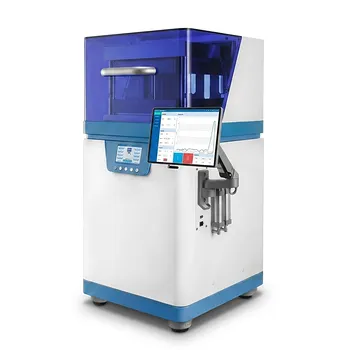
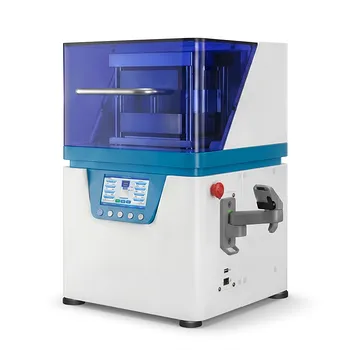
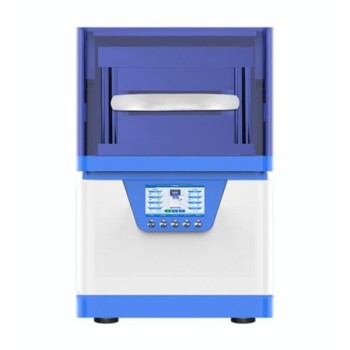
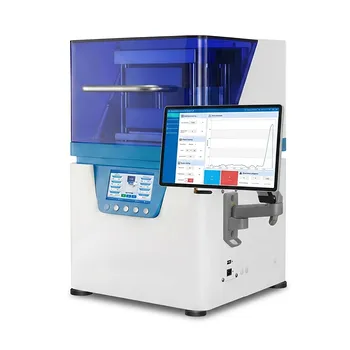
The laboratory press is a critical tool for optimizing the physical and electrochemical properties of cathode sheets—specifically lithium iron phosphate (LiFePO4) coated on aluminum foil—to match the performance of high-efficiency anodes. By applying controlled, high-magnitude pressure (typically around 5 tons), the press compacts the electrode material to maximize particle-to-particle contact and secure the active material to the current collector.
The laboratory press serves as the bridge between raw material coating and a high-performance electrode by ensuring density uniformity and minimal contact resistance. In a full battery system, this compaction is vital for achieving the rate performance and capacity utilization necessary to complement advanced anodes like TiC@C.
Enhancing Electrochemical Performance
Minimizing Interfacial Contact Resistance
The primary role of the laboratory press is to reduce ohmic resistance within the electrode structure. By physically forcing the active material, conductive agents, and binders closer together, the press creates robust electronic contact paths. This reduction in resistance is essential for efficient electron transport during the high-current cycles typical of modern battery applications.
Optimizing Rate Performance and Capacity
Compaction through a laboratory press directly impacts the battery's rate performance. By increasing the contact area between active material particles, the press ensures that lithium ions can be efficiently utilized throughout the entire volume of the cathode. This prevents "dead zones" within the electrode, thereby maximizing the discharge capacity and overall energy density of the full cell.
Structural Integrity and Uniformity
Ensuring Mechanical Adhesion
A laboratory press provides the stable vertical pressure required to bond the cathode slurry firmly to the aluminum foil current collector. This mechanical stability is crucial for preventing the active material from delaminating or "shedding" during the repeated expansion and contraction of charge-discharge cycles. Without this bond, the battery would suffer from rapid capacity decay and structural failure.
Controlling Electrode Density and Thickness
Precision is the hallmark of a laboratory press, allowing researchers to achieve a consistent compaction density across the entire sheet. By eliminating internal pores and air gaps, the press increases the volumetric energy density of the cathode. Furthermore, maintaining a uniform thickness prevents density gradients that could lead to uneven current distribution and localized overstressing of the battery components.
Understanding the Trade-offs
The Risk of Over-Compaction
While high pressure is necessary, excessive force can be detrimental to the electrode's health. Over-compacting the cathode can lead to particle fragmentation or the formation of micro-cracks, which are often observed during post-cycle SEM analysis. If the pressure is too high, the porosity of the electrode may drop so low that electrolyte penetration is hindered, actually decreasing the battery’s performance.
Pressure Limits and Material Sensitivity
Different cathode chemistries and binders require specific pressure profiles; for instance, dry preparation techniques for solid-state batteries may require pressures as high as 400 MPa. Using the wrong pressure setting can result in a brittle electrode or a failure to trigger the necessary fibrillation of binders (like PTFE) that hold the structure together. Finding the "sweet spot" of pressure is a balancing act between mechanical strength and ionic accessibility.
How to Apply This to Your Battery Project
To achieve the best results when preparing cathodes for a full battery system, consider these tactical approaches:
- If your primary focus is high power density: Utilize higher compaction pressures to minimize resistance, ensuring your laboratory press provides the precise linear pressure needed to maintain a thin, highly conductive profile.
- If your primary focus is long-term cycle stability: Prioritize a moderate pressure that ensures strong adhesion to the current collector without causing particle fracture or excessive loss of porosity.
- If your primary focus is experimental consistency: Standardize your pressing protocol (e.g., exactly 5 tons for a set duration) to create a uniform sample base for accurate cross-sectional analysis and performance comparison.
By precisely controlling the physical consolidation of the cathode, the laboratory press ensures the electrode possesses the structural and electrical characteristics required to perform reliably in a complete battery assembly.
Summary Table:
| Key Function | Primary Benefit | Research Impact |
|---|---|---|
| Compaction | Minimizes interfacial contact resistance | Enhances electron transport and rate performance |
| Adhesion | Secures active material to aluminum foil | Prevents delamination during charge-discharge cycles |
| Density Control | Increases volumetric energy density | Eliminates internal pores for uniform current distribution |
| Thickness Regulation | Ensures electrode uniformity | Prevents localized overstressing and capacity decay |
Elevate Your Battery Research with KINTEK Precision
Achieving the perfect electrode density requires more than just pressure—it requires precision. KINTEK specializes in high-performance laboratory equipment designed to help researchers bridge the gap between raw materials and high-efficiency energy storage.
Whether you are preparing cathode sheets for TiC@C systems or exploring solid-state chemistries, our comprehensive range of hydraulic presses (pellet, hot, isostatic), crushing and milling systems, and battery research consumables provides the reliability you need for repeatable results. We also offer a full suite of high-temperature furnaces, high-pressure reactors, and cooling solutions to support every stage of your material synthesis.
Ready to optimize your electrode fabrication? Contact our experts today to find the ideal press for your laboratory!
References
- Junren Wang, Andrea E. Russell. Self-standing TiC-modified carbon fibre electrodes derived from cellulose and their use as an ultrahigh efficiency lithium metal anode. DOI: 10.1039/d3ta01707a
This article is also based on technical information from Kintek Solution Knowledge Base .
Related Products
- Laboratory Hydraulic Press Split Electric Lab Pellet Press
- Laboratory Hydraulic Press Lab Pellet Press Machine for Glove Box
- Large Format Automatic Laboratory Hot Press 400x400 Plate for Industrial Material Sintering and Polymer Lamination
- Automatic Laboratory Hot Press Machine with Heated Platens 200x200mm Program Control Dual Heating Plates
- Laboratory Hydraulic Press Lab Pellet Press for Button Battery
People Also Ask
- What are the roles of a laboratory hydraulic press and stainless steel molds in the preparation of graphite samples?
- What is the role of a laboratory hydraulic press in electrode prep? Maximize Energy Density & Sealing Precision
- How does a laboratory hydraulic press ensure the quality of alumina-forming alloy green bodies? Optimize CSP Research
- How is a laboratory hydraulic press used to evaluate the mechanical performance of nano-modified concrete? Expert Guide
- Why is a laboratory hydraulic press used for ASSB assembly? Achieving 392 MPa for Optimal Solid-State Battery Density