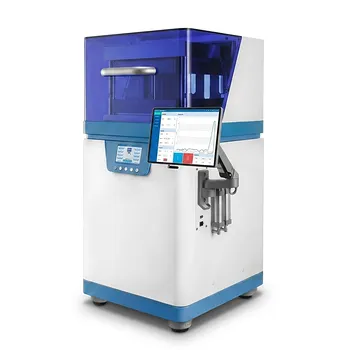
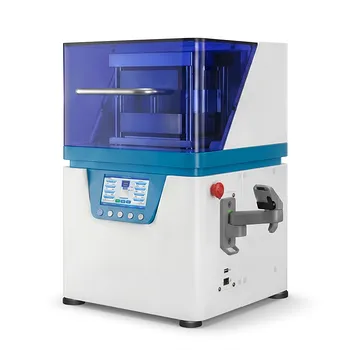
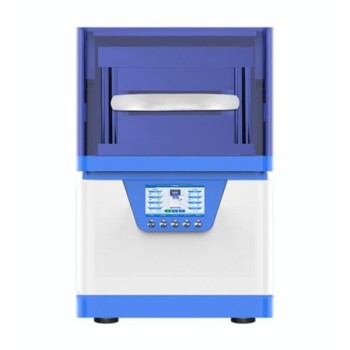
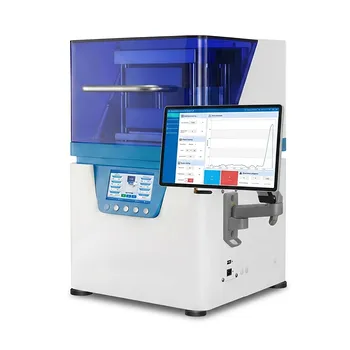
A laboratory press is the fundamental tool for transforming loose powder into high-performance solid electrolyte pellets. It directly determines sample quality by applying precisely controlled pressure—often ranging from 200 MPa to over 600 MPa—to eliminate internal voids and maximize material density. This densification is essential for reducing grain boundary resistance and ensuring the intimate physical contact required for accurate electrochemical characterization.
The laboratory press serves as the critical bridge between raw powder and a valid test sample, directly influencing ionic conductivity and mechanical reliability. Without the uniform densification provided by a press, electrochemical data reflects structural defects and air gaps rather than the electrolyte's intrinsic properties.
Enhancing Microstructural Density
The Elimination of Voids and Internal Pores
Loose electrolyte powders, such as sulfides or LPSCl, contain significant air gaps that impede ion movement. A laboratory press applies constant high pressure to force these particles into an optimal packing density, effectively removing internal pores that would otherwise act as insulators.
Impact on Grain Boundary Resistance
High-pressure molding significantly reduces the distance between individual powder particles, which lowers grain boundary resistance. By minimizing these barriers, the press allows the sample to achieve a higher relative density, which is a prerequisite for maximizing the material's total ionic conductivity.
Establishing Uniform Ion Transport Paths
For nanostructured materials like Calcium Fluoride (CaF2), the pressing process ensures the formation of continuous, efficient ion transport paths. This structural uniformity is vital for obtaining reproducible data during impedance testing, as it prevents localized bottlenecks in ion flow.
Optimizing the Electrode-Electrolyte Interface
Securing Physical Contact for EIS Accuracy
In Electrochemical Impedance Spectroscopy (EIS), the quality of the contact between the electrolyte pellet and the stainless steel electrodes is paramount. A laboratory press ensures tight physical contact, allowing researchers to acquire accurate bulk conductivity data that reflects true internal ion transport characteristics rather than interface resistance.
Minimizing Interface Impedance
Without the high-pressure molding process, the interface between the electrolyte and the electrode remains "loose," leading to artificially high impedance readings. The press creates a seamless transition between the two components, which is necessary for evaluating the performance of the electrolyte under conditions that mimic a real solid-state battery.
Structural Integrity and Battery Safety
Prevention of Dendrite Penetration
Residual pores and loose grain boundaries are primary sites where metallic lithium or sodium filaments (dendrites) can deposit and propagate. By using a laboratory press to create a dense, stable electrolyte structure, the risk of dendrites penetrating the layer and causing internal short circuits is significantly reduced.
Mechanical Strength and Crack Mitigation
The press provides the necessary mechanical strength to support the overall battery structure, ensuring the pellet is crack-free. This is particularly important for materials with a low elastic modulus, where precise pressure control prevents micro-crack propagation that could lead to mechanical failure during cycling.
Understanding the Trade-offs and Pitfalls
Pressure Sensitivity of Materials
Different electrolyte chemistries respond differently to pressure; for instance, sulfide-based electrolytes leverage their low elastic modulus to densify easily, while oxides may require higher pressures or subsequent sintering. Applying the same pressure profile to all materials without adjustment can lead to incomplete densification or material degradation.
Risks of Over-Compression
Applying excessive pressure beyond the material's limit or using poorly maintained molds can induce internal stresses or "capping," where the pellet delaminates upon pressure release. It is critical to balance the need for density with the mechanical limits of the precision molds and the specific electrolyte powder being used.
How to Apply This to Your Research
Effective sample preparation requires aligning your pressing parameters with your specific testing goals to ensure data validity.
- If your primary focus is maximizing ionic conductivity: Use pressures toward the higher end of the material's range (e.g., 390 MPa to 600 MPa) to ensure the lowest possible grain boundary resistance.
- If your primary focus is preventing battery short circuits: Prioritize the elimination of surface pores and internal defects by maintaining pressure for a sustained duration (e.g., 5 minutes) to achieve a "green body" with high structural integrity.
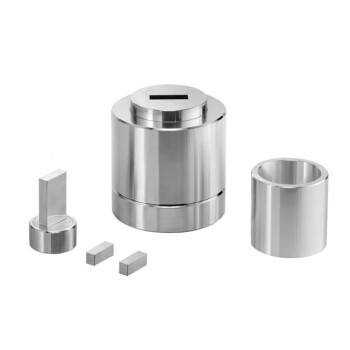
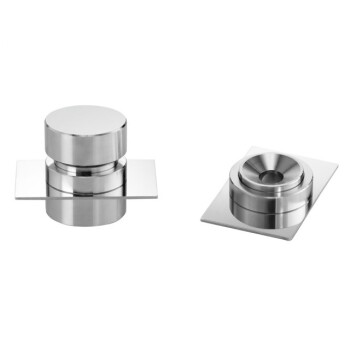
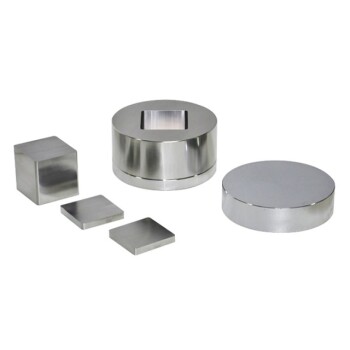
- If your primary focus is accurate material characterization: Ensure the use of specialized, polished molds to produce pellets with fixed dimensions and perfectly flat surfaces for uniform contact with electrodes.
Mastering the laboratory press is the most effective way to ensure your solid electrolyte samples provide a true and reliable representation of their electrochemical potential.
Summary Table:
| Key Impact Factor | Mechanism of Action | Research Benefit |
|---|---|---|
| Microstructural Density | Eliminates internal voids and air gaps | Maximizes ionic conductivity |
| Boundary Resistance | Reduces distance between particles | Minimizes grain boundary impedance |
| Interface Quality | Ensures tight electrode-electrolyte contact | Improves accuracy of EIS measurements |
| Structural Safety | Creates a dense, crack-free pellet | Prevents lithium dendrite penetration |
| Data Reproducibility | Establishes uniform ion transport paths | Ensures consistent and valid test results |
Elevate Your Battery Research with KINTEK Precision
Precision is the foundation of groundbreaking energy research. At KINTEK, we specialize in providing the high-performance laboratory equipment required to transform raw materials into valid test samples.
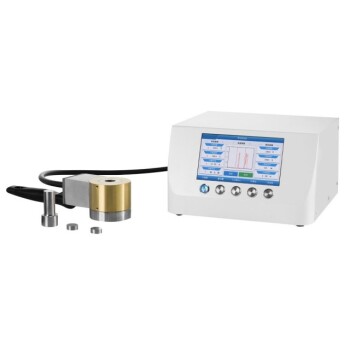
Our comprehensive range of hydraulic presses (pellet, hot, and isostatic) is engineered to provide the stable, high-pressure control (200 MPa to 600+ MPa) essential for maximizing the relative density of your solid electrolytes. To support your entire workflow, our portfolio also includes:
- High-Temperature Furnaces: Muffle, tube, and vacuum furnaces for sintering and material synthesis.
- Sample Preparation Tools: Crushing and milling systems, sieving equipment, and precision molds.
- Advanced Consumables: High-quality ceramics, crucibles, and PTFE products.
Whether you are working on sulfide-based electrolytes or advanced oxides, KINTEK provides the reliability and technical support to ensure your data reflects the intrinsic potential of your materials.
Ready to optimize your sample preparation? Contact our experts today to find the perfect equipment for your lab!
References
- Chen Mi, Simon R. Hall. Improved air-stability and conductivity in the 75Li<sub>2</sub>S·25P<sub>2</sub>S<sub>5</sub> solid-state electrolyte system: the role of Li<sub>7</sub>P<sub>3</sub>S<sub>11</sub>. DOI: 10.1039/d3ra04706g
This article is also based on technical information from Kintek Solution Knowledge Base .
Related Products
- Laboratory Hydraulic Press Split Electric Lab Pellet Press
- Laboratory Hydraulic Press Lab Pellet Press Machine for Glove Box
- Large Format Automatic Laboratory Hot Press 400x400 Plate for Industrial Material Sintering and Polymer Lamination
- Automatic Laboratory Hot Press Machine with Heated Platens 200x200mm Program Control Dual Heating Plates
- Laboratory Hydraulic Press Lab Pellet Press for Button Battery
People Also Ask
- What are the roles of a laboratory hydraulic press and stainless steel molds in the preparation of graphite samples?
- What is the role of a laboratory hydraulic press in electrode prep? Maximize Energy Density & Sealing Precision
- How does a laboratory hydraulic press ensure the quality of alumina-forming alloy green bodies? Optimize CSP Research
- How is a laboratory hydraulic press used to evaluate the mechanical performance of nano-modified concrete? Expert Guide
- Why is a laboratory hydraulic press used for ASSB assembly? Achieving 392 MPa for Optimal Solid-State Battery Density