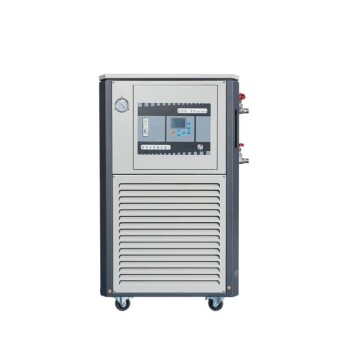
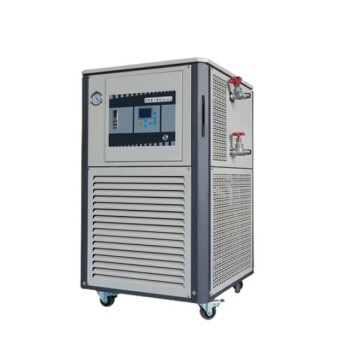
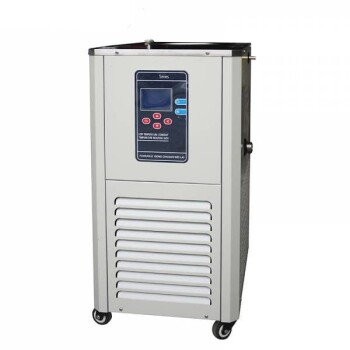
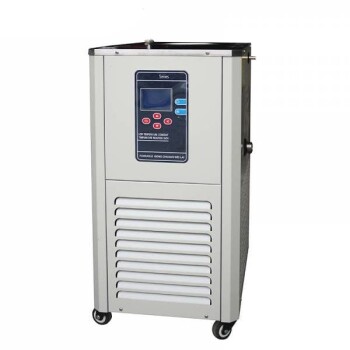
Laboratory constant-temperature heating reaction stations ensure stability by synchronizing high-precision thermal regulation with powerful mechanical agitation. These stations are engineered to overcome the high viscosity inherent in ionic liquids, ensuring uniform distribution of catalysts while strictly limiting temperature fluctuations that destroy sensitive furan compounds.
Success in converting cellulose to HMF relies on managing the delicate balance between reaction kinetics and solvent physical properties. By strictly controlling temperature and mixing intensity, these stations prevent the degradation of unstable intermediates, ensuring high yield and process consistency.
Managing High Viscosity in Ionic Liquids
Overcoming Solvent Resistance
Ionic liquids are distinctively viscous, creating significant resistance to mass transfer. Standard magnetic stirring is often insufficient to move these heavy fluids effectively.
The Role of Mechanical Stirring
These stations utilize powerful mechanical stirring to physically force movement through the dense liquid. This ensures that the reaction mixture remains dynamic rather than stagnant.
Ensuring Catalyst Homogeneity
Proper mixing is critical for the dispersion of catalytic components, such as chromium or ruthenium salts. Mechanical agitation guarantees these catalysts are distributed evenly throughout the vessel, preventing "dead zones" where no reaction occurs.
Precise Thermal Regulation for Reaction Integrity
Preventing Localized Overheating
Uneven heating is the enemy of furan synthesis. These stations provide uniform heat distribution to prevent localized overheating (hot spots) near the heat source.
Protecting the Furan Ring
Excessive heat triggers side reactions, specifically furan ring opening. Precise temperature limits ensure the molecular structure of the HMF product remains intact during formation.
Mitigating Humin Formation
Thermal spikes often lead to the polymerization of intermediates into insoluble solids known as humins. By clamping the temperature at the optimal set point, the system minimizes these waste products.
Optimizing Reaction Synergy
The conversion process involves a synergy between sugar isomerization and dehydration. Constant temperature maintains the specific kinetic conditions required for these two steps to occur in the correct sequence and ratio.
Understanding the Trade-offs
Equipment Complexity and Cost
Achieving this level of control requires sophisticated equipment. These stations are significantly more expensive and complex to maintain than standard laboratory hotplates.
Energy Demands
Mechanically stirring viscous ionic liquids requires high torque. Consequently, the energy consumption for these stations is higher than systems used for low-viscosity aqueous reactions.
Making the Right Choice for Your Goal
To maximize the efficiency of your furan conversion process, consider your specific priorities:
- If your primary focus is maximizing yield: Prioritize thermal precision to prevent ring opening and humin formation.
- If your primary focus is reaction speed: Prioritize mechanical torque to ensure rapid, uniform catalyst contact in the viscous solvent.
Ultimately, the stability of your furan conversion depends as much on the mechanical control of your environment as it does on the chemistry itself.
Summary Table:
| Feature | Stability Impact | Benefit for Furan Conversion |
|---|---|---|
| High-Precision Heating | Eliminates hot spots | Prevents furan ring opening and degradation |
| Mechanical Stirring | Overcomes high viscosity | Ensures uniform catalyst distribution and mass transfer |
| Thermal Regulation | Minimizes temperature spikes | Reduces insoluble humin formation and waste |
| Kinetic Control | Maintains reaction synergy | Optimizes sugar isomerization and dehydration sequence |
Elevate Your Chemical Synthesis with KINTEK Precision
Process stability is the difference between high-yield furan conversion and wasted research hours. KINTEK specializes in advanced laboratory equipment designed to handle the most demanding reaction conditions. From high-torque mechanical stirring systems to high-temperature reactors and constant-temperature heating stations, we provide the tools needed to manage viscous ionic liquids and sensitive chemical kinetics.
Whether you require specialized glassware, electrolytic cells, or custom high-pressure autoclaves, our team is dedicated to supporting your lab's specific research goals with durable, high-performance consumables and hardware.
Ready to optimize your reaction stability and yield? Contact KINTEK today for a consultation and quote!
References
- Rosa Padilla, Martin Nielsen. Homogeneous Catalyzed Valorization of Furanics: A Sustainable Bridge to Fuels and Chemicals. DOI: 10.3390/catal11111371
This article is also based on technical information from Kintek Solution Knowledge Base .
Related Products
- High Temperature Constant Temperature Heating Circulator Water Bath Chiller Circulator for Reaction Bath
- 20L Heating Chilling Circulator Cooling Water Bath Circulator for High and Low Temperature Constant Temperature Reaction
- 10L Heating Chilling Circulator Cooling Water Bath Circulator for High and Low Temperature Constant Temperature Reaction
- 100L Heating Chilling Circulator Cooling Water Bath Circulator for High and Low Temperature Constant Temperature Reaction
- 50L Heating Chilling Circulator Cooling Water Bath Circulator for High and Low Temperature Constant Temperature Reaction
People Also Ask
- What is the necessity of a circulating water bath in chlorate production? Optimize Yield & Purity with Precision
- How does a constant temperature circulator support the leaching reaction of gold scrap? Optimize Gold Recovery Results
- How do constant temperature circulators impact weight-loss immersion tests? Ensure Precision in Corrosion Analysis
- Why is a constant temperature water bath used for precursor storage in CVD? Achieve Stable Nanocrystalline SiC Deposition
- Why is a high-precision constant temperature water bath necessary for anaerobic digestion? Ensure Success at 37±0.02°C