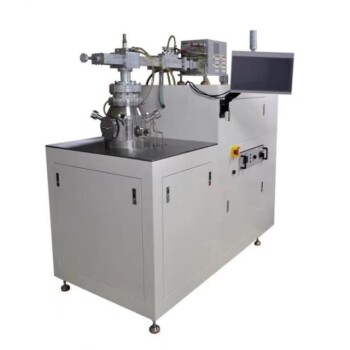
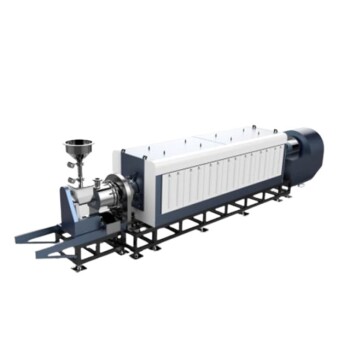
Microwave synthesis reactors significantly outperform traditional heating methods by utilizing direct molecular interaction to achieve rapid, uniform heating. While conventional techniques rely on slower external heat transfer, microwave-assisted technology completes the reduction of silver nanoparticles in minutes, offering a distinct advantage in both speed and energy efficiency.
Microwave irradiation shifts the energy transfer mechanism from conductive heating to direct molecular excitation. This fundamental change allows for the rapid, energy-efficient synthesis of silver nanoparticles using plant extracts, overcoming the time and energy inefficiencies inherent in traditional thermal methods.
The Mechanism of Heating
Molecular vs. Conductive Heating
Traditional heating methods rely on conduction or convection to transfer heat from an external source to the reaction vessel. This process creates a thermal lag, as heat must penetrate from the outside in.
Achieving Uniformity
In contrast, microwave synthesis reactors utilize microwave radiation to heat the solution uniformly at the molecular level. This direct interaction ensures that energy is distributed characteristically throughout the sample, eliminating the temperature gradients common in conventional heating.
Speed and Reaction Kinetics
Drastically Reduced Reaction Times
The primary advantage of microwave-assisted synthesis is the dramatic acceleration of reaction kinetics. What may take hours using traditional thermal methods can often be achieved within minutes using microwave irradiation.
Rapid Reduction Indicators
In the context of green synthesis using plant extracts, this speed is visibly evident. The technology can induce the necessary color changes—indicating the complete reduction of silver ions to nanoparticles—almost immediately.
Sustainability and Energy Efficiency
Lower Energy Consumption
Because the reaction times are significantly shortened, the total energy required to complete the synthesis is drastically reduced. This aligns the heating method with the principles of green chemistry, minimizing the carbon footprint of the process.
Enhancing Green Synthesis
The method complements the use of plant extracts by providing an efficient energy source that does not degrade the biological reducing agents. It maximizes the "green" potential of the synthesis by pairing eco-friendly precursors with an eco-friendly energy profile.
Common Pitfalls of Traditional Methods
The Cost of Thermal Lag
Sticking to traditional heating methods involves inherent inefficiencies due to slow heat transfer. This thermal lag results in prolonged exposure to heat, which consumes significantly more energy over the course of a reaction.
Inconsistent Energy Distribution
Conventional heating often fails to achieve the molecular-level uniformity of microwaves. This can lead to uneven reaction rates within the solution, potentially affecting the consistency and quality of the final nanoparticle product.
Making the Right Choice for Your Goal
When selecting a heating method for the green synthesis of silver nanoparticles, consider your primary constraints regarding time and sustainability.
- If your primary focus is process efficiency: Microwave reactors are the superior choice, capable of completing reductions and inducing color changes in minutes.
- If your primary focus is energy conservation: Microwave-assisted technology is recommended as it significantly lowers overall energy consumption compared to the prolonged heating required by traditional methods.
By leveraging molecular heating, you ensure a synthesis process that is not only faster but fundamentally more aligned with the goals of green chemistry.
Summary Table:
| Feature | Microwave Synthesis Reactors | Traditional Heating Methods |
|---|---|---|
| Heating Mechanism | Direct molecular excitation (Internal) | Conduction/Convection (External) |
| Reaction Time | Minutes | Hours |
| Energy Efficiency | High (Rapid, targeted heating) | Low (Thermal lag and heat loss) |
| Temperature Uniformity | Excellent (Molecular level) | Poor (Temperature gradients) |
| Sustainability | High (Aligns with Green Chemistry) | Moderate to Low |
Elevate Your Research with KINTEK’s Advanced Synthesis Solutions
Transitioning to green chemistry requires more than just eco-friendly precursors; it demands the right equipment. At KINTEK, we specialize in high-performance laboratory solutions designed to optimize your material synthesis. Whether you are developing silver nanoparticles using our microwave synthesis reactors or requiring precise thermal control with our muffle, tube, and vacuum furnaces, we have the expertise to enhance your lab's efficiency.
Our comprehensive portfolio includes:
- High-Temperature Systems: Muffle, rotary, and CVD furnaces.
- Pressure & Reaction Vessels: High-temperature high-pressure reactors and autoclaves.
- Sample Preparation: Crushing, milling, and hydraulic presses.
- Advanced Research Tools: Battery research consumables, electrolytic cells, and cooling solutions.
Don't let thermal lag slow your innovation. Contact KINTEK today to discover how our high-precision equipment can streamline your workflow and deliver consistent, high-quality results for your target applications.
References
- Kamal Prasad Kamal. Silver Nanoparticles: Synthesis, Characterization, and Emerging Applications in Agriculture and Biomedicine for Enhancing Crop Production and Human Health. DOI: 10.56556/jase.v4i1.1140
This article is also based on technical information from Kintek Solution Knowledge Base .
Related Products
- Cylindrical Resonator MPCVD Machine System Reactor for Microwave Plasma Chemical Vapor Deposition and Lab Diamond Growth
- Microwave Plasma Chemical Vapor Deposition MPCVD Machine System Reactor for Lab and Diamond Growth
- High Pressure Laboratory Autoclave Reactor for Hydrothermal Synthesis
- Customizable Laboratory High Temperature High Pressure Reactors for Diverse Scientific Applications
- Electric Rotary Kiln Small Rotary Furnace Biomass Pyrolysis Plant
People Also Ask
- What are the advantages of a Microwave Plasma CVD reactor for MCD/NCD coatings? Precision Multilayer Diamond Engineering
- How does a microwave plasma reactor facilitate the synthesis of diamond? Master MPCVD with Precision Technology
- Why is argon-rich gas phase chemistry used for UNCD growth? Unlock Precision Nano-Diamond Synthesis
- How does chemical vapor deposition work for diamonds? Grow Lab-Created Diamonds Layer by Layer
- What are the primary advantages of the CVD method for growing diamonds? Engineering High-Purity Gems and Components