PTFE seals and sealing glands contribute to assembly integrity by physically compensating for surface imperfections to form a gas-tight barrier. Used in conjunction with specialized threaded structures, the PTFE material compresses to fill microscopic irregularities on the reaction tube, effectively blocking leak paths.
The combination of pliable PTFE seals and threaded glands creates a hermetic seal essential for high-purity applications, ensuring atmospheric control by preventing both the escape of reaction gases and the infiltration of external air.
The Mechanics of the Seal
Compensating for Surface Irregularities
Ceramic reaction tubes often possess microscopic surface defects or roughness that rigid seals cannot accommodate.
PTFE acts as a conforming agent. Under pressure, it flows into these tiny gaps and irregularities on the tube's surface.
This establishes a continuous interface, eliminating the pathways that gas would otherwise use to escape or enter the system.
The Role of the Threaded Gland
The PTFE seal relies on external mechanical force to function correctly.
The threaded gland structure provides the necessary compression. By tightening the gland, uniform pressure is applied to the PTFE, forcing it against the ceramic tube.
This ensures the seal remains tight even if there are minor shifts or vibrations in the assembly.
Why PTFE is Critical for Reaction Integrity
Chemical Inertness and Stability
Beyond physical sealing, the material integrity of the seal is paramount.
PTFE offers exceptional corrosion resistance. As noted in industry applications, it withstands erosion from acids, alkalis, and organic solvents.
This allows the reaction to proceed without the seal degrading or contaminating the internal environment.
Atmospheric Isolation
The primary goal of this assembly is maintaining a specific atmosphere.
The seal functions as a bi-directional barrier. It prevents hazardous reaction gases from leaking out, ensuring operator safety.
Simultaneously, it blocks external air infiltration, which is vital for high-purity experiments where oxygen or moisture could ruin the reaction.
Understanding the Trade-offs
The Necessity of Modification
While pure PTFE is excellent for sealing, it has inherent defects that may require compensation.
Pure PTFE may require "compounding" for specific applications. As indicated by supplementary data, combining PTFE with other materials (filling or blending modification) can enhance its performance.
This is often done to address issues like material creep or wear resistance in more demanding industrial environments.
Operational Limits
While PTFE contributes to integrity, it is not a universal solution for all conditions.
Temperature and pressure limits must be respected. While stable in many environments, the seal's integrity depends on the material remaining solid and pliable without melting or excessive deformation.
Making the Right Choice for Your Goal
To ensure your reaction tube assembly performs as intended, consider your specific operational requirements:
- If your primary focus is High-Purity Atmospheric Control: Prioritize the correct tightening of the threaded gland to ensure the PTFE fully compensates for microscopic tube irregularities.
- If your primary focus is Chemical Compatibility: Verify that the PTFE grade used is pure or appropriately modified to resist the specific solvents or acids in your reaction.
- If your primary focus is Mechanical Durability: Consider using modified or compounded PTFE seals to mitigate wear and deformation defects common in pure PTFE.
By leveraging the conformability of PTFE within a threaded gland structure, you secure the vital gas-tight connection required for safe and precise chemical reactions.
Summary Table:
| Component | Function in Assembly | Key Benefit |
|---|---|---|
| PTFE Seal | Conforming agent for surface gaps | Blocks microscopic leak paths via material compression |
| Threaded Gland | Provides mechanical compression | Ensures uniform pressure and stability against vibrations |
| Material Properties | Chemical inertness & stability | Prevents contamination and resists corrosion from solvents |
| Atmospheric Barrier | Bi-directional isolation | Maintains high-purity environments and ensures operator safety |
Enhance Your Laboratory Precision with KINTEK
Ensure the integrity of your high-temperature experiments with KINTEK’s premium laboratory solutions. Whether you are managing complex chemical reactions in our high-temperature high-pressure reactors or requiring reliable PTFE consumables and ceramics for gas-tight assemblies, we provide the durability and precision your research demands.
From muffle and vacuum furnaces to specialized electrolytic cells and crushing systems, KINTEK is your trusted partner for high-performance lab equipment.
Ready to optimize your reaction tube assembly? Contact KINTEK experts today for tailored equipment solutions!
References
- Jörn Matthies, Ulrich Nieken. Electrically Heated Oxide Ceramic Tubes for High Temperature Reactions. DOI: 10.1002/cite.202200186
This article is also based on technical information from Kintek Solution Knowledge Base .
Related Products
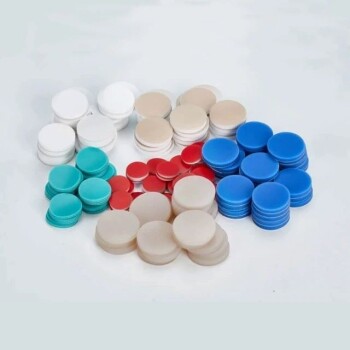
- Custom PTFE Teflon Parts Manufacturer for Gaskets and More
- PTFE Electrolytic Cell Electrochemical Cell Corrosion-Resistant Sealed and Non-Sealed
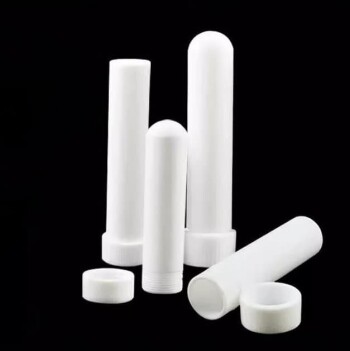
- Custom PTFE Teflon Parts Manufacturer for Centrifuge Tubes
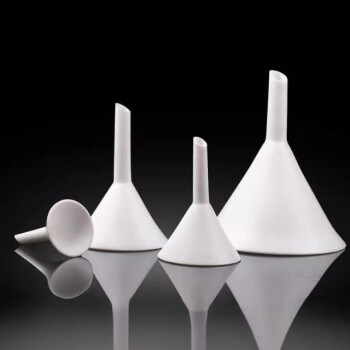
- Custom PTFE Teflon Parts Manufacturer for PTFE Buchner Funnel and Triangular Funnel
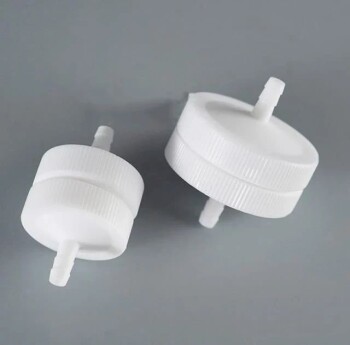
- Custom PTFE Teflon Parts Manufacturer for Sampling Filters
People Also Ask
- What technical advantages do PTFE seals provide in high-pressure CO2? Optimize Your Seal Integrity
- What are the critical functions of Polytetrafluoroethylene (PTFE) gaskets within a glow discharge unit? Enhance Precision
- How are PTFE gaskets utilized for POEGMA electrolyte conductivity? Ensure Precision in Electrochemical Measurements
- What is the purpose of using PTFE gaskets in fuel cell test fixtures? Ensure Seal Purity and Data Integrity
- What protective roles do Sealing Gaskets and Support Grids play in oil-water separation? Ensure High-Pressure Integrity