PTC heaters with perforated surfaces operate by combining the mechanics of a standard fan heater with a specialized physical design to maximize thermal efficiency. Instead of blowing air over a solid or finned element, air is directed over a surface designed with specific perforations that increase the contact area between the heat source and the passing air.
Core Takeaway The perforated design is an engineering optimization that increases the surface area available for heat exchange. This allows the heater to transfer thermal energy to the air more efficiently than standard solid-surface designs.
The Mechanics of Perforated Design
Increasing Heat Transfer Efficiency
The defining feature of this heater is the perforated surface area. In thermodynamics, heat transfer is often limited by how much air can physically touch the hot surface at any given moment.
By perforating the surface, the design breaks up the airflow. This ensures that a higher volume of air comes into direct contact with the heated material, resulting in a more rapid and efficient rise in air temperature.
The Role of Forced Air
According to the primary technical documentation, this heater functions similarly to a fan heater.
It does not rely on passive radiation. Instead, it utilizes an internal fan to actively blow air across the perforated components. The velocity of the air, combined with the perforated texture, optimizes the energy exchange.
Comparing Heater Configurations
Perforated Surface vs. Standard Fan Heaters
A standard PTC fan heater mounts heating elements within a housing and simply blows air through the cavity.
The perforated model refines this process. It distinguishes itself by using the texture of the surface itself to grab the air, rather than relying solely on the fan's power to push heat into the room.
Perforated Surface vs. Convection Heaters
It is important to distinguish this active system from PTC convection heaters.
As noted in the supplementary data, convection heaters rely on heating elements attached to aluminum fins to create a natural "chimney effect" (hot air rising). Perforated PTC heaters generally rely on forced induction (fans) rather than this natural, passive flow.
Understanding the Operational Trade-offs
Noise vs. Speed
Because these units function like fan heaters, they prioritize speed of heating over silence. The fan required to push air over the perforations will generate operating noise, unlike the silent operation of a natural convection heater.
Airflow vs. Condensation Control
The active airflow is excellent for raising room temperature quickly.
However, if your goal is minimizing condensation inside an enclosure, the natural convection method (mentioned in the supplementary references) is often superior because it creates a gentle, continuous circulation rather than a direct blast of hot air.
Making the Right Choice for Your Goal
Select the heater technology that aligns with your specific thermal management requirements:
- If your primary focus is rapid heating efficiency: Choose the PTC heater with perforated surface areas, as the design maximizes heat transfer rates to the air.
- If your primary focus is silent operation and condensation prevention: Choose a PTC convection heater, which utilizes aluminum fins and natural airflow to circulate heat without a fan.
Summary: The perforated PTC heater is an evolution of the fan heater, using surface geometry to extract maximum thermal efficiency from the airflow.
Summary Table:
| Feature | Perforated PTC Heater | PTC Convection Heater |
|---|---|---|
| Mechanism | Forced Air (Fan) | Natural Convection |
| Surface Design | Perforated / Textured | Aluminum Fins |
| Heating Speed | High / Rapid | Moderate |
| Noise Level | Moderate (Fan noise) | Silent |
| Best Use Case | Fast space heating | Condensation control |
Elevate Your Laboratory Precision with KINTEK
Maximize your thermal management efficiency with KINTEK’s advanced heating solutions. Whether you require the rapid performance of perforated PTC systems or the specialized control of our high-temperature furnaces, muffle furnaces, and vacuum systems, we provide the engineering excellence your research demands.
From battery research tools and electrolytic cells to high-pressure reactors and precision crushing systems, KINTEK specializes in laboratory equipment designed for durability and accuracy.
Ready to optimize your lab environment? Contact our experts today to find the perfect heating or processing solution for your specific application.
Related Products
- Infrared Heating Quantitative Flat Plate Press Mold
- Automatic High Temperature Heated Hydraulic Press Machine with Heated Plates for Lab
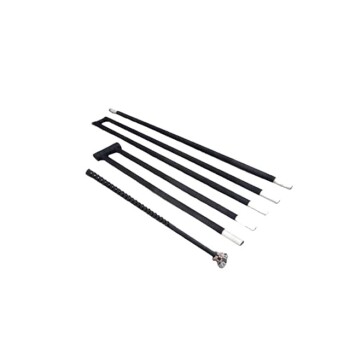
- Silicon Carbide SiC Thermal Heating Elements for Electric Furnace
- High Temperature Constant Temperature Heating Circulator Water Bath Chiller Circulator for Reaction Bath
- Manual High Temperature Heated Hydraulic Press Machine with Heated Plates for Lab
People Also Ask
- Can a heat press be used as a laminator? Why It's a Risky Choice for Your Projects
- What is the difference between manual and air compressed heat press? Choose the Right Tool for Your Production Needs
- Can you use a heat press for transfers? The Definitive Tool for Professional Results
- What is the standard temperature for heat press? Master the Perfect Settings for Durable Transfers
- What is the process of hot press molding? A Guide to High-Density Material Manufacturing