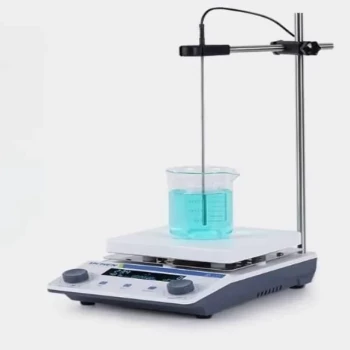
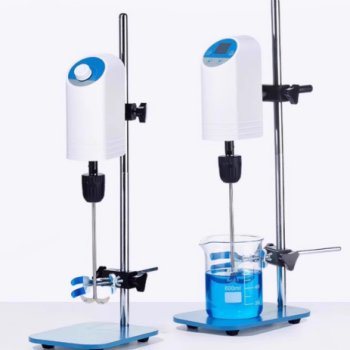
Stirred reactors equipped with temperature compensation influence catalyst structure by strictly regulating the kinetics of the sol-gel process. specifically, they control the hydrolysis and polycondensation rates of precursors, such as metal alkoxides. By modulating reaction temperature and stirring intensity, these systems dictate the transformation of monomers into colloidal solutions or three-dimensional network polymer gels, directly determining the final material's porosity and morphology.
Core Takeaway Achieving a specific catalyst structure requires precise command over phase transitions. These reactors provide the stability needed to manipulate the process at a molecular level, ensuring that the chemical composition and pore structure are engineered rather than accidental.
Mechanisms of Structural Control
Regulating Reaction Kinetics
The fundamental influence of these reactors lies in their ability to stabilize reaction rates. Temperature compensation functions prevent thermal fluctuations that could accelerate or retard chemical activity unpredictably.
Controlling Hydrolysis and Polycondensation
The specific chemical pathways targeted are hydrolysis and polycondensation. By maintaining a strict thermal environment, the reactor ensures these precursors break down and re-bond at a consistent, pre-determined pace.
Transformation of Monomers
This kinetic control governs the physical state of the material. It allows operators to precisely induce the shift from simple monomers into complex colloidal solutions.
Formation of 3D Networks
Beyond simple solutions, these reactors facilitate the creation of three-dimensional network polymer gels. The stirring intensity aids in uniform network formation, preventing localized agglomeration.
Engineering the Final Catalyst Properties
Molecular-Level Composition
The influence of the reactor extends to the chemical makeup of the catalyst. The controlled environment allows for molecular-level precision regarding the final chemical composition.
Defining Porosity
Porosity is a critical factor in catalyst performance. By regulating how the polymer gel forms and sets, these reactors determine the density and distribution of pores within the material.
Macroscopic Morphology
The physical shape and texture of the catalyst are also results of this process. The combined effect of stirring shear and temperature control dictates the macroscopic morphology of the final product.
Understanding the Trade-offs
Sensitivity to Parameter Settings
While these reactors offer high precision, they require exact calibration. If the stirring intensity is mismatched with the reaction rate, it can disrupt the formation of the desired 3D network.
Complexity of Control Loops
Temperature compensation implies an active feedback system. Operators must ensure that the compensation response time is fast enough to handle the exothermic or endothermic nature of specific sol-gel reactions to maintain true uniformity.
Optimizing for Specific Outcomes
To leverage this technology effectively, align your operational parameters with your structural goals:
- If your primary focus is high porosity: Prioritize temperature stability to carefully control the polycondensation rate, allowing the 3D network to form without collapsing.
- If your primary focus is uniform morphology: Focus on optimizing stirring intensity to ensure a homogeneous transition from monomer to colloid throughout the entire vessel volume.
Mastering the balance between thermal control and mixing energy is the difference between a random precipitate and an engineered catalyst.
Summary Table:
| Parameter Influence | Effect on Catalyst Structure | Key Process Mechanism |
|---|---|---|
| Temperature Stability | Controls pore density and distribution | Regulates hydrolysis & polycondensation rates |
| Stirring Intensity | Ensures uniform 3D network formation | Manages transition from monomers to colloids |
| Kinetic Control | Determines molecular-level composition | Prevents thermal fluctuations & agglomeration |
| Phase Transition | Dictates macroscopic morphology | Governs transformation into polymer gels |
Elevate Your Material Synthesis with KINTEK Precision
Achieving the perfect catalyst structure requires more than just mixing; it demands absolute control over reaction kinetics. KINTEK specializes in advanced laboratory solutions designed for high-stakes research. Our comprehensive range of high-temperature high-pressure reactors and autoclaves, alongside precision stirring and heating systems, empowers you to engineer specific porosities and morphologies with confidence.
Whether you are developing next-generation catalysts or optimizing complex sol-gel processes, KINTEK provides the high-performance tools—from crushing and milling systems to homogenizers and specialized crucibles—to ensure your results are reproducible and engineered for success.
Ready to transform your laboratory outcomes? Contact our technical experts today to find the ideal reactor configuration for your research goals.
References
- Ahmed I. Osman, Mika Sillanpää. Biofuel production, hydrogen production and water remediation by photocatalysis, biocatalysis and electrocatalysis. DOI: 10.1007/s10311-023-01581-7
This article is also based on technical information from Kintek Solution Knowledge Base .
Related Products
- Laboratory Small Constant Temperature Heated Magnetic Stirrer Heater and Stirrer
- High Performance Laboratory Stirrers for Diverse Applications
- Customizable Laboratory High Temperature High Pressure Reactors for Diverse Scientific Applications
- High Pressure Laboratory Autoclave Reactor for Hydrothermal Synthesis
- Mini SS High Pressure Autoclave Reactor for Laboratory Use
People Also Ask
- What role does a magnetic stirrer with heating play in ZnO nanoparticle synthesis? Precision Control for Quality Results
- What role does a constant temperature heating magnetic stirrer play in MFC-HAp synthesis? Achieve Material Homogeneity
- What is the function of a laboratory magnetic stirrer in Ni–Cr–P electrodeposition? Optimize Ion Transport & Coating
- Why is a laboratory magnetic stirrer required for benzoic acid esters? Boost Reaction Speed & Yield with High RPM
- What role does a laboratory magnetic stirrer play in TiO2 and TiO2-Ag sol preparation? Master Chemical Kinetics