Vacuum pumps and pressure control systems act as the stabilizing foundation for PECVD processes. By integrating high-precision gauges, micro-inlet needle valves, and multi-stage pumping systems, these components maintain a rigid low-pressure environment within the reaction chamber. This precise control dictates the mean free path and collision frequency of precursor molecules, ensuring that plasma-phase reactions remain stable enough to deposit uniform, pinhole-free thin films.
The stability of the vacuum determines the stability of the film. While the chemical precursors define the material, the pressure control system governs the physics of the plasma, ensuring that the reaction environment is identical from the beginning of the deposition to the end.
The Physics of Consistency: Controlling Molecular Behavior
To understand why vacuum systems are critical, you must look beyond simple air removal. You are managing the kinetic behavior of gas molecules.
Regulating the Mean Free Path
The primary function of the vacuum system is to control the mean free path—the average distance a molecule travels before colliding with another.
By maintaining a specific low pressure, the system ensures that precursor molecules (like HMDSO or Silane) have a predictable trajectory. If the pressure is too high, molecules collide too often, altering the reaction before they reach the substrate.
Stabilizing Collision Frequency
Consistent film growth requires a constant collision frequency within the plasma.
High-precision pressure gauges and micro-inlet needle valves work in tandem to keep the pressure static. This stability allows the plasma-phase reaction to proceed at a uniform rate, preventing fluctuations that would cause variations in the film's chemical composition.
Ensuring Compositional Purity
The vacuum system allows for the creation of specific film types, such as silicon dioxide-like or organosilicon layers.
By locking in the pressure parameters, the system ensures the ratio of reactants remains constant. This results in thin films that are not only uniform in thickness but also homogeneous in their chemical structure.
Hardware Configurations for Purity and Precision
Achieving this level of control requires a sophisticated arrangement of hardware designed to eliminate variables.
The Role of Dry Pumps
Standard mechanical pumps often use oil, which can backstream and contaminate the sensitive vacuum chamber.
To prevent this, PECVD systems typically utilize dry pumps to create the initial low vacuum. This eliminates the risk of oil vapor interfering with the film's purity.
High Vacuum via Molecular Pumps
Once the rough vacuum is established, molecular pumps are engaged to achieve high vacuum levels.
These pumps are particularly effective at removing lighter molecules and stubborn contaminants like water vapor, nitrogen, and oxygen. Removing water vapor is critical, as residual moisture can induce defects and alter the electrical properties of the film.
Precision Valve Management
The system relies on a network of roughing valves, backing valves, and gate valves to manage gas flow direction and pressure steps.
These components isolate the process chamber from external atmosphere and pump vibration, ensuring the deposition environment remains perfectly still and isolated.
Understanding the Trade-offs
While vacuum control is essential for quality, it introduces specific operational constraints that must be managed.
Deposition Rate vs. Uniformity
There is often a tension between how fast you can deposit a film and how uniform that film is.
Increasing gas flow rates can boost deposition speed, but if the vacuum system cannot maintain the optimized pressure under this increased load, uniformity will degrade.
Throughput vs. Purity
Achieving the highest quality vacuum (removing every trace of water vapor via molecular pumps) takes time.
Deep vacuum cycles increase the total cycle time per wafer. Operators must balance the need for an ultra-pure, pinhole-free film against the manufacturing requirement for high throughput.
Making the Right Choice for Your Process
Optimizing your PECVD results requires tuning your vacuum parameters to your specific end-goal.
- If your primary focus is Film Purity: Prioritize the use of molecular pumps and allow for longer pump-down times to fully evacuate water vapor and oxygen.
- If your primary focus is Wafer Uniformity: Concentrate on optimizing the chamber pressure and the spacing between the showerhead and susceptor to ensure even gas distribution.
- If your primary focus is Defect Reduction: Ensure your system utilizes dry pumps to eliminate oil contamination and maintain higher process temperatures to reduce pinhole formation.
Success in PECVD is ultimately a measure of control; the more precisely you manage the pressure, the more predictable your thin film becomes.
Summary Table:
| Feature | Role in PECVD Consistency | Impact on Thin Film Quality |
|---|---|---|
| Dry Pumps | Eliminates oil backstreaming | Prevents chemical contamination and ensures high purity |
| Molecular Pumps | Removes water vapor and light gases | Reduces defects and stabilizes electrical properties |
| Precision Gauges | Maintains static pressure environment | Ensures uniform collision frequency and growth rate |
| Needle Valves | Regulates precursor gas flow | Controls mean free path for predictable molecular trajectories |
| Pressure Stability | Governs plasma-phase physics | Guarantees homogeneity and consistent thickness across wafers |
Elevate Your Thin Film Deposition with KINTEK Precision
Achieving the perfect, pinhole-free thin film requires more than just chemistry—it requires absolute control over your vacuum environment. KINTEK specializes in advanced laboratory solutions, offering high-performance PECVD and CVD systems, integrated with high-precision pressure control and reliable pumping technologies.
Whether you are developing silicon dioxide-like layers or complex organosilicon coatings, our comprehensive portfolio of high-temperature furnaces, vacuum systems, and essential consumables ensures your research yields consistent, repeatable results.
Ready to optimize your lab’s throughput and film purity? Contact our technical experts today to find the ideal vacuum and pressure configuration for your specific application!
References
- Daniela Branco Tavares Mascagni, Elidiane Cipriano Rangel. Corrosion resistance of 2024 aluminum alloy coated with plasma deposited a-C:H:Si:O films. DOI: 10.1590/1516-1439.289014
This article is also based on technical information from Kintek Solution Knowledge Base .
Related Products
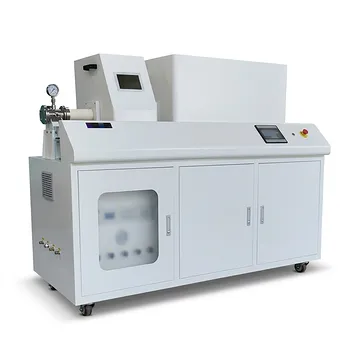
- Chemical Vapor Deposition CVD Equipment System Chamber Slide PECVD Tube Furnace with Liquid Gasifier PECVD Machine
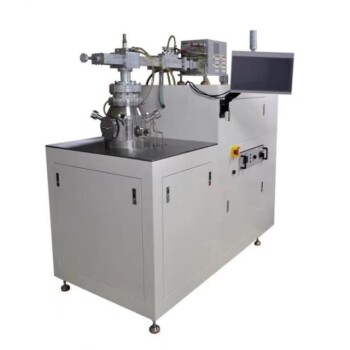
- RF PECVD System Radio Frequency Plasma-Enhanced Chemical Vapor Deposition RF PECVD
- Inclined Rotary Plasma Enhanced Chemical Vapor Deposition PECVD Equipment Tube Furnace Machine
- Inclined Rotary Plasma Enhanced Chemical Vapor Deposition PECVD Equipment Tube Furnace Machine
- 915MHz MPCVD Diamond Machine Microwave Plasma Chemical Vapor Deposition System Reactor
People Also Ask
- What are the advantages of chemical vapor deposition? Achieve Superior Thin Films for Your Lab
- What types of substrates are used in CVD to facilitate graphene films? Optimize Graphene Growth with the Right Catalyst
- What is the chemical vapor deposition growth process? Build Superior Thin Films from the Atom Up
- How expensive is chemical vapor deposition? Understanding the True Cost of High-Performance Coating
- Why is Chemical Vapor Deposition (CVD) equipment uniquely suited for constructing hierarchical superhydrophobic structures?